Basement Waterproofing Services in Northern & Central New Jersey
Water in the basement rarely fixes itself. It usually starts as a musty smell, a damp line along the floor, or a puddle after a storm, and it gets worse each season. A-1 Basement Solutions finds where the water is getting in and installs the system that keeps it out, from interior French drains and sump pumps to exterior drainage and crack sealing.
We work from our office at 26 North Avenue in Garwood and serve homeowners across ten Northern and Central New Jersey counties. Every job is done by our own W2 employees, never subcontractors, and our waterproofing systems are backed by a transferable Life-of-the-House Guarantee.
Why New Jersey Basements Leak
Most basement leaks come down to water pressure in the soil around your foundation. After heavy rain or snowmelt, the soil fills with water and pushes against the walls and floor. Builders call this hydrostatic pressure, and it forces water through any weak point it can find.
Common entry points we see in New Jersey homes:
- The floor-wall joint (cove joint), where the wall sits on the footing and the floor is poured separately.
- Cracks in poured concrete or gaps in block walls, especially in older homes.
- Window wells that fill with water and leak around the frame. See our guide to window well leak prevention.
- Failing or clogged footing drains that no longer carry water away.
- Poor grading and short downspouts that dump roof water right next to the foundation.
Older housing stock across Union, Essex and Morris counties adds to the problem, since many original drainage systems were never designed for today’s storms. Read more about why NJ basements flood and what to do after heavy rain.
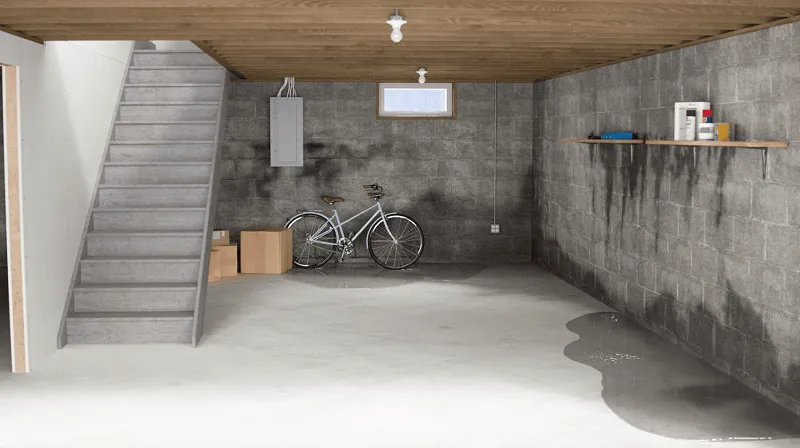
Signs You Need Basement Waterproofing
Not every damp basement needs a full system, but these signs mean it is time for a professional inspection:
Puddles or pooling water mean water is getting in faster than it can drain.
A wet line around the edge of the floor often points to hydrostatic pressure.
Cracks give water a direct path inside. Cracks that widen, step or bow can be structural; see our foundation repair services.
This is efflorescence, mineral deposits left behind as water pushes through masonry.
Moisture is moving through the walls or hanging in the air.
Our Basement Waterproofing Services
We start with the source of the water, then recommend the system that fits your home. Many basements need a combination of the solutions below.
Interior French Drain Systems
An interior French drain runs along the inside perimeter of the basement, below the floor. It collects water at the floor-wall joint before it reaches your floor and carries it to a sump pump. It is one of the most common fixes for basements that leak at the cove joint or through block walls. Read how interior French drains work in NJ homes.
Sump Pump Installation and Battery Backup
The sump pump moves collected water out and away from the house. We install new pumps, replace worn ones, and add battery backup so the system keeps working when a storm knocks out power. Compare options in our guides to the best sump pumps for basements and sump pump backup power.
Exterior Waterproofing and Outside Drainage
Some problems are best handled outside the foundation. For outside drainage, we cut an individual slot with a trencher and install fabric-covered rigid drain tile that diverts water away from the house. Where the foundation wall itself needs protection, exterior waterproofing membranes are another option. See interior vs. exterior waterproofing for how we decide.
Crack Sealing and Wall Waterproofing
Non-structural cracks in poured concrete walls can be sealed to stop seepage. We also explain why waterproofing paints often fail as a long-term fix. If a crack is a sign of wall movement, our team will address it through foundation repair.
Humidity Control and Crawl Space Solutions
A basement can be damp without visible leaks. Ventilation and dehumidification help control the moisture that leads to odors and mold growth. Learn more about basement humidity control. If your home has a crawl space, compare crawl space encapsulation vs. a vapor barrier. For mold already present, visit our basement mold solutions page.
Interior or Exterior Waterproofing: Which Do You Need?
There is no single answer for every home. Interior systems manage water that reaches the foundation and are often less disruptive to landscaping, driveways and patios. Exterior work addresses water before it touches the wall but requires excavation. The right choice depends on where the water enters, your foundation type, your yard and your budget. During the inspection we show you what we found and explain the options before you decide. For a deeper look, read about the types of basement waterproofing systems.
How Our Waterproofing Process Works
- Inspection. We look at the walls, floor, cracks, window wells, sump pit, grading and downspouts to find where water enters.
- Clear recommendation and estimate. You get a plain-language explanation of the problem, the system we recommend and a clear estimate, with no pressure to decide on the spot.
- Preparation. Our crew protects your belongings and the work area before any digging or cutting starts.
- Installation. Our own W2 employees install the system. We do not hand your home to subcontractors.
- Cleanup and walkthrough. We clean up, walk you through how the system works and explain what your guarantee covers.
Why Homeowners Choose A-1 Basement Solutions
- Our own employees. All work is done by trusted W2 employees, never subcontractors.
- Transferable Life-of-the-House Guarantee. Our guarantee can transfer to the next owner if you sell. We review exactly what it covers for your system before work begins.
- Local and easy to reach. Our office is in Garwood, in Union County, and we know the soils, storms and housing stock of the area.
- Honest, clear communication. We explain what we found, what we recommend and why.
- Clean, respectful work. We treat your home and your basement with care.
- Licensed in New Jersey. NJ HIC License #13VH05563200.
See what neighbors say in our Google reviews.

What Does Basement Waterproofing Cost?
Cost depends on the size of the basement, the system needed, wall and floor conditions, sump pump requirements and access. We give you a clear estimate after the inspection. For general ranges and what drives the price, read our basement waterproofing cost guide. If you want to spread out the cost, see our article on waterproofing financing options.
Basement Waterproofing Across Northern & Central New Jersey
A-1 Basement Solutions is based in Garwood and serves homeowners in ten New Jersey counties: Bergen, Essex, Hunterdon, Middlesex, Morris, Passaic, Somerset, Sussex, Union and Warren.
Close to our Garwood office: Garwood, Cranford, Westfield, Clark, Scotch Plains, Fanwood, Mountainside, Springfield, New Providence, Berkeley Heights and Long Hill.
Also serving: Summit, Millburn, Short Hills, Chatham, Madison, Basking Ridge, Bernardsville, Warren Township, Bridgewater, Somerville, Raritan, Hillsborough, Piscataway, Dunellen, Edison and Metuchen.
Don’t see your town? Call 908-322-1313 and we’ll let you know if we cover your area.
Basement Waterproofing FAQs
Will a sump pump alone fix my wet basement?
Sometimes, but usually not. A sump pump only removes water that reaches it. Most leaking basements need a drainage system, such as an interior French drain, to collect water and send it to the pump. Read French drain vs. sump pump.
Can I waterproof my basement with sealant or paint?
Waterproofing paints and sealers can reduce minor dampness, but they rarely stop water under pressure. Water pushing from the soil side tends to break the coating down over time.
Is basement waterproofing worth it?
For most homes with recurring water, yes. Waterproofing helps protect your foundation, stored belongings and indoor air from ongoing moisture. Read is waterproofing a basement worth it.
Does waterproofing prevent basement mold?
Mold needs moisture. Keeping water out and controlling humidity removes a main condition mold needs to grow. If mold is already present, it should be addressed separately through mold solutions.
Why is my basement still wet after waterproofing?
Common causes include a failed or undersized sump pump, clogged drains, grading problems or a leak source the original system did not address. See why a basement can stay wet after waterproofing.
What happens during a waterproofing inspection?
We check where water enters, look at the foundation, sump pit, window wells, grading and downspouts, and then explain what we found and what we recommend.
Is a Life-of-the-House Guarantee transferable?
Yes. Our Life-of-the-House Guarantee is transferable. We’ll explain exactly what it covers for your system before work begins.
Get a Dry Basement You Can Count On
If you’re seeing water, dampness or musty odors, schedule an inspection with A-1 Basement Solutions. We’ll find the source, explain your options and give you a clear estimate.