
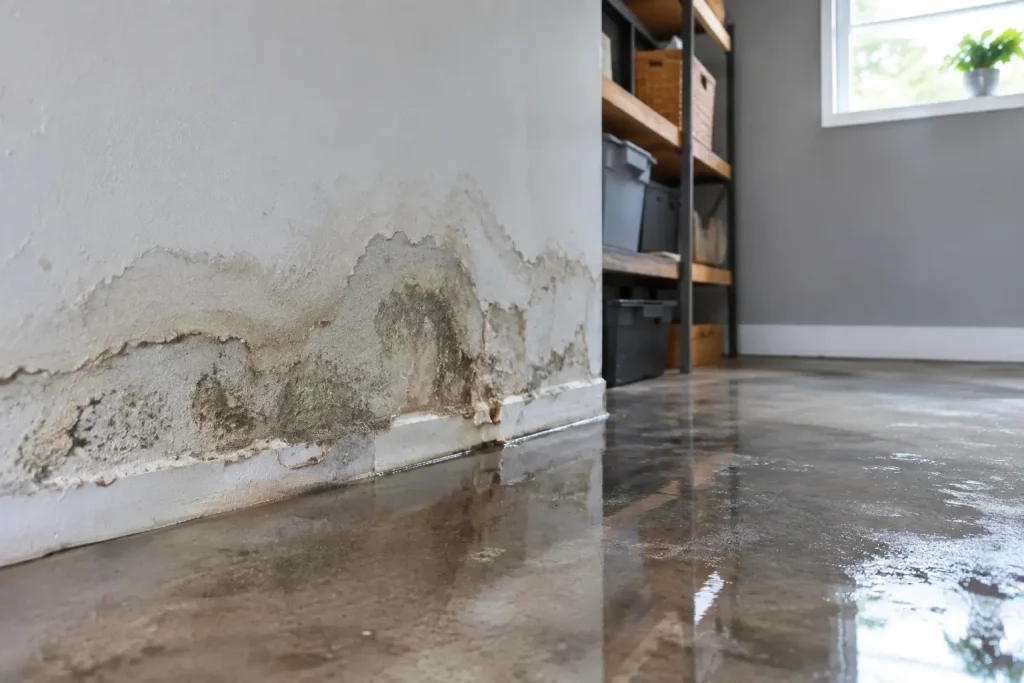
A basement can look dry for months, then take on water after one hard rain. Often, the change is not a mystery or a sudden failure inside the house. It is the result of water building up in the soil around the foundation. Understanding hydrostatic pressure damage gives New Jersey homeowners a clearer way to assess wet basement symptoms, protect their homes, and avoid repairs that only address the visible water.
What Hydrostatic Pressure Means for Your Foundation
Hydrostatic pressure is the force groundwater creates as it presses against your foundation walls and floor. Soil absorbs rainwater, melting snow, and runoff. When that soil becomes saturated, the water has weight. It naturally pushes toward any available path, including small cracks, porous concrete, wall-floor joints, and utility openings.
This is especially common in New Jersey, where seasonal rain, snowmelt, high water tables, and clay-heavy soils can keep moisture close to the foundation. A home does not need to sit beside a lake to experience the problem. Water can collect below ground after repeated storms, poorly managed roof runoff, or grading that sends surface water toward the house.
Concrete is strong, but it is not waterproof by itself. Over time, persistent pressure can expose weak points that were never noticeable during drier weather. That is why a homeowner may see water in one corner of the basement one year and along an entire wall the next.
How Hydrostatic Pressure Damage Shows Up
Hydrostatic pressure does not always announce itself with standing water. In many homes, the early signs are quieter. A damp smell, white powder on the wall, peeling paint, or a dark line along the basement floor can all point to moisture moving through or around the foundation.
The white, chalky material sometimes found on concrete is called efflorescence. It occurs when moisture travels through masonry and leaves mineral deposits behind as it evaporates. It is not the main problem, but it is evidence that water is moving where it should not.
As pressure continues, you may notice cracks in foundation walls or at the cove joint, where the wall meets the floor. Hairline cracks are not automatically a structural emergency, but they deserve a professional evaluation if they are wet, growing, or accompanied by bowing, displacement, or recurring leakage. Water can also enter around pipes, basement windows, and unfinished wall penetrations.
In more advanced cases, hydrostatic pressure can contribute to a wet slab, damp carpeting, damaged finished walls, mold growth, rusted appliances, and deteriorated stored belongings. A sump pump that runs frequently may be doing its job, but frequent cycling can also be a sign that the drainage system is handling a significant amount of groundwater.
Why Water Pressure Can Become a Structural Concern
Water pressure is primarily a moisture problem at first. Left unresolved, it can become a foundation concern. Constant saturation adds lateral force against below-grade walls. If the soil outside the home expands when wet, it can add even more pressure.
Not every crack means the wall is failing, and not every wet basement requires foundation repair. The right solution depends on what the inspection shows. A localized leak through a crack calls for a different approach than a wall that is bowing inward or a floor that is becoming wet across several areas.
The key is not to separate water control from structural protection. If a foundation wall is under unusual pressure, simply sealing the inside surface may not relieve the force causing the issue. Likewise, repairing a crack without correcting the water conditions outside or below the foundation can leave the home vulnerable to another leak.
The Difference Between Surface Water and Groundwater
Homeowners often hear that they need better drainage, but drainage can mean several different things. Surface water comes from rain flowing across the yard, overflowing gutters, clogged downspouts, or sloped landscaping. Groundwater sits or moves below the surface after the surrounding soil becomes saturated.
Improving gutters, extending downspouts, and correcting negative grading can make a real difference when surface runoff is the main source of water. Those steps should not be overlooked. However, they may not solve a groundwater issue below the slab or beside the footing.
An interior French drain system is designed to collect water that reaches the foundation area and direct it to a sump pump for discharge away from the home. In some situations, an exterior waterproofing approach is appropriate, particularly when the source and condition of the foundation wall call for it. There is no honest one-size-fits-all answer. A proper inspection should identify where the water is coming from, how it is entering, and whether there are signs of structural movement.
Understanding Hydrostatic Pressure Damage Before Finishing a Basement
Finishing a basement can add useful living space, but it should not hide an unresolved water problem. New flooring, drywall, and paint can make the room look complete while moisture continues behind the walls. That can lead to damaged materials, unpleasant odors, and mold conditions that are harder and more expensive to address later.
Before beginning a basement remodeling project, look for past water marks, musty odors, efflorescence, cracks, and signs of prior patching. Ask whether the sump pump has been tested and whether there is a backup plan during a power outage. A basement that has been dry recently is encouraging, but a long-term assessment should account for heavy rain events and seasonal groundwater conditions.
Waterproofing first gives the finished space a better chance of staying healthy and usable. It also provides a clearer view of the foundation before walls and flooring cover it.
What a Professional Inspection Should Include
A useful waterproofing inspection should be straightforward, not a pressure-filled sales visit. The goal is to understand the conditions at your home and explain practical options in plain language.
A qualified specialist will typically examine the basement walls and floor, visible cracks, the wall-floor joint, sump pump operation, signs of mold or moisture damage, exterior grading, gutter discharge, and any drainage concerns around the property. They should also ask when the water appears. Does it happen during heavy rain, days after a storm, only in spring, or year-round? The timing often helps identify the source.
Just as important, the recommended scope should match the evidence. If the problem is limited, the solution should be limited. If the inspection finds recurring groundwater entry or structural concerns, the recommendation should explain why a more complete system is warranted.
At A-1 Basement Solutions, that means focusing on the condition of the home rather than using fear to sell a larger project. Homeowners deserve clear communication, clean work, and an explanation of what the repair is designed to accomplish.
Can You Prevent Hydrostatic Pressure Problems?
You cannot stop rain or eliminate groundwater around every home, but you can reduce the conditions that allow water to build up against the foundation. Keep gutters clean, make sure downspouts discharge well away from the house, and watch for soil that has settled and now slopes toward the foundation. Avoid piling mulch or soil high against siding and foundation walls.
Inside, check your sump pump periodically and confirm that its discharge line is clear and directed away from the house. If your basement has a history of water entry, a battery backup can provide added protection when storms cause power outages. It is also wise to keep stored items off the floor until the moisture issue has been professionally addressed.
These maintenance steps are worthwhile, but they are not substitutes for a drainage system when groundwater is already reaching the basement. The best approach is the one that controls the actual source of the water.
When to Act
A single puddle after an unusual storm may not mean your foundation is in immediate danger. Still, recurring water, a worsening crack, a musty smell, or a sump pump that cannot keep up should not be treated as normal basement behavior. Moisture problems rarely improve on their own, and waiting often allows a manageable repair to become a larger restoration project.
A dry basement is not just about protecting boxes in storage. It protects indoor air quality, usable space, foundation materials, and the long-term value of the home. When water starts pressing where it does not belong, the most reassuring next step is a clear inspection and a solution built for the conditions beneath your home.