
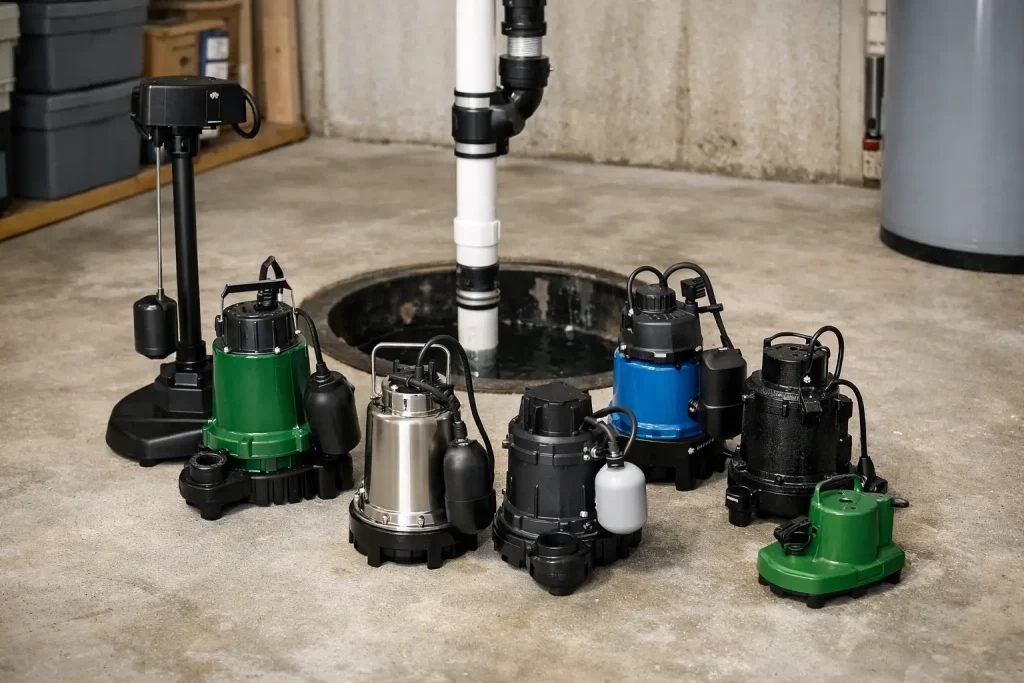
A sump pump usually gets ignored until the night your basement starts taking on water. That is why choosing among the best sump pumps for basements is less about brand hype and more about matching the right system to the way your home actually handles groundwater, storm runoff, and power outages.
For New Jersey homeowners, that matters. Heavy rain, high water tables, older foundations, and sudden storms can all push water toward the lowest part of the house. A sump pump is often the last line of defense, but it only works well if the pump is sized correctly, installed properly, and supported by a drainage system that moves water where it needs to go.
What makes the best sump pumps for basements?
The best sump pump is not always the most expensive one on the shelf. In many homes, the right choice comes down to reliability, switch design, pumping capacity, and whether the unit can keep working when the power goes out.
A good basement sump pump should turn on consistently, move water fast enough to stay ahead of incoming flow, and hold up over time in a damp environment. Cast iron pumps often last longer and run cooler than lighter plastic models, but they also cost more. Thermoplastic units can still be a good fit for lighter-duty situations, especially in homes with occasional seepage rather than repeated heavy flooding.
The float switch matters more than many homeowners realize. A poor-quality switch is one of the most common failure points. Tethered floats can work well in larger basins, while vertical switches tend to fit tighter pits. Electronic switches offer compact performance, but some homeowners prefer mechanical options because they are simpler to diagnose and replace.
The main types of basement sump pumps
Submersible sump pumps
Submersible pumps sit inside the sump pit and are designed to operate underwater. For most finished or frequently used basements, this is the preferred option because it is quieter and keeps the system more contained.
These pumps are usually the best fit when you want stronger performance and less noise. They also tend to be better for homes that deal with regular groundwater entry through a perimeter drain system. The trade-off is cost. Submersible models are generally more expensive than pedestal pumps, and because they sit in water, maintenance access is a little less convenient.
Pedestal sump pumps
A pedestal pump keeps the motor above the pit, with only the intake base sitting in the water. This design often makes the pump easier to service and can extend motor life in some cases.
Pedestal pumps can make sense in unfinished basements or in homes where noise is less of a concern. They are usually more affordable, but they are also louder and typically less ideal for finished spaces. If appearance matters or you want a cleaner, lower-profile setup, a pedestal unit may feel like the wrong fit.
Battery backup sump pumps
A battery backup pump is not a luxury in many homes. It is protection against the exact moment your primary pump is most likely to be tested – during a major storm that knocks out power.
If your basement has flooded before, or your area loses electricity during heavy weather, backup power should be part of the conversation. Some systems use a separate DC-powered pump mounted alongside the primary. Others are packaged as integrated systems. Either way, a backup pump gives you a second layer of protection when the primary pump fails or cannot keep up.
Combination sump pump systems
A combo system pairs a primary pump with a battery backup in one coordinated setup. For many homeowners, this is the strongest overall choice because it addresses both normal water conditions and emergency scenarios.
It costs more upfront, but it also reduces the risk of relying on a single point of failure. If you are finishing a basement, storing valuables below grade, or protecting a home with recurring seepage, a combo system is often the smartest long-term investment.
7 best sump pumps for basements by use case
1. Best overall for most homes: cast iron submersible pump
For a typical residential basement, a cast iron submersible pump in the one-third to one-half horsepower range is often the best all-around option. It is strong enough for many common basement water problems, quiet enough for living spaces, and durable enough for long-term use.
This type of pump works especially well when paired with an interior drainage system. If your basement takes on steady groundwater during storms, this is usually the baseline homeowners should consider first.
2. Best for finished basements: quiet submersible system with alarm
A finished basement needs more than raw pumping power. It needs low noise, dependable activation, and an alert system that tells you when something is wrong.
A submersible system with a high-water alarm is a strong fit here. The alarm gives you early warning before water reaches flooring, drywall, or stored belongings. That extra notice can prevent a much larger cleanup.
3. Best for storm-prone areas: combo primary and battery backup system
If your neighborhood loses power during bad weather, a combo system deserves serious consideration. A primary AC pump handles day-to-day drainage, while the battery backup takes over when electricity fails.
This setup is one of the best sump pumps for basements exposed to heavy rain and outage risk. It is not the cheapest route, but it is often the most dependable one when conditions are at their worst.
4. Best budget option: pedestal pump for unfinished basements
A pedestal pump can still be a practical solution when the basement is unfinished and the water volume is moderate. It is usually less expensive to buy and easier to access for repairs.
The trade-off is noise and a less compact design. If your goal is basic protection in a utility basement, that may be perfectly acceptable. If the space is used daily, most homeowners prefer something quieter.
5. Best for high water volume: one-half horsepower or higher submersible pump
Some homes do not have occasional seepage. They have serious water pressure around the foundation and a sump basin that fills fast during storms. In that situation, a more powerful pump may be needed.
A one-half horsepower or larger submersible pump can move significantly more water, but bigger is not always better. Oversizing without considering pit size, discharge line design, and actual water conditions can lead to short cycling and extra wear. The right answer depends on how your drainage system performs as a whole.
6. Best for tight sump pits: compact pump with vertical float switch
Not every sump basin has room for a wide float arm or bulky backup setup. In tighter pits, a compact pump with a vertical float switch can prevent switch interference and improve reliability.
This is one of those details homeowners rarely think about until a pump jams against the pit wall and fails to turn on. Proper fit matters just as much as motor strength.
7. Best for peace of mind: professionally installed system with monitoring
The best sump pump on paper can still fail if it is installed poorly. Improper check valves, undersized discharge piping, clogged drain connections, and bad basin placement can all limit performance.
That is why, for many households, the best option is not just a pump model. It is a professionally installed system with testing, alarm features, and a clear maintenance plan. At A-1 Basement Solutions, that is the difference we see every day between temporary fixes and real basement protection.
How to choose the right sump pump for your basement
Start with your actual water problem. Is this occasional seepage after extreme rain, or does your basement take on water several times a year? A home with minor moisture issues may do well with a standard primary pump. A home with repeated flooding risk usually needs a stronger primary unit and backup protection.
Next, think about what is at stake. If the basement is unfinished and mainly used for utilities, your tolerance for noise and risk may be different. If the space is finished, includes storage, or sits below bedrooms or living areas, reliability becomes much more important.
You should also consider the full drainage path. A sump pump is only one part of the system. If water is not being collected properly through a French drain or perimeter waterproofing system, even a quality pump can struggle. The discharge line also needs to send water far enough away from the foundation so it does not cycle back toward the house.
Common mistakes homeowners make
One common mistake is buying based on horsepower alone. More power sounds better, but the wrong size can create performance issues instead of solving them.
Another is skipping backup protection. Homeowners often assume the primary pump is enough, right up until a storm knocks out power. That is when basement flooding tends to get expensive fast.
Maintenance also gets overlooked. Sump pumps should be inspected, cleaned, and tested. Debris in the pit, a stuck float, or a failing battery can turn a reliable system into a false sense of security.
When a sump pump is not enough by itself
A sump pump can remove collected water, but it does not stop water from pushing against your foundation. If hydrostatic pressure is high, or if water is entering through wall-floor joints, cracks, or cove areas, the pump should usually be part of a larger waterproofing plan.
That may include interior drainage, exterior grading corrections, downspout extensions, crawl space moisture control, or foundation repair. Homeowners sometimes hope a new pump alone will solve everything. Sometimes it will. Often, the real fix is a properly designed system that addresses the source of the water as well as the removal of it.
The right sump pump should make your basement more predictable, not leave you wondering what will happen in the next storm. If you are weighing options, focus less on marketing claims and more on fit, backup protection, and installation quality. A dry basement usually comes from a system that was designed honestly, installed correctly, and built to keep working when you need it most.