
A basement that smells damp after every heavy rain is not just annoying. It is often the first sign that water is finding a path into your home. When homeowners start researching types of basement waterproofing systems, they usually discover something frustrating fast: there is no single fix for every basement.
That is the honest answer. The right system depends on where the water is coming from, how your foundation was built, what the grading looks like outside, and whether the problem is occasional seepage or a basement that takes on water every storm. A good waterproofing plan matches the cause, not just the symptom.
Understanding the types of basement waterproofing systems
Most waterproofing systems fall into two broad categories: exterior systems that stop water before it reaches the foundation, and interior systems that manage water once it gets to the wall or floor line. Neither approach is automatically better in every situation. The best choice depends on access, budget, the age of the home, and how severe the water issue has become.
Many homes also need a combination of methods. For example, poor grading might push water toward the house, while hydrostatic pressure under the slab forces it up through floor cracks. In that case, one repair alone may not solve the full problem.
Exterior waterproofing systems
Exterior waterproofing is designed to keep groundwater and surface water away from the foundation walls. This is often the most direct way to address water intrusion, especially when the problem starts outside with saturated soil pressing against the home.
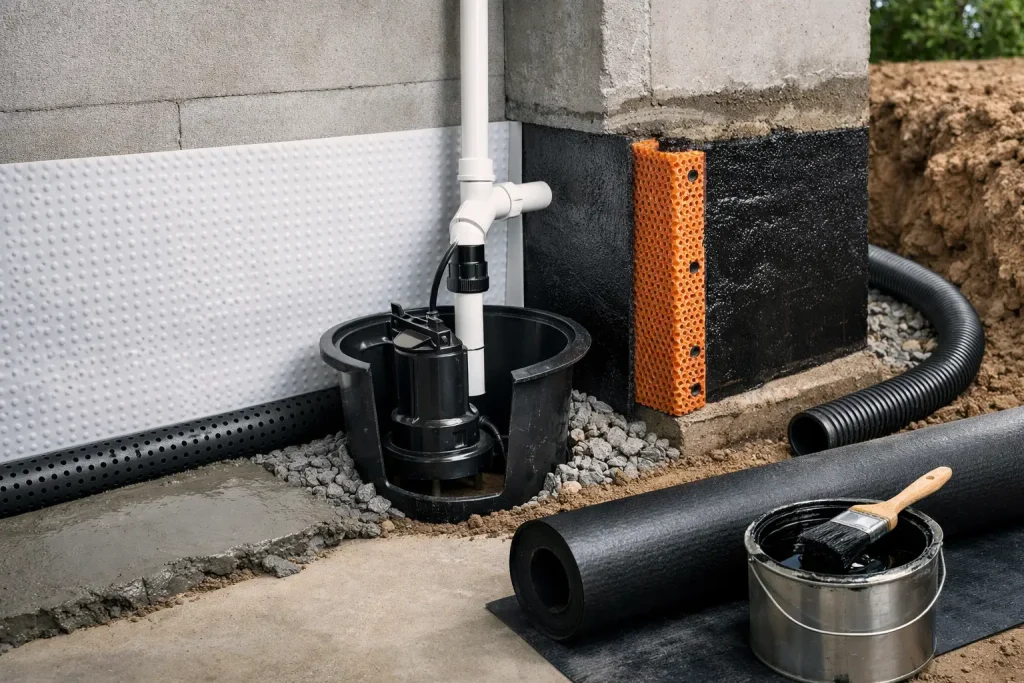
One common exterior approach involves excavating around the foundation, applying a waterproof membrane to the outside wall, and installing drainage board or protection layers. This creates a barrier that helps prevent moisture from entering through porous block, cracks, or mortar joints. Done correctly, it is a strong long-term solution, but it is also one of the more labor-intensive options because it requires digging around the house.
Another exterior system is footing drainage, often called an exterior French drain or perimeter drain. This system collects water near the foundation footing and directs it away before pressure builds against the wall. It works well when groundwater is the main issue, but performance depends heavily on proper pitch, clean stone backfill, and a reliable discharge point.
Exterior systems can be very effective, but they are not always practical. Landscaping, patios, walkways, porches, and property line limitations can make full excavation difficult or expensive. That is why many homeowners end up considering interior drainage instead.
Interior drainage systems
Interior drainage systems are among the most common basement waterproofing solutions for existing homes. Rather than trying to block every drop of water outside, these systems collect water at the point where it enters and move it safely away from the basement.
A typical interior perimeter drainage system is installed along the inside edge of the basement floor, near the foundation wall. Water that seeps down the wall or rises from below the slab enters the drain channel and is routed to a sump pump basin. Once there, the pump discharges the water outside and away from the home.
For many homeowners, this is the most practical solution because it avoids major exterior excavation and addresses hydrostatic pressure directly. It is especially useful when water enters at the wall-floor joint, through cove seepage, or up through floor cracks. The trade-off is that it manages water rather than preventing all soil moisture from reaching the outside wall.
When installed properly, an interior system can be clean, dependable, and highly effective. The quality of the installation matters. Drain placement, wall treatment details, sump sizing, and discharge design all affect whether the system solves the problem for the long term.
Sump pump systems and why they matter
A drainage system is only as good as its discharge method. That is where the sump pump comes in. If your waterproofing plan includes collecting water below the floor, you need a pump system that can move that water out reliably.
Primary sump pumps handle normal water loads and are a key part of many interior waterproofing systems. In homes with frequent groundwater issues, a properly sized and professionally installed sump pump is not optional. It is central to the entire system.
Backup sump pumps are also worth serious consideration. Power outages often happen during major storms, which is exactly when water intrusion risk is highest. A battery backup can keep the system running when the main pump loses power or becomes overwhelmed. For homeowners who have finished basements, stored valuables, or a history of flooding, backup protection adds real peace of mind.
A sump system should never be treated like a generic add-on. Pump quality, basin design, check valves, and discharge routing all matter. If any of those pieces are poorly handled, the whole waterproofing strategy can fall short.
Crack repair and wall sealing systems
Not every basement water issue requires a full perimeter system. In some cases, water enters through a specific crack, pipe penetration, or isolated wall defect. When the source is limited and clearly identified, targeted repair may be the right move.
Foundation crack repair is often done with epoxy or polyurethane injection, depending on whether the concern is structural stabilization, water stoppage, or both. These repairs can be effective when a poured concrete wall has one or a few active cracks that leak during rain.
Wall sealants and vapor barriers also play a role, but homeowners should understand their limits. Interior waterproof coatings can help reduce moisture transmission through masonry walls, and vapor barriers can direct wall seepage into an interior drain system. But coatings alone usually do not solve significant water pressure from the outside. If a contractor presents paint-on waterproofing as the whole answer for a consistently wet basement, that deserves a closer look.
Drainage correction outside the home
Some of the most important basement waterproofing work happens above ground. If roof runoff, yard slope, or hardscape design is sending water toward the foundation, even a well-built basement system can be forced to handle more than it should.
Gutter and downspout extensions are simple but often overlooked. When roof water dumps next to the house, the soil around the foundation becomes saturated fast. Regrading can also help by creating positive slope away from the home, reducing pooling along the wall.
In some cases, surface drains, channel drains, or yard drainage improvements are needed to intercept water before it reaches the basement wall. These are not always marketed as one of the main types of basement waterproofing systems, but they are often part of the real solution. Waterproofing works best when the whole water-management picture is addressed.
Which system is right for your basement?
The honest answer is: it depends on the failure point.
If water is pushing through foundation walls below grade, exterior waterproofing may be the most direct fix. If the basement takes on water at the cove joint or through the slab, an interior perimeter drain and sump pump system is often more practical. If the issue is isolated to one wall crack, targeted repair might be enough. And if outside drainage is poor, correcting grade and runoff may be just as important as anything installed inside the basement.
This is why a proper inspection matters. You want someone who can tell the difference between condensation, seepage, hydrostatic pressure, structural cracking, and surface drainage problems. Those issues can look similar to a homeowner, but they do not call for the same repair.
At A-1 Basement Solutions, that solutions-first mindset matters because homeowners deserve a recommendation based on the house, not a one-size-fits-all sales pitch. The best waterproofing system is the one that actually matches the source of the water and holds up over time.
What homeowners should ask before choosing a system
Before agreeing to any waterproofing work, ask what is causing the water intrusion, why the proposed system fits that cause, and whether any outside drainage corrections are also needed. Ask how the water will be discharged, what maintenance the system requires, and what kind of warranty comes with the work.
Those questions help separate real diagnosis from guesswork. They also protect you from paying for a partial fix when the basement really needs a more complete plan.
A dry basement is not about fancy terminology or the most expensive package. It is about clear answers, solid workmanship, and a system built for the way your home actually handles water. If your basement has been sending warning signs, the best next step is to have the problem evaluated before a damp corner turns into structural damage, mold growth, or a flooded lower level.