
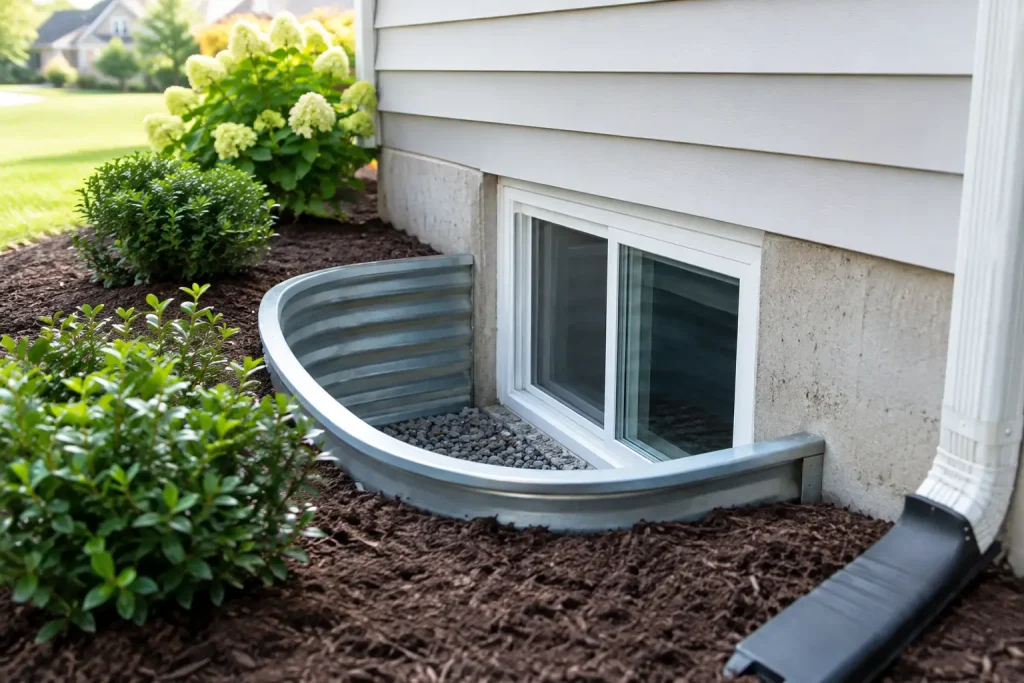
A basement window well can fill quietly during a hard New Jersey rain, then send water through the window frame or foundation opening before anyone notices. Effective window well leak prevention is not just about placing a cover over the well. It means controlling roof runoff, surface grading, drainage at the bottom of the well, and the condition of the basement window itself.
When those pieces work together, a window well can protect a below-grade window and provide a safe escape route. When even one fails, it can become a direct path for water into the basement. The good news is that many problems are visible and correctable before they lead to damaged finishes, mold growth, or a recurring wet-basement problem.
Why Window Wells Start Leaking
A window well is below the surrounding grade, so it naturally collects whatever water is directed toward it. During a storm, that may include rainfall, runoff from a sloped yard, overflowing gutters, or water discharged too close to the foundation by a downspout. If the well drain is blocked or missing, the water level rises until it reaches the window.
The window itself also matters. A basement window with worn weatherstripping, failed caulk, a cracked frame, or an improperly sealed installation can leak even when the well is not full. In other cases, water enters through cracks or gaps in the foundation wall around the window opening.
Homeowners sometimes assume a window well cover will solve every issue. A cover can reduce direct rainfall and keep leaves out, but it cannot correct poor grading, a failed drain, or water pressure building in the soil around the foundation. Covers are useful protection, not a substitute for a drainage plan.
Start With the Water Above the Window Well
The fastest way to understand a leak is to look at where rainwater travels before it reaches the well. Start with the roofline. Gutters should be clean, securely pitched, and free of overflow near the foundation. Downspouts should carry water well away from the house, not release it beside a basement window.
Next, inspect the soil around the foundation. The ground should slope away from the home so water drains outward rather than settling beside the wall. Mulch, landscaping borders, decorative stone, and added topsoil can slowly change the grade over time. A yard that once shed water properly may now direct it straight into the window well.
Pay close attention after a storm. Standing water near the foundation, washed-out soil, or a stream of water flowing toward the well are clear warning signs. Addressing those conditions may stop a minor leak without any work inside the basement.
Check the Window Well Drain
Many window wells have a drain at the bottom, often connected to the footing drain system around the foundation. Its job is simple: collect water and move it away before it rises to the window. Leaves, mulch, dirt, gravel, and roof runoff can clog that drain over time.
Remove loose debris from the well and look for the drain opening. If it is covered by soil or sediment, carefully clear the area without damaging the drain pipe. The bottom of the well should not be packed with dense soil that holds water against the foundation. Clean gravel can help water move toward the drain, but gravel alone will not fix a pipe that is blocked, crushed, disconnected, or draining into an already overloaded system.
A simple observation can tell you a great deal. After rainfall, does water disappear from the well within a reasonable time, or does it remain pooled for hours or days? Persistent standing water usually points to a drainage issue that needs a closer inspection.
Be careful with aggressive drain-cleaning methods. Forcing rods, high-pressure water, or harsh chemicals into an unknown drain line can cause damage or push a blockage farther into the system. If the drain repeatedly backs up, a professional assessment is the more reliable path.
Choose a Cover That Fits the Well
A properly fitted window well cover is a practical part of window well leak prevention, especially under trees or near roof valleys where debris collects quickly. It keeps out leaves, snow, small animals, and much of the direct rainfall that would otherwise land in the well.
The right cover should be strong enough to handle normal weather conditions, secured so wind cannot lift it, and shaped to shed water away from the house. It should also leave enough clearance for the window to operate as intended. If the window is an emergency egress window, do not install a cover that cannot be opened quickly from inside.
There is a trade-off with tightly enclosed covers. While they keep out more debris, they can trap humidity if the well has limited airflow or existing moisture problems. Clear covers also show dirt and leaf buildup easily, which is helpful, but they need occasional cleaning to continue shedding water properly.
A cover should not sit flat against the window or create a low point where water can pond. If a cover routinely fills with puddled water, the fit, slope, or surrounding grade needs attention.
Inspect the Window and Foundation Opening
If the well stays relatively dry but water still appears inside, inspect the window assembly. Look for cracked glass, deteriorated seals, gaps around the frame, damaged caulk, or signs that the window has shifted. Water staining on the interior trim, bubbling paint, and damp insulation around the opening can help identify the entry point.
Caulk and weatherstripping have a role, but they are maintenance materials, not permanent answers to exterior drainage failure. Re-caulking a window while water continues to pool against it may temporarily hide the symptom while the underlying problem worsens.
The foundation wall around the window should also be examined for cracks, separated mortar, or gaps where an old window was replaced without proper sealing. Small cracks can become active during heavy rain when saturated soil creates hydrostatic pressure against the foundation. That type of water intrusion often calls for more than a surface repair.
When a Window Well Leak Signals a Bigger Basement Problem
A leak limited to one well may have a straightforward cause, such as a clogged drain or a short downspout extension. But repeated water at a basement window can also reveal a broader drainage problem around the home.
Consider a professional inspection if water returns after basic cleanup, if several areas of the basement are damp, or if the well fills despite a dry-looking yard. Other warning signs include white mineral deposits on foundation walls, musty odors, mold growth, peeling paint, visible wall cracks, or a sump pump that runs frequently during storms.
In these cases, the right repair depends on how the home handles groundwater and surface water as a whole. A foundation drainage system, interior French drain, sump pump, exterior grading correction, window replacement, or targeted foundation repair may be appropriate. No two homes manage water exactly the same way, which is why a thorough inspection should come before a major recommendation.
A Seasonal Routine That Prevents Surprises
Window wells do not need constant attention, but they should be part of regular home maintenance. Check them in spring after snowmelt and heavy rains, again in fall after leaves begin to drop, and whenever you notice moisture in the basement.
A useful routine includes clearing debris from the well, confirming the cover is secure, checking that the drain area is open, and watching how nearby downspouts discharge. Walk around the foundation during or shortly after a storm when possible. Water patterns are much easier to diagnose while they are happening than days later.
Avoid stacking firewood, bags of mulch, planters, or dense shrubs against the window well. These items can block drainage, hide developing problems, and make it harder to inspect the foundation. Keep the area accessible and let water have a clear path away from the house.
For homeowners who are tired of guessing why a basement window keeps leaking, A-1 Basement Solutions takes a solutions-first approach. A clear inspection can separate a simple maintenance issue from a drainage or foundation concern that needs lasting repair. The goal is not to add work that is unnecessary. It is to stop water at the source and help you feel confident when the next hard rain arrives.