
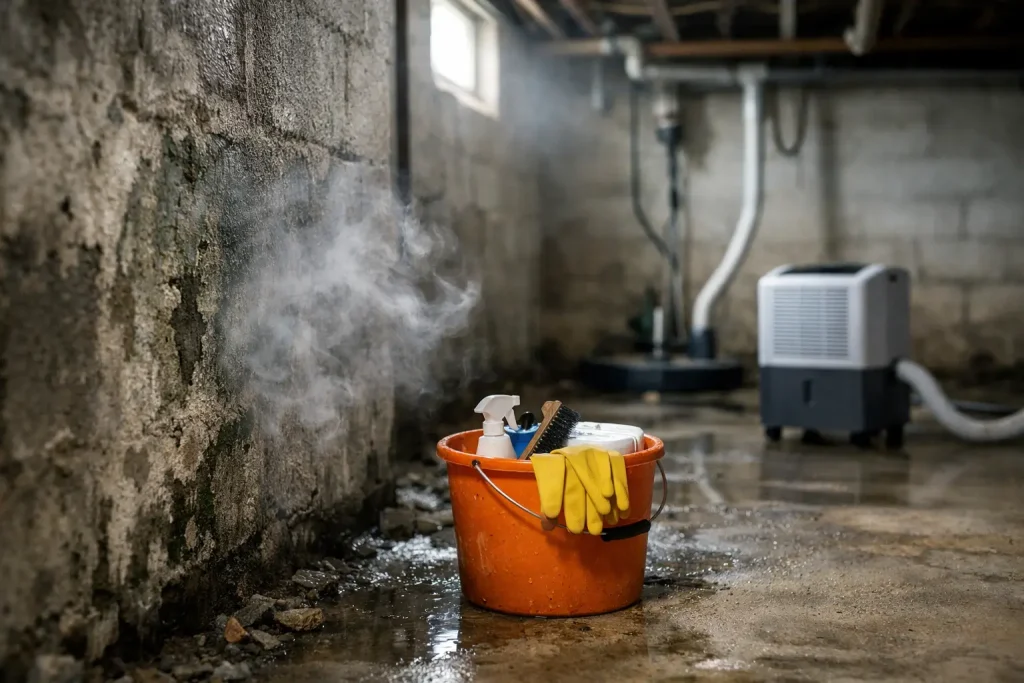
That stale, earthy odor you notice when you open the basement door usually is not random. In most homes, musty basement smell causes point back to one issue – moisture where it should not be. Sometimes it is a minor humidity problem. Other times, it is the first sign of water intrusion, mold growth, or air circulation issues that can affect the rest of the house.
A musty smell does not always mean you have standing water on the floor. In fact, some of the most persistent basement odors come from hidden dampness behind finished walls, under flooring, inside insulation, or around foundation edges. If the smell keeps coming back after cleaning, the source is still active.
The most common musty basement smell causes
Basements are naturally more vulnerable to damp conditions because they sit below grade and are surrounded by soil. When outside water pressure builds up or indoor humidity stays high, moisture finds a place to settle. Once that happens, organic materials start absorbing it, and odors follow.
High humidity and condensation
One of the most common causes is simply excess humidity. Basements tend to stay cooler than the rest of the home, especially in summer. When warm, humid air enters and hits cool surfaces such as concrete walls, pipes, or floors, condensation forms. That thin layer of moisture may not look serious, but over time it feeds mildew and creates that familiar musty odor.
This is why some homeowners notice the smell more during humid months, even if they have never had obvious flooding. In that case, the issue may be air moisture rather than direct water entry. A dehumidifier can help, but if humidity is consistently high, it is worth asking why the basement is holding that moisture in the first place.
Water seepage through the foundation
Another major source is water entering through foundation walls or floor joints. Small cracks, porous concrete, and cove joints where the wall meets the floor can all allow groundwater to seep in. You may not see puddles every time it rains. In many basements, moisture enters slowly enough to stay hidden while still soaking materials and creating odor.
This kind of problem tends to be more than a smell issue. If outside drainage is poor or hydrostatic pressure is pushing water toward the foundation, the odor is often an early warning that the basement needs waterproofing, drainage correction, or both.
Mold and mildew growth
Mold and mildew are often part of the story, but they are usually not the root cause by themselves. They grow because moisture is present. Cardboard boxes, wood framing, drywall paper, carpeting, and dust all give them something to feed on.
Mildew often creates a lighter, stale smell, while mold can produce a stronger earthy odor. Either way, if the smell is concentrated near stored items, finished walls, or corners of the basement, hidden microbial growth may be involved. Cleaning visible spots is rarely enough if the moisture source remains active.
Wet building materials and stored contents
Basements often become storage spaces, and that can make odor problems worse. Fabric, paper, wood, and cardboard all absorb moisture from humid air. Once they stay damp long enough, they hold odors and sometimes spread them throughout the space.
This is one reason a basement can smell musty even when the concrete itself looks dry. The smell may be trapped in old rugs, furniture, shelving, or boxes stored directly on the floor. If you have had even a minor water event in the past, those materials may still be carrying the effects.
Less obvious causes homeowners miss
Some basement odor issues are not caused by one dramatic leak. They build slowly from conditions that seem minor on their own.
Poor ventilation
A closed basement with little airflow tends to trap damp, stale air. That does not create moisture by itself, but it allows humid conditions and odors to linger. Finished basements are especially prone to this because insulation, paneling, and flooring can hide the problem while also reducing natural air movement.
Opening windows is not always the answer, especially during New Jersey summers when outdoor humidity is high. In some cases, bringing in outside air actually makes the basement smell worse.
Drain or sump issues
A floor drain with a dry trap can let sewer-like or musty odors rise into the basement. A sump pump basin that is uncovered, dirty, or holding stagnant water can also contribute to unpleasant smells. These odors can be confused with mold at first because they both create a damp, unpleasant basement atmosphere.
If the smell is strongest near a drain or sump area, the source may be mechanical rather than structural. Still, it should be addressed quickly because drainage systems are part of keeping the basement dry and healthy.
Crawl space or duct contamination
In homes where the basement connects to a crawl space, utility chase, or HVAC ductwork, odors may travel from one area to another. A damp crawl space can easily make the basement smell musty. So can mold growth inside insulation near duct lines or around air handlers.
That matters because basement air does not always stay in the basement. It can move upward into living spaces, carrying odor and moisture with it.
What the smell is telling you
Homeowners sometimes treat the smell as a nuisance when it is really a symptom. Air fresheners, odor absorbers, and bleach may cover things up for a while, but they do not solve the reason the smell developed.
If the odor appears after rain, during humid weather, or in one consistent section of the basement, that pattern is useful. It helps narrow down whether the issue is outside water pressure, interior humidity, drainage failure, or hidden mold growth. The stronger and more persistent the smell, the less likely it is to be a surface-level problem.
There is also a health and property value side to this. Musty conditions can aggravate allergies, make finished spaces uncomfortable, and lead to long-term damage in framing, drywall, flooring, and stored belongings. For recent homebuyers, this kind of smell can also point to a problem that was painted over rather than properly fixed.
How to fix musty basement smell causes the right way
The right fix depends on where the moisture is coming from. That is the part many homeowners miss. A dehumidifier may help with seasonal dampness, but it will not stop foundation seepage. Mold treatment may remove growth, but it will not keep it from returning if basement walls are still taking on water.
Start with the basics. Look for signs of dampness along walls, floor edges, around windows, and near mechanical systems. Check whether stored items feel cool or slightly damp. Notice whether the smell gets worse after storms or during hot, humid days. Those details can point to the source.
If humidity is the primary issue, controlling indoor moisture may be enough. That might include better dehumidification, insulating cold pipes, and reducing moisture-holding clutter. But if there are signs of seepage, staining, peeling paint, white mineral deposits, or repeated dampness, the better long-term answer is usually a waterproofing solution designed for the foundation itself.
That can include interior drainage, a French drain system, sump pump installation, crack repair, or crawl space protection depending on the home. The goal is not just to remove odor. It is to stop moisture from getting a foothold.
When mold is part of the issue, remediation should happen alongside moisture correction, not instead of it. Otherwise, the smell often returns because the basement conditions never changed.
When professional help makes sense
Some odor problems are simple. Others are hidden behind finished walls or tied to broader drainage conditions around the home. If you have cleaned the basement, run a dehumidifier, and still notice that same smell, there is a good chance the source is deeper than surface moisture.
A professional inspection can help separate a manageable humidity issue from a foundation water problem. That matters because the repair path and cost can be very different. An honest contractor should be able to explain what is causing the odor, what is not, and which repairs are truly necessary.
At A-1 Basement Solutions, that approach matters. Homeowners deserve clear answers, not scare tactics, especially when a smell may be the first sign of a bigger moisture issue.
A musty basement is not something you have to accept as part of owning an older home. Usually, the smell is your house telling you where moisture is winning – and the sooner you find that source, the easier it is to protect the space for the long run.