
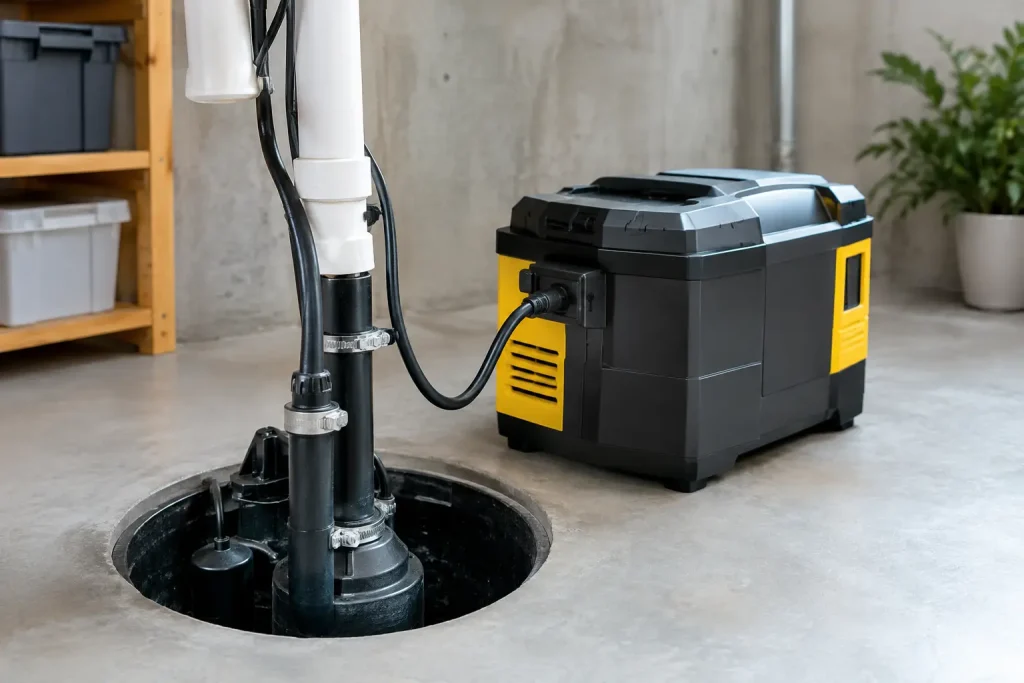
A sump pump can be doing everything right until the exact moment your home needs it most: a heavy New Jersey storm knocks out the power. Groundwater is still moving toward the basement, but the primary pump has no electricity to remove it. That is why a homeowner guide to sump pump backup planning should start with one simple fact: a standard sump pump alone is not a complete flood-prevention plan.
A backup system gives your basement drainage system another line of defense when the primary pump loses power, cannot keep up with incoming water, or fails mechanically. The right choice depends on your home’s water conditions, your plumbing, and how long outages tend to last in your area. A clear assessment beats a one-size-fits-all recommendation every time.
Why a Sump Pump Backup Matters
Your sump pump is usually the final collection point for water managed by an interior drainage system. Water entering through the foundation wall, floor joint, or below the slab is directed toward the sump basin, where the pump sends it safely away from the house. If that pump stops during a storm, water can rise in the pit and eventually spill onto the basement floor.
The result can be more than a wet carpet. Standing water may damage finished walls, flooring, stored belongings, appliances, and electrical components. It can also create conditions that support mold growth. For homeowners who have already invested in basement waterproofing, a backup protects that investment when utility power is least reliable.
Power outages are not the only concern. A primary pump can fail because of a worn switch, a jammed float, a clogged discharge line, a tripped breaker, or simply because the pump has reached the end of its service life. Some backup systems step in when the water level rises above the primary pump’s normal operating range, providing protection even if the power is still on.
Homeowner Guide to Sump Pump Backup Options
There are three common approaches: battery backup pumps, water-powered backup pumps, and standby generators. Each can be useful, but they solve the problem differently.
Battery backup sump pumps
A battery backup pump is installed in the same sump basin as the primary pump or in a nearby basin. When the power goes out or the primary pump cannot keep up, the backup pump runs on a dedicated battery. Most systems include an alarm that alerts you when the backup activates, when the battery is low, or when there is a problem with the pump.
For many New Jersey homeowners, this is the most practical option. It operates automatically, does not rely on a homeowner being present, and can provide valuable protection during short to moderate outages. The trade-off is run time. Battery capacity is limited, and a backup pump will drain its battery faster when groundwater is entering the pit quickly or continuously.
Battery type matters. A deep-cycle battery designed for sump pump use is generally a better fit than a standard car battery. The system should also have a reliable charger and a clearly visible status indicator. Homeowners should know how to read the alarm and test the system before storm season, not after the basement is at risk.
Water-powered backup pumps
Water-powered backups use your home’s municipal water supply to create suction and remove water from the sump pit. Because they do not depend on electricity or a battery, they can run as long as municipal water pressure remains available.
That can make them appealing for homes that experience lengthy outages. However, they are not suitable for every property. They require adequate water pressure, proper plumbing access, and compliance with local plumbing requirements. They also use a significant amount of municipal water while operating, which can affect water usage and cost during a major event.
A water-powered system is not an option for a home supplied by a private well if the well pump also loses power during an outage. It should be evaluated as part of the whole property, not selected based on one feature alone.
Standby generators
A permanently installed standby generator can keep the primary sump pump running during an outage while also supporting other essential systems in the home. For a homeowner who wants broader outage protection, it may be the strongest solution.
It also requires the largest investment and should be properly sized by qualified professionals. A portable generator can power a sump pump in some situations, but it is not an automatic backup. Someone must be home to set it up, it must be operated outdoors, and it must never be used in a garage, basement, or enclosed space due to carbon monoxide risk. For unattended protection during a storm, an automatic backup pump is generally the more dependable starting point.
How to Choose the Right Backup Capacity
The best backup is not necessarily the biggest battery or the most expensive equipment. It is the system that matches the amount of water your home handles.
A basement with occasional minor seepage may need a different level of protection than one with an active interior French drain system that sees regular groundwater flow. Homes in low-lying areas, properties near high water tables, and basements with a history of flooding deserve special attention. If your primary pump cycles frequently during rain, a small battery backup may provide only limited time before it needs recharging.
Pump capacity is measured in gallons per hour at a given lift, meaning the vertical distance water must travel from the pit to the discharge point. A pump that moves a high number of gallons at a low lift may move considerably less once it has to push water upward and out of the home. The discharge piping, check valve, and exterior drainage route all affect real-world performance.
This is where an inspection is useful. A qualified waterproofing specialist can look at the sump basin size, primary pump condition, discharge line, drainage system, and signs of past water intrusion. The goal is not to sell fear. It is to identify the failure points and recommend a solution that gives the home a reasonable margin of safety.
Installation Details That Make a Difference
A backup pump is only as dependable as its installation. The sump pit must be large enough to accommodate the equipment and allow floats to move freely. If floats become tangled, blocked by debris, or pressed against the basin wall, the pump may not turn on when it should.
The backup should have its own check valve arrangement so water discharged by one pump does not flow backward through the other. The discharge line must be routed to direct water away from the foundation, without creating an ice blockage in winter. A frozen or clogged discharge line can make a working pump ineffective.
The electrical setup deserves equal attention. The primary sump pump should typically be on a properly grounded dedicated outlet. Battery backup components should be protected from moisture and positioned where controls are easy to inspect. Clean, professional installation is not just about appearance. It makes future testing, service, and emergency response much easier.
Maintenance Is Part of Backup Protection
A backup system should not be installed and forgotten. Test the primary pump and backup system several times a year, especially before periods of heavy rain. Pour water into the sump pit until the primary pump activates, then follow the manufacturer’s instructions for testing the backup function. Listen for alarms and confirm that water is being discharged outside.
Keep the sump pit clear of loose gravel, debris, and stored items. Check that the discharge outlet remains open and directs water away from the home. If your system has a battery, inspect its status light and replace the battery according to the manufacturer’s recommended schedule, even if it has not been used often. Batteries can lose capacity gradually without obvious warning.
If the pump runs constantly, makes unusual noise, cycles rapidly, or triggers an alarm, address it promptly. Those symptoms may point to a failing pump, a drainage issue, a stuck float, or a discharge problem. Waiting for the next storm turns a manageable repair into a much larger risk.
When a Backup Pump Is Not Enough
A sump pump backup manages water after it reaches the drainage system. It does not correct every source of basement moisture. If water is entering through foundation cracks, overflowing gutters, poorly graded soil, failed exterior drains, or a missing interior drainage system, the home may need a broader waterproofing plan.
The most reliable basements use layers of protection: proper grading and downspout discharge outside, effective drainage around or beneath the foundation, a correctly installed sump system, and backup power for severe conditions. A-1 Basement Solutions approaches these problems from that full-system perspective, with clear recommendations instead of pressure-driven fixes.
Before the next forecast calls for days of rain, take a look at your sump pump while conditions are calm. A few minutes spent checking the pit, power source, battery status, and discharge route can be the difference between hearing an alarm early and discovering water after the damage is done.