
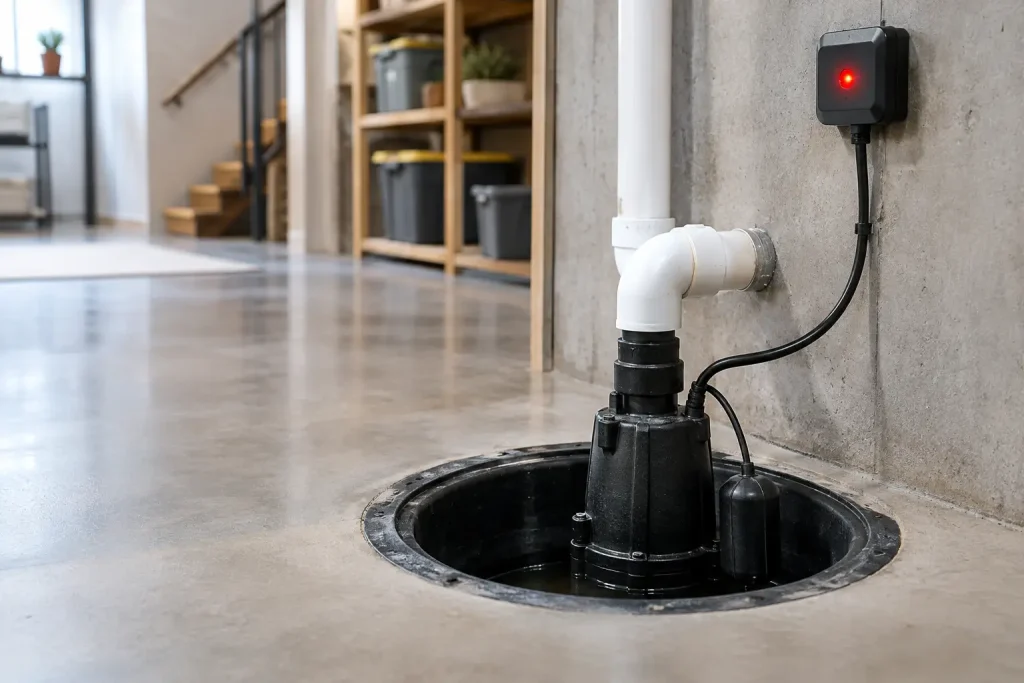
A sump pump can run quietly for years, which makes it easy to assume it will be ready when the next heavy New Jersey storm arrives. But pumps can lose power, switches can stick, discharge lines can freeze, and basins can fill faster than a pump can keep up. Sump alarms provide an early warning when water is rising or a pump system is not doing its job, giving you a chance to act before a wet basement becomes a costly cleanup.
For homeowners with finished basements, stored belongings, furnaces, water heaters, or laundry areas below grade, that warning can make a major difference. An alarm does not replace a properly designed drainage and sump pump system. It is a practical extra layer of protection for the system your home already depends on.
What Are Sump Alarms?
A sump alarm is a monitoring device placed in or near the sump pit. When the water level rises above its normal range, the alarm sounds, sends a notification, or does both. The goal is simple: alert someone before water reaches the basement floor.
Some alarms are standalone units with an audible siren. Others connect to Wi-Fi, a cellular network, or a home monitoring system and send alerts to a phone. More advanced setups may track power loss, high water, pump run time, and battery backup status.
The right option depends on the property and how the basement is used. A basic audible alarm may be enough for a homeowner who is usually home and can hear it from the living area. A remote notification system can be more useful for a vacation property, a frequently vacant home, or anyone who wants alerts while away.
Why a Sump Pump Can Fail Without Warning
A sump pump is a hardworking mechanical device operating in a damp environment. Even a quality pump needs periodic testing and maintenance. Most failures are not dramatic at first. A small issue can go unnoticed until a storm puts the system under pressure.
Power outages are a common concern. A primary sump pump that plugs into a standard outlet cannot operate when utility power is off unless the home has a battery backup, generator, or other backup power source. Severe storms can create the exact conditions that cause both water intrusion and outages.
Mechanical problems matter, too. A float switch can become tangled or stuck. Debris can interfere with the pump intake. A discharge line may be blocked, frozen, disconnected, or routed in a way that lets water return toward the foundation. If the pump is undersized for the volume of groundwater entering the system, it may run continuously and still fall behind.
A sump alarm cannot correct these problems on its own. What it does is shorten the time between a failure and your response. That time can be the difference between resetting a tripped outlet and removing soaked carpet, damaged drywall, and mold-prone materials.
When Sump Alarms Are Especially Worth Considering
Any home with a sump pump can benefit from an alarm, but they are particularly valuable where water has caused trouble before. If your basement has flooded during heavy rain, a warning device should be part of the conversation along with drainage improvements, pump capacity, and backup power.
They are also useful when the basement is finished or holds valuable items. A sump pit may sit in an unfinished utility corner, while water can spread quickly into a recreation room, office, bedroom, or storage area. By the time you notice damp flooring upstairs or smell moisture, the damage may already be significant.
New Jersey homes with high groundwater, older drainage systems, low-lying lots, or frequent stormwater concerns deserve careful evaluation. In these situations, relying on one pump without an alarm or backup plan can leave little margin for error.
Choosing the Right Type of Sump Alarm
The best alarm is one that matches the risks at your property and that you will actually maintain. A feature-heavy system is not helpful if it is disconnected from Wi-Fi, has dead batteries, or sends alerts to a phone nobody checks.
Audible high-water alarms
These devices sound a loud alarm when water reaches the sensor. They are usually straightforward and cost-effective. Their limitation is distance: if no one is home, sleeping nearby, or able to hear the alarm, the warning may not lead to action soon enough.
Wi-Fi or cellular sump alarms
Remote alarms send a text, app notification, email, or call when water rises. They are a strong choice for homeowners who travel, work long hours, or own a second property. Wi-Fi models depend on a functioning internet connection, while cellular models may require a service plan but can remain useful when the home internet is down.
Pump monitoring systems
Some systems monitor more than water level. They may alert you when a pump runs too long, loses power, fails to cycle normally, or has a problem with a backup battery. These systems offer more information, but installation and setup should be done carefully so the monitor does not create a false sense of security.
Battery backup systems with alarms
A battery backup sump pump is not simply an alarm. It is a second pump designed to operate when the primary pump fails or power is lost. Many include alarms to indicate that the backup system has activated or that its battery needs attention. For homes with a history of flooding or finished lower levels, this combination can offer meaningful protection.
An Alarm Is Not a Substitute for Proper Waterproofing
This is the key trade-off homeowners should understand. Sump alarms tell you water is rising. They do not stop groundwater from entering, repair a cracked foundation wall, redirect surface water, or increase the capacity of an overwhelmed drainage system.
If your sump pit regularly fills to an alarming level, the answer may be more than an alarm. The home may need a properly installed interior French drain, a larger or additional sump pump, improved discharge routing, exterior grading corrections, or a battery backup system. The right solution begins with identifying where the water is coming from and why the existing system is struggling.
A basement that becomes wet only during rare, extreme storms may need a different approach than one with constant seepage along the wall-floor joint. No Problems, Just Solutions means looking at the whole system instead of selling a single device for every situation.
How to Maintain Your Alarm and Sump System
A sump alarm only works if it is tested. Check it according to the manufacturer’s instructions, especially before spring rains and hurricane season. Confirm that audible alarms can be heard where they need to be heard and that remote alerts reach the right phones.
Test the pump as well. Pour water into the pit until the float activates and watch whether the pump turns on, removes water, and shuts off correctly. Look outside to make sure water is discharging away from the foundation rather than pooling near the home. If your system uses a battery backup, inspect the battery status and replace it on the recommended schedule.
Keep the sump pit accessible. Stacked boxes, finished wall panels, or stored items should never prevent you from reaching the pump, float, alarm, and check valve. A quick inspection is much easier before a storm than during one.
Pay attention to changes in performance. New vibration, frequent cycling during dry weather, a pump that runs continuously, or an alarm that activates repeatedly are all reasons to schedule an inspection. Ignoring those signals can turn a manageable repair into an emergency.
What to Do When a Sump Alarm Goes Off
First, check whether water is approaching the top of the pit or spilling onto the floor. If it is safe to do so, verify that the pump has power and that the outlet or breaker has not tripped. Do not handle electrical connections while standing in water.
If the pump is running but the water is not dropping, the discharge line may be blocked, the pump may be undersized, or the system may be receiving more water than it can handle. If the pump is not running, a failed switch, motor issue, power problem, or disconnected plug could be responsible. A battery backup pump may keep water under control temporarily, but it should not be treated as a permanent fix for a primary system failure.
When flooding is possible, move valuables off the floor and contact a qualified basement waterproofing professional promptly. A-1 Basement Solutions can inspect the drainage, sump pump, discharge, and foundation conditions to help determine what will protect the home for the long term.
A sump alarm is a modest investment in awareness, not a reason to worry about every rainfall. Set it up, test it, and let it do what it is meant to do: give you valuable time to protect your basement before water takes control.