
A wet basement usually does not start with a dramatic flood. More often, it starts with a damp wall after heavy rain, a musty smell that never fully leaves, or water showing up along the floor edge where the wall meets the slab. That is where french drain installation in basement spaces often becomes the right fix – not as a cosmetic patch, but as a system that manages water before it can spread across the floor and damage the home.
For New Jersey homeowners, this matters because basement water problems rarely stay small. Moisture leads to mold, damaged finishes, ruined storage, and long-term stress about what the next storm will bring. A properly designed drainage system can change that. The key is understanding what a basement French drain actually does, when it is the right solution, and what separates a lasting installation from a temporary one.
What french drain installation in basement spaces actually means
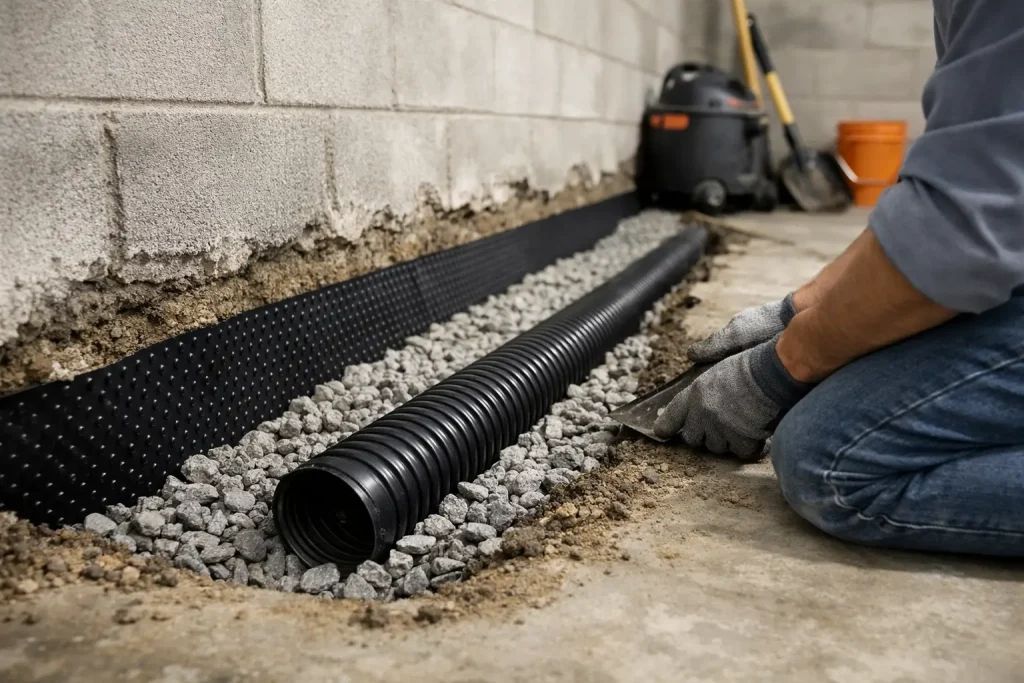
Despite the name, a basement French drain is not usually a trench filled with gravel in the middle of the room. In most homes, it is an interior drainage system installed around the basement perimeter. The contractor opens the concrete floor along the foundation walls, creates a trench, places drainage stone and perforated pipe, and directs collected water to a sump pump system for discharge away from the house.
The goal is simple. Instead of letting water pressure build under the floor or seep through the wall-floor joint, the system gives that water a controlled path to move. That relieves pressure and keeps the basement floor much drier.
This is one of the most common and effective solutions for basements that take on groundwater or seepage during rain events. It does not stop rain from falling or soil from becoming saturated, but it does manage the water that reaches the foundation so it does not end up across your basement floor.
When a basement French drain is the right solution
Not every moisture issue calls for the same repair. Sometimes a downspout extension or exterior grading correction helps. Sometimes cracks or foundation concerns need separate attention. But french drain installation in basement areas is often recommended when water is entering at the cove joint, pushing up through the slab, or showing up repeatedly after storms.
A few signs point in that direction. You may see a wet perimeter, white mineral deposits on lower walls, peeling paint, damp carpet edges, or puddling near one side of the basement. In unfinished spaces, the pattern is often easier to spot. In finished basements, the warning signs may be more subtle, like warped base trim, musty smells, or repeated humidity problems.
The important part is diagnosis. A good waterproofing contractor should not push one fix for every home. Water can come from surface runoff, hydrostatic pressure, plumbing leaks, or foundation wall entry points. The right recommendation depends on where the water is coming from and how often it happens.
How the installation process works
Homeowners are often surprised that the work is more controlled and organized than they expected. A professional crew begins by protecting the workspace and identifying the perimeter areas where the system will be installed. Concrete is then opened in a narrow strip along the basement walls.
Once the trench is exposed, the crew places clean stone and perforated drain pipe at the proper depth and pitch. In many systems, drainage matting or wall vapor components are also used to help direct wall moisture down into the drain. The collected water is routed to a sump basin, where a pump moves it safely away from the foundation.
After the drainage components are installed, the concrete floor is restored over the trench area. When done correctly, the finished result looks clean and intentional. The basement may not look exactly untouched during the process, but the goal is always a neat, functional system that restores the floor and leaves the space usable.
The quality of the sump pump matters here. A drain system is only as reliable as the point where the water ends up. If the pump is undersized, aging, or poorly installed, the whole system is compromised.
What a good installation should include
The difference between a dependable basement waterproofing system and a recurring headache often comes down to details. Pipe placement, stone quality, discharge design, pump selection, and workmanship all matter. So does cleanup.
Homeowners should expect a clear explanation of what is being installed and why. If a contractor cannot explain where the water is entering, where it will be collected, and where it will be discharged, that is a concern. The work should also be completed by trained crews who do this regularly, not by whichever subcontractor is available that week.
That matters because basement drainage is not just about digging a trench. It is about understanding water behavior, foundation conditions, and long-term reliability. An honest company will explain trade-offs too. For example, an interior French drain is excellent at managing water that reaches the foundation, but if exterior grading is poor, that should still be corrected. Good waterproofing is often a system, not a single product.
Interior French drains vs. exterior solutions
Homeowners often ask whether water should be stopped outside instead of managed inside. The fair answer is that it depends on the home and the source of the problem.
Exterior waterproofing can be effective, especially when foundation walls have significant exterior entry issues or when the home is already being excavated for other reasons. But it is more disruptive, usually more expensive, and not always necessary to solve basement seepage. Interior french drain installation in basement spaces is often the more practical option because it addresses the water where it is actually appearing, with less excavation and a more predictable installation process.
That does not mean interior is always better. It means the best solution depends on access, budget, the construction of the home, and the pattern of water intrusion. A trustworthy contractor should walk you through those factors instead of making broad claims.
Common concerns homeowners have
One of the biggest concerns is dust and disruption. That is understandable. Breaking concrete inside the home sounds messy. Professional crews should use dust control measures, protect nearby areas, and clean thoroughly throughout the project. Basement waterproofing work is construction, so it will never feel like no work happened at all, but it should feel organized and respectful of the home.
Another concern is whether the system will work in a finished basement. In many cases, yes. Finished spaces can often be waterproofed, though some materials may need to be removed and later restored depending on how the basement is built. This is why inspection matters. The layout, wall finish, and flooring all affect the plan.
Cost is also a major question, and rightly so. Pricing varies based on basement size, water conditions, pump requirements, and whether additional repairs are needed. The lowest price is not always the best value if it leaves out essential parts of the system or comes with weak warranty protection. Homeowners are usually better served by looking at scope, workmanship, and long-term confidence, not just the estimate total.
Why long-term protection matters
A basement drainage system should not be treated like a short-term patch. If the problem has been recurring for years, the solution needs to be built with the same long view homeowners bring to roof replacement, HVAC equipment, or foundation repair.
That is why warranty coverage and company accountability matter so much. When a contractor stands behind the work with a strong guarantee and uses in-house crews, it tells homeowners something important. It says the company expects the system to last and is prepared to own the result. That kind of accountability is especially important in basement waterproofing, where the real test often comes during the next major storm.
At A-1 Basement Solutions, that solutions-first mindset is a big part of how homeowners are served. The point is not to scare people into a project. It is to identify the source of the problem, explain the options clearly, and install a system that helps protect the home for the long run.
Choosing the right contractor for french drain installation in basement areas
This is one of those projects where experience shows up fast. The right contractor will inspect carefully, explain things in plain language, and talk through what the system can and cannot do. They will not use pressure tactics or try to turn every moisture issue into the most expensive option.
You should also look for a company that understands the full basement environment. Water control affects air quality, mold risk, flooring decisions, and foundation performance. A contractor who only talks about one piece of the problem may miss the bigger picture.
If your basement smells damp, shows signs of seepage, or leaves you checking the floor every time it rains, that is your signal to get it evaluated. A well-installed French drain system can turn a basement from a constant source of worry into a dry, dependable part of the home, and that kind of peace of mind is worth doing right.