
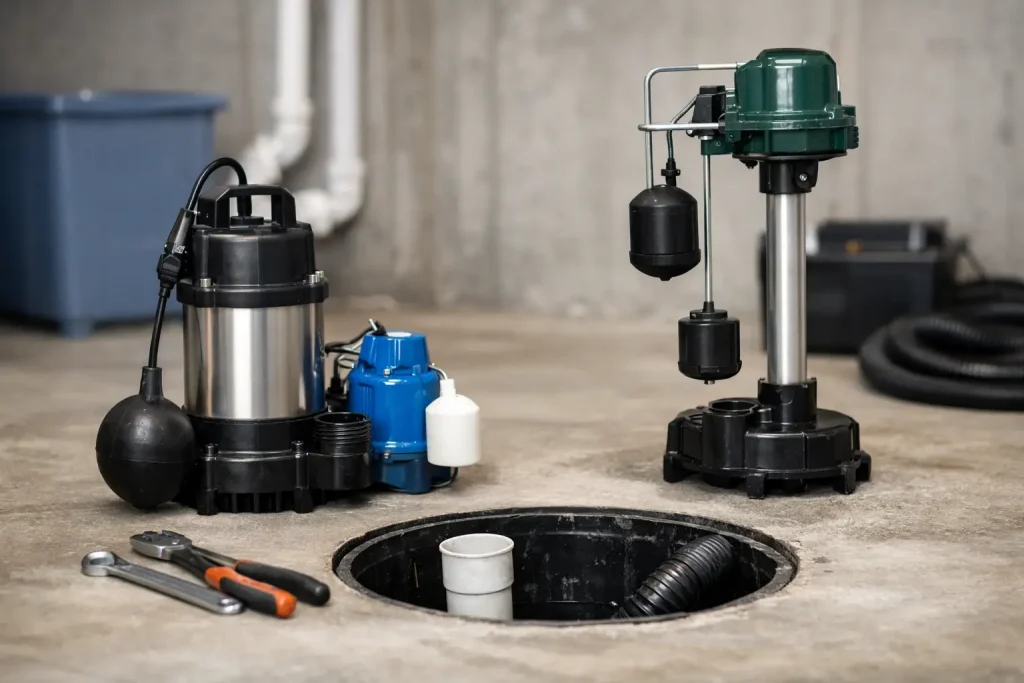
A sump pump usually gets your attention after the first basement scare – a heavy rain, a power outage, or that moment you notice water creeping across the floor. If you are wondering how to choose sump pump equipment for your home, the right answer is not just about buying the strongest unit on the shelf. It is about matching the pump to your basement, your drainage system, and the amount of water your home actually has to handle.
That matters because sump pumps are not one-size-fits-all. A pump that works well in one New Jersey home may be the wrong fit for another, even if the basements look similar. Soil conditions, water table levels, footing drain design, pit size, and how often your system runs all affect what will work best over time.
How to choose sump pump for your basement
Start with the reason you need it. Some homeowners need a sump pump as part of a full basement waterproofing system with interior drainage. Others are replacing an older pump that has become unreliable. In both cases, the real goal is the same: move water out before it becomes damage.
The first question is capacity. If your basement sees occasional seepage during major storms, a smaller residential pump may be enough. If you have steady groundwater pressure or a basement drainage system that channels a lot of water into the pit, you need a pump built for more frequent cycling and stronger performance. Bigger is not always better, though. An oversized pump can short cycle, which causes unnecessary wear and can shorten the life of the system.
This is where professional sizing matters. A good recommendation should be based on how much water enters the sump pit, how fast it comes in, the vertical lift to the discharge point, and the length of the discharge run. Those details tell you far more than horsepower alone.
Pedestal vs. submersible sump pumps
For most finished or regularly used basements, submersible pumps are the better fit. They sit inside the sump pit, run more quietly, and stay out of the way. They are also generally better at handling higher volumes of water in a cleaner, more contained setup.
Pedestal pumps have the motor mounted above the pit. That can make them easier to service, and in some cases they cost less up front. But they are louder, more exposed, and usually less appealing in a basement where noise and appearance matter.
If your priority is long-term convenience and a cleaner installation, submersible usually wins. If budget is the main driver and the basement is unfinished, a pedestal pump may still make sense. The trade-off is comfort and appearance versus lower initial cost.
Cast iron vs. plastic construction
The pump housing matters more than many homeowners realize. Cast iron pumps usually hold up better under heavy use and help dissipate heat more effectively. That can be valuable in a basement that sees frequent pumping during storms.
Plastic or thermoplastic housings can work in lighter-duty applications, and they may cost less. But if your basement has a history of water issues, this is not the place to cut corners. A stronger housing often means better durability and fewer headaches later.
Pick the right horsepower, not just the biggest one
Many homeowners assume more horsepower means more protection. Sometimes it does. Sometimes it just means you are paying for capacity you do not need.
A 1/3 HP pump is common in many homes and can be enough for moderate water conditions. A 1/2 HP pump is often a better fit when water intrusion is more consistent or when the discharge has to push water farther or higher. In more demanding situations, 3/4 HP or higher may be appropriate, but that is usually for homes with unusually high water volume or challenging drainage conditions.
The better way to think about pump size is performance under load. A pump has to move water at a certain rate and overcome head pressure, which is the resistance created by lifting water upward and pushing it out through the discharge line. That is why horsepower by itself is not a buying strategy. You want a pump that performs reliably in real conditions, not just one with a bigger number on the label.
The backup system is not optional in many homes
If your basement ever takes on water during major storms, you should think seriously about backup protection. Storms often bring two problems at once: more groundwater and power interruptions. A primary sump pump cannot help much if the electricity goes out right when you need it most.
Battery backup systems are a smart addition for many homes. They activate when the main pump fails or when power is lost, giving you a second layer of protection. That can be the difference between a dry basement and a cleanup job.
Water-powered backup pumps are another option in some homes, though they depend on municipal water supply and are not right for every setup. The key point is simple: if basement flooding would be costly or disruptive, a single pump system may leave too much to chance.
Alarm features and monitoring
High water alarms are worth having. They alert you if water is rising in the pit because the pump is not keeping up or has stopped working. Some systems also offer remote alerts.
Those features do not replace proper installation or maintenance, but they do give you earlier warning. When water issues are involved, early warning matters.
How to choose sump pump features that actually help
A lot of features sound impressive in marketing, but a few matter more than the rest.
A reliable float switch is one of them. Mechanical switches are common, but they can sometimes snag or wear out. Vertical float switches often fit better in tighter pits and may reduce interference. Electronic switches are available too, though quality varies by manufacturer and application.
A good check valve is another key part of the system. It prevents discharged water from flowing back into the pit, which reduces extra cycling and helps the pump run more efficiently. You also want a properly sized sump basin with a secure lid, especially if moisture control, odor reduction, and basement cleanliness matter.
Material quality matters throughout the system. Stainless steel fasteners, durable seals, and a dependable motor all contribute to lifespan. Most homeowners do not need the most expensive unit available, but they do need a system designed for actual basement conditions, not occasional light duty.
Installation matters as much as the pump itself
A high-quality pump can still underperform if the installation is poor. This is one of the biggest reasons homeowners end up replacing pumps more often than they should.
The sump pit has to be the right size and depth. The discharge line has to be routed properly and carry water far enough away from the foundation. The check valve must be installed correctly. If the pump is tied into a broader basement waterproofing system, everything needs to work together.
That is why choosing a sump pump is really choosing a system, not just a device. In homes with recurring basement water, the pump should be evaluated alongside drainage channels, wall seepage, grading issues, and discharge location. If one piece is wrong, the rest of the system has to work harder.
When replacement is smarter than repair
If your sump pump is older, runs constantly, makes unusual noises, or struggles during heavy rain, repair may not be the best investment. The same goes for pumps with visible rust, intermittent switching, or a history of tripping breakers.
A failing sump pump does not always stop all at once. Sometimes it loses efficiency gradually, which is why homeowners are caught off guard during the next major storm. If your current setup has already shown weak spots, replacement may offer more value than another short-term fix.
At A-1 Basement Solutions, that conversation should be straightforward. A homeowner deserves a clear explanation of what is failing, what can be repaired, and when replacement is the better long-term choice.
What homeowners should ask before buying
Before choosing a sump pump, ask how much water your system needs to handle during peak conditions, whether a battery backup is recommended, what kind of switch the pump uses, and how the discharge line will be configured. Also ask about warranty coverage and what kind of maintenance the system needs over time.
A good contractor should be able to answer those questions without pressure or vague promises. You are not just buying a piece of equipment. You are protecting flooring, storage, air quality, and in some cases the finished living space below your main floor.
The right sump pump is the one that fits your home, your water conditions, and your tolerance for risk. If you are choosing carefully now, you are far less likely to be dealing with water damage later. A dry basement starts with good information and the kind of system that is built to do its job when the weather turns against you.