
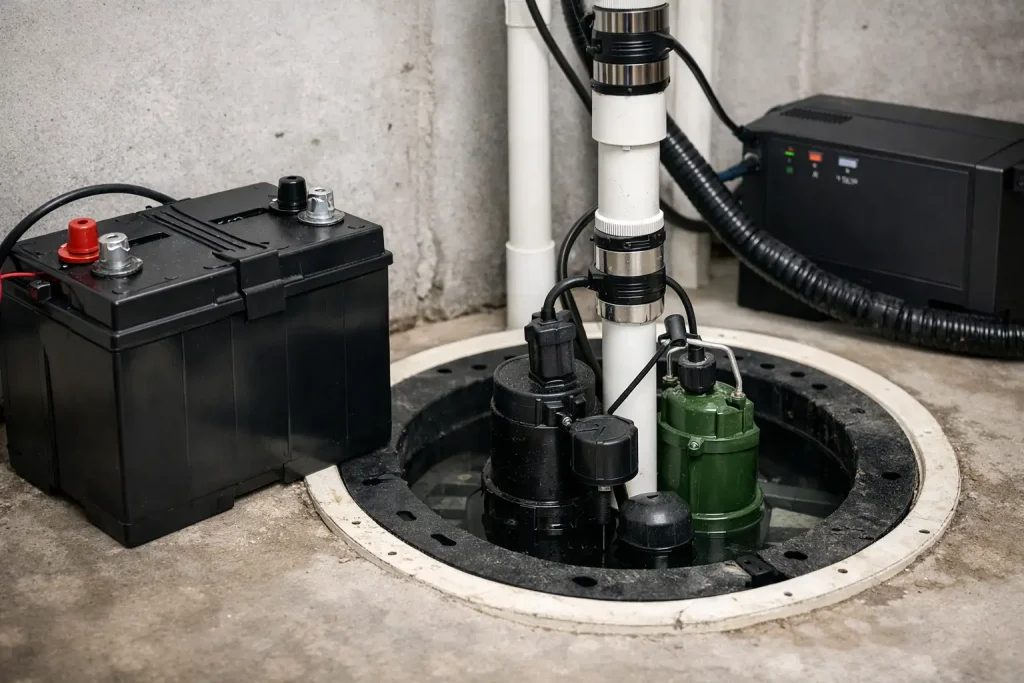
The storm that knocks out your power is usually the same storm that sends the most water toward your foundation. That is exactly why a sump pump battery backup review matters. If your primary pump is doing its job but the power goes out, your basement can still take on water fast.
For many homeowners, the mistake is treating battery backup as an optional add-on instead of part of a complete protection system. A backup pump is not there for convenience. It is there for the night when heavy rain, saturated soil, and a power outage all hit at once.
What a sump pump battery backup really does
A battery backup sump pump is a second pump system designed to turn on when the main pump cannot keep up or loses power. In most homes, that happens for one of two reasons. Either the electricity goes out, or the primary pump fails mechanically.
That sounds simple, but performance can vary a lot from one system to the next. Some battery backup units are built to handle brief outages and moderate water flow. Others are designed for longer run times, higher pumping capacity, and more demanding basement conditions.
That is why the best sump pump battery backup review is not just about brand names. It is about matching the system to the house. A lightly damp basement in a low-risk area has different needs than a home with a history of water intrusion, high groundwater, or a deep foundation.
What to look for in a sump pump battery backup review
When homeowners compare systems, the marketing usually focuses on one big promise – emergency protection. That promise matters, but the details behind it matter more.
Battery type and runtime
The battery is the heart of the backup system. Most homeowners will see either standard lead-acid options or maintenance-free AGM batteries. AGM batteries usually cost more, but they are cleaner, more stable indoors, and generally easier for homeowners to live with.
Runtime is where expectations need to stay realistic. A battery backup is not an unlimited power source. Its job is to buy you time and keep water under control during an outage, not run forever through days of nonstop pumping. If your home sees frequent or extended outages, battery capacity deserves close attention.
Pumping power
Not every backup pump moves the same amount of water. Some are fine for nuisance water. Others can handle heavier inflow. If you have a basement that takes on serious water during storms, a weak backup pump may give you a false sense of security.
This is one of the biggest trade-offs in any sump pump battery backup review. Higher pumping performance can mean more battery demand. More power is good, but only if the battery can support it long enough to matter.
Charging system and monitoring
A quality backup system should charge the battery automatically and alert you if something is wrong. Audible alarms, warning lights, and system diagnostics are worth having. If the battery is low, disconnected, or nearing failure, you want to know before the next storm arrives.
Some higher-end systems also offer remote alerts. That can be useful, especially if you travel often or own a second property. Still, the basic requirement is simple: the system should make its status easy to understand.
Build quality and installation
A dependable backup system is not just a pump and a battery. The switch, charger, discharge setup, check valve arrangement, and overall installation all affect performance. Even a good product can underperform if it is installed poorly.
That is one reason homeowners should be careful about judging systems only by online ratings. A five-star product installed the wrong way can still leave a basement wet.
Common battery backup options and how they compare
Most battery backup systems fall into three broad categories.
Basic backup units are the entry-level option. They are usually more affordable and can offer meaningful protection during short outages. For homes with occasional risk and lower water volume, they may be enough. The downside is limited runtime and lower pumping capacity.
Mid-range systems are where many homeowners find the best balance. They tend to offer stronger pumping performance, better monitoring, and more reliable battery management. For a typical New Jersey home with real storm exposure, this category often makes the most sense.
High-capacity systems are built for tougher conditions. These are better suited for homes with recurring water issues, heavier inflow, or a strong need for extra protection. They cost more up front, but for some basements, they are the right answer.
There is no single winner for every property. A good review should not pretend there is. The right system depends on how much water your sump system handles, how often outages happen in your area, and how much risk you are willing to carry.
What homeowners often get wrong
The most common mistake is assuming a battery backup can compensate for a bad waterproofing plan. It cannot. If your sump pit is undersized, your drainage system is poorly designed, or groundwater is overwhelming the basin, a backup pump is only one piece of the puzzle.
Another mistake is buying based on price alone. Saving a few hundred dollars on the equipment can feel smart until the first severe storm exposes the limits of the system. The cheapest option is rarely the cheapest if it fails when you need it.
Homeowners also overlook maintenance. Backup systems are not install-and-forget equipment. Batteries age. Connections loosen. Pumps should be tested. Alarms should be checked. If a system has not been inspected in years, its reliability is a guess.
When a battery backup is worth it
For some homes, battery backup is close to essential. That includes houses with finished basements, stored valuables, mechanical equipment in the basement, or any history of water intrusion. If one outage could lead to major cleanup, repairs, or mold risk, backup protection is usually money well spent.
It also makes sense for homeowners who travel, work long hours, or simply want fewer unknowns during storm season. Water damage does not wait for a convenient time.
If your basement has never had water and your drainage conditions are mild, the decision may feel less urgent. Even then, it helps to think in terms of consequences. The question is not just how likely failure is. It is how expensive and disruptive that failure would be.
A practical sump pump battery backup review checklist
If you are comparing options, ask a contractor these questions in plain language. How long will this system run during a real outage? How much water can it move? What kind of battery does it use? How will I know if the battery is failing? What maintenance should I expect? And just as important, is this backup being sized to my house or simply sold as a standard package?
That last question matters. The better approach is always inspection first, recommendation second. A trustworthy contractor should explain the trade-offs clearly and avoid overselling features you do not need.
At A-1 Basement Solutions, that is how we believe homeowners should be treated. No pressure, no scare tactics, just a clear explanation of what your basement needs to stay protected.
Battery backup versus water-powered backup
Some homeowners also ask about water-powered backup pumps. These systems use municipal water pressure rather than a battery. They can be useful in certain homes, but they are not right for everyone.
They depend on strong, reliable city water service and may not be suitable in homes with well water. They can also raise concerns about water usage. In a straightforward sump pump battery backup review, battery systems remain the more common and flexible choice for most homeowners, especially where installation conditions and local utility setup vary.
The real standard for a good system
A good battery backup system should do three things well. It should activate automatically, pump enough water for your actual conditions, and give you confidence that it will be ready when needed.
Anything less is a compromise, and sometimes compromises are reasonable. Not every house needs the most expensive setup. But every homeowner deserves an honest assessment of risk, performance, and long-term value.
If you are shopping for backup protection, think beyond the product box. The best system is the one that fits your basement, your drainage demands, and your tolerance for risk. A quiet basement during a hard storm is not luck. It is usually the result of good planning, good equipment, and a system designed as a whole.
When water control is done right, you do not have to wonder what will happen the next time the lights go out.