
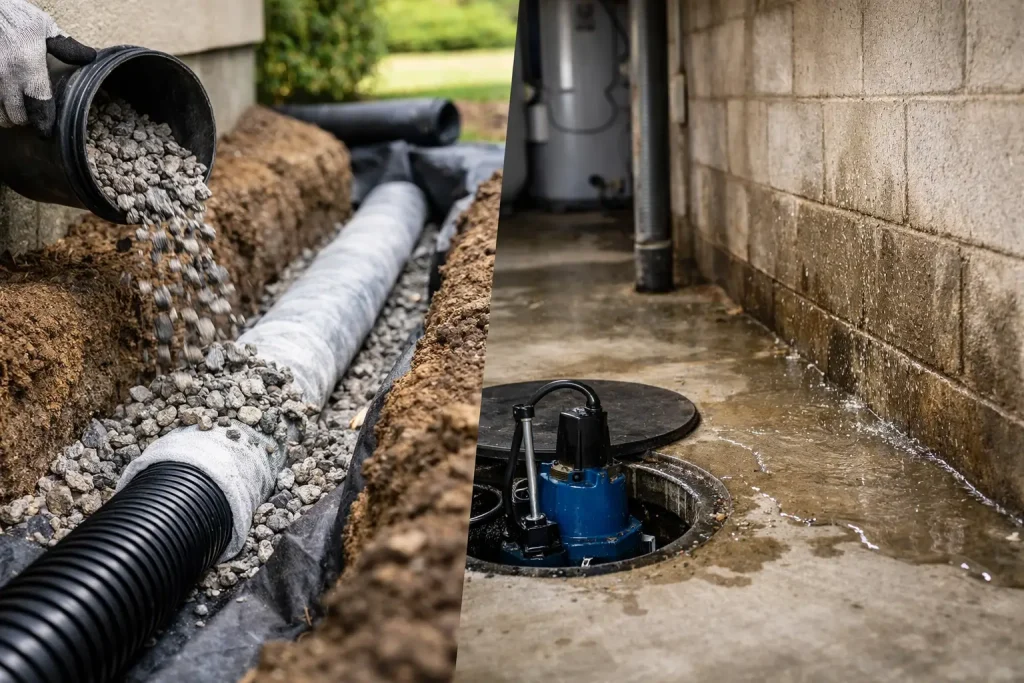
A basement can look perfectly dry for months, then take on water during one hard New Jersey storm. Often, the problem is not a single visible crack or a failed sump pump. It is groundwater building pressure around the foundation with nowhere safe to go. French drains are designed to give that water a controlled path away from your home.
For homeowners, that can mean the difference between a basement that stays usable and one that repeatedly smells damp, grows mold, or suffers water damage after heavy rain. The right drainage system is not a quick patch. It is part of a complete plan to manage water at its source and protect the structure for the long term.
What Is a French Drain?
A French drain is a drainage system that collects water from soil around a foundation and directs it to a safe discharge point. Although the design can vary by property, it typically includes a perforated pipe placed in a gravel bed. Water moves through the gravel, enters the pipe, and is carried away before it can build up against basement walls or beneath the floor.
For basement waterproofing, the drain is often installed along the inside perimeter of the foundation, beneath the basement floor. This is commonly called an interior footing drain. Water that enters through wall-floor joints, porous concrete, or cracks is collected at the lowest point and routed to a sump basin. From there, a sump pump sends the water outside through a properly planned discharge line.
Exterior French drains can also be effective in the right situation. They are installed outside the foundation to intercept groundwater before it reaches the wall. Because exterior installation requires excavation around the home, it can be more disruptive and may not be practical for every property. A thorough inspection should determine which approach addresses the actual water path instead of simply treating the symptom.
Signs Your Home May Need French Drains
Standing water is an obvious warning sign, but it is not the only one. Many basement drainage problems begin quietly. A musty odor, damp lower wall areas, peeling paint, white mineral deposits on masonry, and recurring mold can all point to moisture moving through or around the foundation.
Pay close attention to timing. If moisture appears after prolonged rain, rapid snowmelt, or when the ground is saturated, groundwater pressure may be involved. Water that enters where the wall meets the floor is another common indicator. That joint is a natural weak point because hydrostatic pressure pushes water toward the lowest available opening.
You may also notice that a dehumidifier runs constantly without solving the underlying issue. A dehumidifier can improve comfort and reduce humidity, but it cannot collect active groundwater or relieve pressure outside the foundation. Likewise, sealing a visible crack may help in a limited area, but it will not stop water from finding another path if drainage conditions remain unchanged.
How a Basement French Drain System Works
A properly designed interior system starts with identifying where water is entering and how it moves around the home. The crew then carefully removes a narrow section of concrete along the basement perimeter. Beneath the slab, a drainage channel and perforated pipe are installed beside the footing, surrounded by clean stone that allows water to flow freely.
The system directs collected water toward a sump basin. A reliable sump pump is essential because the drain can only gather water – the pump is what moves it out of the basement. The discharge line should carry water far enough from the foundation that it does not return to the same saturated soil and repeat the cycle.
Once the drainage system is in place, the floor is restored with concrete. The goal is a clean, functional installation that protects the home without turning the basement into a permanent construction zone. Details matter here. A drain installed at the wrong elevation, an undersized sump basin, poor discharge routing, or a loosely finished floor can reduce the value of the entire project.
French Drains Are Not a One-Size-Fits-All Repair
French drains are highly effective when groundwater is the cause of basement water intrusion. They are not automatically the answer to every damp basement. Honest waterproofing work starts with a clear diagnosis.
For example, water entering through an above-grade foundation crack may require targeted crack repair. A leaking window well may need improved grading, a properly fitted cover, or drainage correction outside. Water from clogged gutters, short downspouts, or soil that slopes toward the home should be addressed at the surface first. Those repairs are often simpler and can reduce the volume of water reaching the foundation.
Foundation movement also requires separate attention. If cracks are widening, walls are bowing, or floors are sloping, drainage alone does not correct structural damage. Water management may be part of the solution, but the home should be evaluated for appropriate foundation repair as well.
The best system may combine several measures: surface drainage improvements, crack repair, an interior drain, a sump pump, and a battery backup for power outages. The correct scope depends on the property, the soil conditions, the age and design of the foundation, and the pattern of water entry.
Why Professional Installation Matters
Installing French drains is more involved than digging a trench and placing pipe in gravel. Basement drainage is tied directly to your foundation, electrical needs for the pump, discharge planning, and the finished condition of your lower level. A rushed installation can create avoidable problems, including poor water flow, broken concrete, unreliable pumping, or water discharged too close to the house.
A professional assessment should explain what the crew found, why the recommended solution fits the problem, and what work will be performed. Homeowners deserve straight answers about the limits of each option. If a surface fix can solve the issue, that should be said. If an interior drainage system is necessary for lasting protection, the reasons should be clear.
It also matters who performs the work. An experienced in-house crew has direct accountability for site preparation, installation quality, cleanup, and communication. At A-1 Basement Solutions, the focus is No Problems, Just Solutions: identify the cause, explain the options, and complete the work with care rather than pressure.
Protecting Your System After Installation
A quality drainage system needs far less attention than a flooded basement, but it should not be forgotten. Test the sump pump periodically by adding water to the basin and confirming that it turns on, removes water, and shuts off properly. Keep the pit clear of debris, and make sure the discharge line remains open and directs water away from the foundation.
If your area experiences frequent storms or power outages, a battery backup pump can provide valuable protection when the primary pump cannot operate. This is especially important for homes with a history of rapid water entry. A backup does not replace a primary pump, but it adds a layer of protection when conditions are at their worst.
Outside, maintain gutters and downspouts, watch for settled soil near the foundation, and avoid directing roof runoff toward the house. These simple maintenance steps support the drainage system and help keep unnecessary water out of the ground around your basement.
A Dry Basement Starts With the Right Diagnosis
A wet basement affects more than stored boxes or finished living space. Moisture can encourage mold, damage flooring and wall finishes, reduce indoor comfort, and create lasting concern about the home’s condition. Waiting for the next major storm rarely makes the issue easier or less expensive to solve.
If you are seeing dampness, water at the wall-floor joint, or a persistent musty smell, start with a professional inspection that looks beyond the visible stain. The right French drain system should fit your home, manage the water that is actually causing the problem, and give you confidence when the forecast turns wet.