
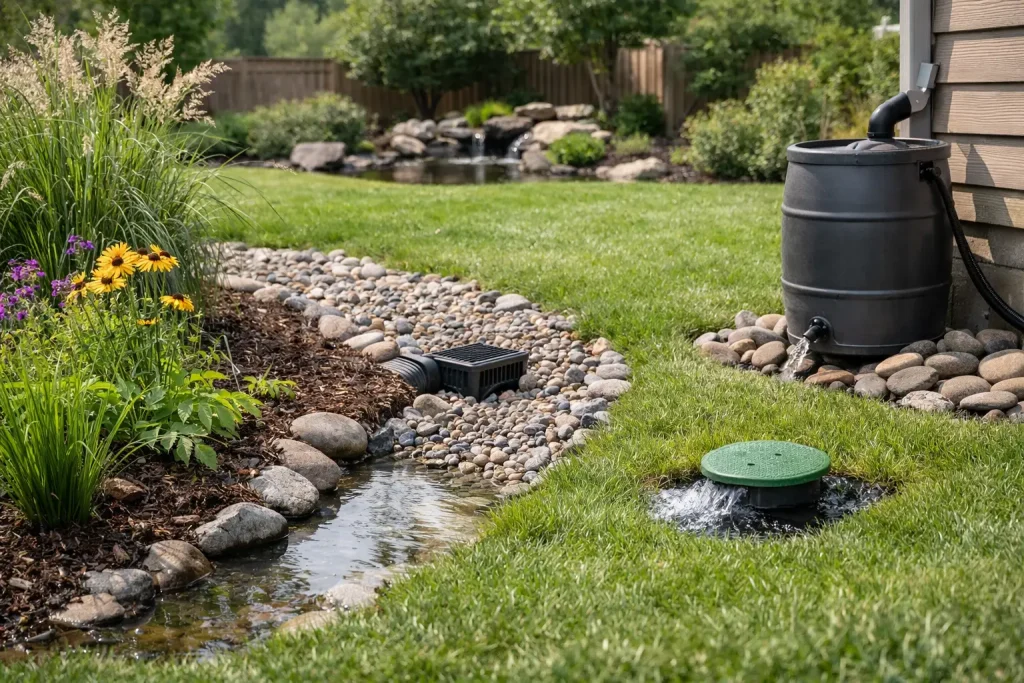
A wet basement often starts outside, but the water does not always follow the same path. A low spot beside the foundation, overflowing gutters, a buried downspout line, or groundwater beneath the slab can all create similar symptoms indoors. That is why homeowners researching French drain alternatives should start with the source of the water, not with a one-size-fits-all product.
A French drain can be an effective drainage solution in the right situation. But it is not the only solution, and it is not always the first repair a New Jersey home needs. The right approach should address where water is collecting, where it is entering, and where it can safely be directed afterward.
When a French Drain May Not Be the First Answer
The term “French drain” can describe different systems. Outside, it often means a gravel-filled trench with perforated pipe that redirects surface or groundwater. Inside a basement, it can refer to a perimeter drainage system installed beneath the floor and connected to a sump pump.
Both systems have a place. Still, installing drainage pipe without correcting a clear surface-water problem can mean spending more than necessary. For example, if roof runoff dumps next to the foundation during every storm, the first priority is usually moving that water farther away. If a basement stays dry except during severe wind-driven rain, a drainage system may not be the most targeted repair.
On the other hand, surface improvements alone may not solve water pressure beneath a basement slab or persistent seepage at the floor-wall joint. That is where a professional inspection matters. Good waterproofing work begins with honest diagnosis, not pressure and not guesswork.
French Drain Alternatives That Address Surface Water
Regrading the Soil Around the Foundation
The ground around your home should slope away from the foundation. As a general rule, soil should drop about 6 inches over the first 10 feet where site conditions allow. That slope encourages rainwater to move away instead of pooling along the basement wall.
Regrading can be one of the most practical French drain alternatives when the issue is shallow surface water. It is especially helpful after landscaping changes, patio work, settling soil, or years of mulch buildup have altered the original grade.
There are limits. Regrading cannot solve a high water table, a failed footing drain, or water entering through cracks below grade. It also needs to be done carefully so soil does not cover siding, bridge the gap to wood framing, or create drainage problems for a neighbor.
Gutter Repairs and Downspout Extensions
A standard roof can shed thousands of gallons of water during a heavy storm. If gutters overflow or downspouts empty beside the foundation, that water quickly saturates the soil around the basement wall.
Cleaning, repairing, or resizing gutters may be a simple first step. Downspouts should discharge well away from the home, ideally onto a properly graded area or into an approved drainage route. Extensions need to remain connected, slope properly, and release water where it will not run back toward the house.
Buried downspout lines can look tidy, but they need an outlet and occasional maintenance. A clogged underground line can create the same problem as a short downspout, except the backup is hidden until water appears in the basement.
Swales and Landscape Drainage
A swale is a shallow, graded channel that guides water across a yard. It can be grass-lined, landscaped, or designed with stone depending on the property. For homes with broad yards and recurring puddles, a swale may move runoff more naturally than a deep trench around the foundation.
This option works best when there is a safe place for the water to go. Local grading, property lines, municipal rules, and neighboring homes all affect what is possible. Water should never be redirected in a way that simply transfers the problem downhill.
A landscape drainage plan may also include catch basins and solid drainpipe. Unlike a perforated French drain pipe, a catch basin system is designed to collect surface water at specific low points and carry it to a suitable discharge location. It can be a good fit for driveway runoff, patio drains, and areas where water consistently ponds after rain.
Dry Wells
A dry well receives roof or surface runoff and allows it to disperse slowly into the surrounding soil. It can reduce the amount of water reaching the foundation while keeping drainage mostly out of sight.
Dry wells depend heavily on soil conditions. They are less effective in dense clay, poorly draining soil, or areas with a seasonally high water table. They also require thoughtful placement, since a dry well installed too close to a house can concentrate water exactly where it does not belong.
Alternatives for Water Entering the Basement
Sump Pump and Interior Drainage Systems
When water pressure builds beneath the basement floor or moisture repeatedly enters at the cove joint where the wall meets the slab, the most reliable solution may be an interior drainage system connected to a sump pump. This system collects water before it rises onto the floor and pumps it outside through a dedicated discharge line.
This is not always an alternative to a French drain in the traditional sense. In many homes, it is the most practical form of basement drainage because it avoids excavating around the exterior foundation. It is particularly useful for finished basements, older homes, and properties where exterior access is limited by decks, driveways, additions, or tight lot lines.
A sump pump should not be treated as an appliance you install and forget. It needs a correctly sized basin, reliable discharge piping, and a plan for power outages. A battery backup or secondary pump can provide valuable protection during the storms when the primary pump is needed most.
Exterior Waterproofing Membranes
If water is entering through foundation walls, exterior waterproofing may be appropriate. This involves excavating to the foundation, repairing damaged areas as needed, applying a waterproof membrane, and often adding protective drainage materials.
Exterior waterproofing addresses water from the outside, which can be a strong option when foundation walls are accessible and excavation is justified. It may be recommended for severe wall seepage, deteriorated exterior coatings, or foundation repair work that already requires digging.
The trade-off is cost and disruption. Landscaping, porches, utility lines, and hardscaping can make exterior excavation more involved. It should be chosen because the home needs it, not because it sounds more complete than other options.
Crack Repair for Isolated Leaks
A single crack that leaks during rain does not automatically mean the entire basement needs a drainage system. Professional crack injection can seal certain poured concrete wall cracks from within the basement. The repair material is selected based on whether the crack is actively leaking, expected to move, or needs structural evaluation.
Crack repair is a focused solution, not a cure for widespread hydrostatic pressure. If several wall cracks, floor seepage, and dampness are present, the home may have a larger drainage issue. But for an isolated entry point, repairing the crack can be the sensible, cost-effective answer.
Do Not Overlook Crawl Space Moisture
Homes with crawl spaces need a different conversation. Standing water, damp soil, and high humidity beneath the home can contribute to mold growth, musty odors, damaged insulation, and moisture-related wood concerns.
Depending on the cause, crawl space protection may include exterior drainage corrections, a sump pump, vapor barrier installation, encapsulation, or a dehumidifier. Simply covering the ground with plastic without addressing bulk water can trap a problem rather than solve it. The goal is to control both liquid water and humid air.
How to Choose the Right Drainage Solution
The best solution depends on the pattern. Notice when water appears, where it first shows up, and what happened outside beforehand. A basement that leaks only after gutters overflow points to a different repair than one that takes on water after several days of wet weather.
During an inspection, a qualified specialist should look at roof drainage, soil grade, exterior discharge routes, foundation conditions, basement walls and floors, sump equipment, and any signs of mold or structural movement. They should also explain what each recommended repair will and will not accomplish.
At A-1 Basement Solutions, the focus is on no problems, just solutions. That means recommending work based on the conditions of your home, using trained in-house crews, and giving homeowners a clear explanation before work begins. A lasting repair is not necessarily the largest project. It is the one that controls the water at its source and protects the home for the long term.
If your yard stays soggy, your downspouts overwhelm the soil, or your basement shows signs of moisture, take photographs during and after rain. Those details can make the inspection more productive and help identify a solution that brings real peace of mind.