
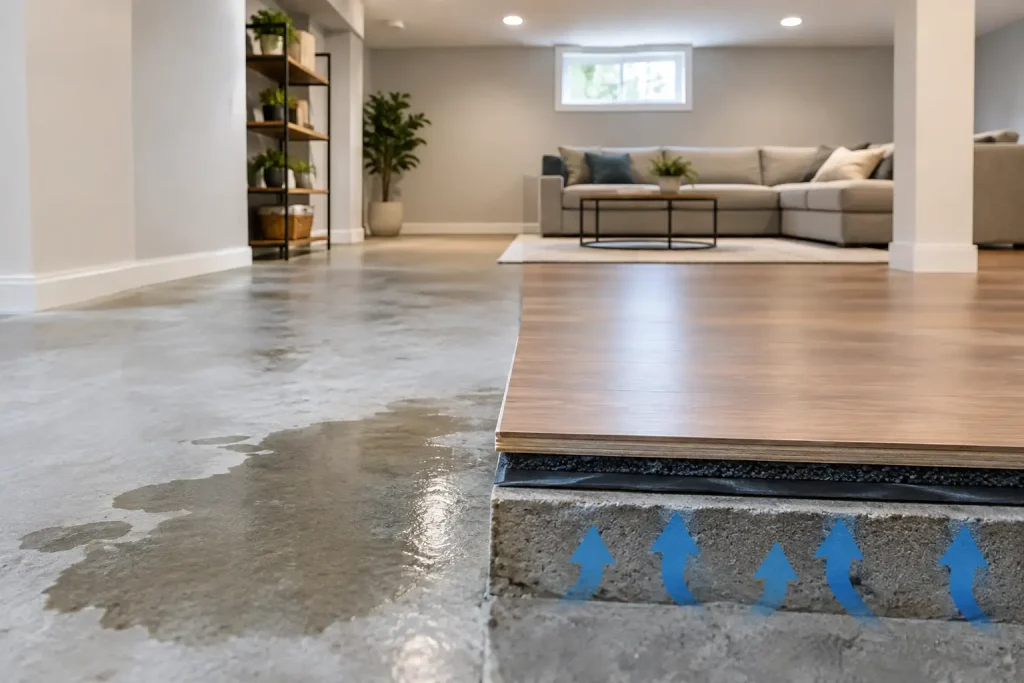
A beautiful basement floor can be ruined by a small amount of water moving through concrete. A damp corner, a musty smell after rain, or a floor that feels cold and clammy are not just cosmetic concerns. They are signals that the room needs the right basement flooring moisture solutions before new materials go down.
For New Jersey homeowners, the order of work matters. Flooring should be the finish line, not the first attempt at fixing a wet basement. If water is still entering through foundation walls, rising beneath the slab, or collecting around the home, even a premium floor can buckle, loosen, grow mold, or trap moisture where you cannot see it.
Start With the Source of the Moisture
Concrete is porous. It can absorb and release moisture even when there is no standing water on the floor. That means a basement may look dry most days while still carrying enough moisture vapor to damage certain flooring products over time.
The source may be exterior surface water, saturated soil against the foundation, clogged gutters, poor grading, a high water table, foundation cracks, leaking plumbing, or condensation from humid air. Each calls for a different solution. Painting the floor or adding a vapor barrier without identifying the cause may cover the symptom while allowing the underlying problem to continue.
A useful distinction is between occasional humidity and active water intrusion. A dehumidifier may help a basement that becomes humid during summer. It will not stop water that seeps through a wall after heavy rain. Likewise, a waterproof vinyl floor can tolerate a spill, but it cannot prevent water from collecting beneath it.
Solve Water Problems Before Choosing a Floor
When water is entering from outside, lasting protection often begins with drainage and waterproofing. An interior French drain system can collect groundwater at the base of the foundation and direct it to a sump pump. The pump then moves that water safely away from the home. In other situations, exterior grading corrections, downspout extensions, crack repair, or a combination of measures may be appropriate.
A professional inspection should look beyond the visible stain or puddle. The goal is to understand where water is traveling, what changes during rain, and whether the foundation shows signs of movement or deterioration. Homeowners deserve a clear explanation of what is necessary, what is optional, and why a recommended repair fits the conditions of the home.
At A-1 Basement Solutions, the focus is no problems, just solutions: address the moisture pathway first, then help homeowners protect the finished space for the long term. A dry, controlled basement gives flooring the stable environment it needs.
Do not skip moisture testing
Even after obvious leaks are repaired, the slab should be checked before flooring installation. Moisture testing helps determine how much vapor is moving through the concrete and whether the selected adhesive, underlayment, or flooring system can handle it.
This step is especially important for glued-down flooring, engineered wood, laminate, and carpet. Installation requirements vary by manufacturer. Skipping the test can void a flooring warranty and leave homeowners paying twice for the same room.
Basement Flooring Moisture Solutions That Fit the Room
There is no single best basement floor for every home. The right choice depends on whether the basement is fully waterproofed, how the space will be used, the condition of the slab, ceiling height, budget, and the homeowner’s tolerance for maintenance.
Luxury vinyl plank or tile
Luxury vinyl plank and luxury vinyl tile are popular choices for finished basements because the material itself resists water. They offer a wide range of wood and stone looks, feel warmer underfoot than bare concrete, and are generally easier to replace in a small area than many other floor types.
However, water-resistant does not mean the system beneath it is protected. If moisture becomes trapped below floating vinyl planks, odors and mold can develop in dust or organic debris under the floor. A clean, dry slab and the correct underlayment remain essential.
Tile over a prepared concrete slab
Porcelain or ceramic tile performs well in basements because it does not absorb water the way wood-based materials do. It is a practical option for laundry areas, entry points, utility rooms, and basements that may occasionally see minor water exposure.
Tile does have trade-offs. It is hard, cool underfoot, and can crack if the concrete below it shifts. Cracks in a slab do not always mean serious structural trouble, but they should be evaluated before tile is installed. Proper crack repair or an uncoupling membrane may be needed depending on the conditions.
Epoxy or sealed concrete
For a workshop, storage area, home gym, or unfinished basement, a professionally prepared concrete coating can be a sensible solution. Epoxy and similar coatings create a clean, durable surface that is easier to maintain than raw concrete.
Coatings work best on slabs with manageable moisture levels and sound surface preparation. If hydrostatic pressure is pushing water up through the slab, a coating can blister or peel. This option is not a substitute for drainage or waterproofing where active moisture is present.
Raised subfloor systems
A raised subfloor creates a separation layer between the concrete and finished flooring. These systems can help a basement floor feel warmer and can provide a path for minor moisture vapor or condensation to move beneath the surface instead of becoming trapped directly against the flooring.
They are particularly useful when installing laminate, engineered flooring, or vinyl in a finished living area. The trade-off is height. A raised system can reduce headroom, which matters in older New Jersey basements with lower ceilings. It also should not be used as a way to ignore recurring water intrusion.
Carpet, laminate, and wood products
These materials are not automatically off-limits, but they require more caution. Carpet can make a finished basement comfortable, yet it holds moisture and can be difficult to dry after a leak. If it is used, choose moisture-resistant padding and do so only after the basement has a reliable water-management system.
Traditional solid hardwood is usually a poor fit below grade because it expands and contracts with changes in moisture. Laminate and engineered wood can work in some dry basements, but only when the manufacturer permits below-grade installation and the required vapor protection is in place. A low-cost material is rarely a bargain if it must be removed after the next storm.
Details That Protect the Finished Floor
Once the main moisture issue is resolved, a few practical details help preserve the investment. Keep humidity in a healthy range with appropriate ventilation or dehumidification. Make sure the sump pump is tested regularly, with a backup plan for power outages if the basement relies on it during storms.
Avoid installing flooring tightly against walls where moisture could wick into baseboards or trim. Use basement-appropriate materials for trim and keep stored belongings off the floor in utility areas. If the basement will become a bedroom, playroom, or family room, choose finishes that can be cleaned and repaired without tearing apart the entire space.
Pay attention to warning signs after installation. A new musty odor, cupping planks, lifting edges, discolored grout, or dampness near the perimeter deserves prompt attention. Catching a drainage or pump issue early can save the floor and prevent mold from becoming a larger project.
When a Floor Problem May Be a Foundation Problem
Not every cracked or uneven basement floor points to a foundation issue, but some conditions should be assessed before remodeling. Widening wall cracks, bowing walls, recurring water at the same location, settlement, or doors above the basement that begin sticking can indicate movement that needs more than a flooring fix.
Foundation repair and waterproofing are related, but they are not interchangeable. A structural repair may stabilize a wall, while a drainage system manages the water putting pressure against it. Honest recommendations account for both when both are needed, without selling work that the home does not require.
A finished basement should feel like part of the home, not a room you worry about every time rain is in the forecast. Start with an inspection, resolve the moisture cause, and select a flooring system that matches the conditions beneath it. That approach protects your comfort, your home value, and the work you put into making the space your own.