
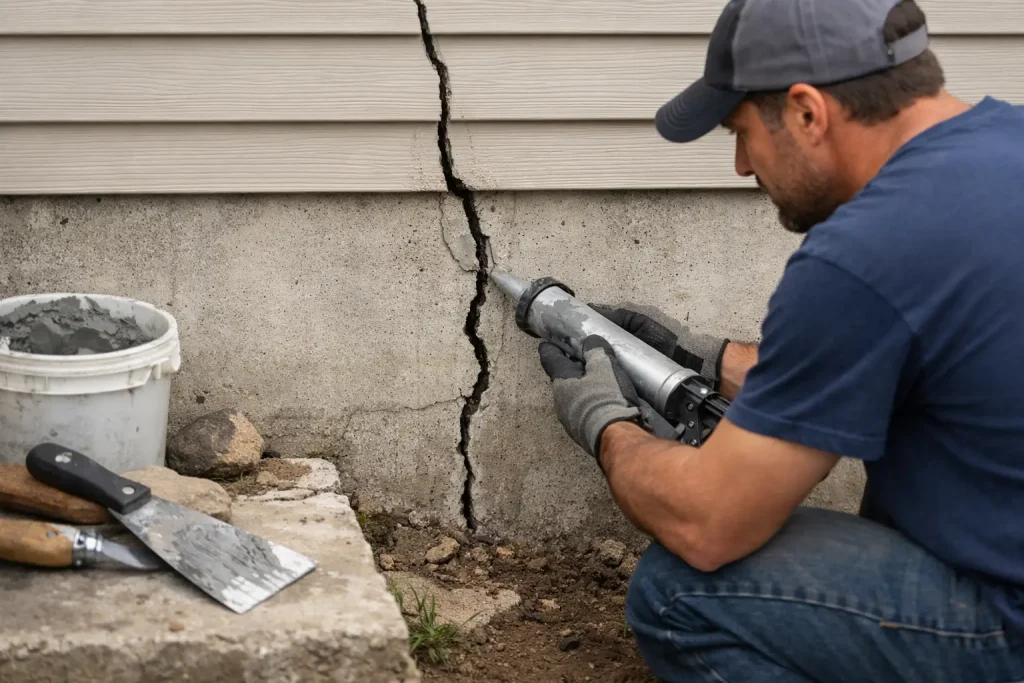
A crack in your foundation can turn a normal trip to the basement into a stressful one fast. If you are wondering how to fix foundation cracks, the first thing to know is that not every crack means your home is in serious trouble. Some are minor shrinkage cracks. Others are early warnings of water pressure, soil movement, or structural stress that should not be ignored.
The challenge for most homeowners is knowing the difference. A small crack can stay small for years, or it can become the path that lets water into your basement every time it rains. That is why the right repair starts with understanding what caused the crack, not just filling it and hoping for the best.
How to Fix Foundation Cracks Starts With the Type of Crack
Foundation cracks are not all the same, and they should not be treated the same way. The direction, width, location, and behavior of the crack all tell part of the story.
Vertical cracks are often the least serious. In many homes, these form as poured concrete cures and shrinks over time. If the crack is narrow, shows no displacement, and is not actively leaking, it may be more of a maintenance issue than a structural one.
Diagonal cracks can point to settling. If one part of the foundation is moving differently than another, that uneven pressure often shows up as an angled crack. These deserve a closer look, especially if doors stick, floors slope, or the crack continues to widen.
Horizontal cracks are the ones that raise the most concern. They can signal outside soil pressure pushing against a basement wall. In New Jersey, where seasonal moisture changes can affect soil expansion and contraction, this type of crack may indicate a wall under stress. A horizontal crack does not always mean failure is imminent, but it usually means the problem should be evaluated promptly.
Stair-step cracks in block or masonry foundations are another sign that movement may be involved. These often follow mortar joints and can suggest settlement or lateral pressure. If the blocks are shifting or bowing, a simple surface repair will not solve the real issue.
When a Crack Is Cosmetic and When It Is Not
Homeowners often want a clear yes-or-no answer, but foundation cracks are one of those areas where it depends. Hairline cracks that stay stable and dry may only need monitoring or sealing. Wider cracks, active leaks, repeated moisture, or visible wall movement usually call for more than a patch.
A good rule of thumb is to pay attention to change. If a crack is getting wider, longer, or wetter, the cause is still active. If you see white mineral staining, dampness, musty odors, or puddles nearby, water is already using that crack as an entry point.
It also matters where the crack appears. A crack in a finished basement wall can hide a moisture problem behind framing and drywall. A crack near a window opening or a corner may be connected to concentrated stress. Multiple cracks in the same wall can point to a broader foundation or drainage issue.
Can You Fix Foundation Cracks Yourself?
For a very small, non-structural crack, a homeowner can sometimes apply a surface seal or an injection material successfully. That can make sense when the crack is minor, dry, and clearly stable.
But there is a trade-off. DIY repairs usually address the visible gap, not the reason it formed. If hydrostatic pressure is building outside the wall, if gutters are dumping water near the foundation, or if the wall is beginning to shift, a store-bought fix may only buy time. In some cases, it can also hide a problem that gets more expensive later.
This is where honesty matters. If your goal is to stop a tiny cosmetic crack from collecting dust, that is one thing. If your goal is to keep water out and protect the structure of your home, you need to be sure the repair matches the cause.
What Professional Foundation Crack Repair Usually Involves
When professionals assess how to fix foundation cracks, they are not just looking at the crack itself. They are looking at drainage, wall condition, moisture patterns, grading, and signs of movement across the home.
For non-structural poured concrete cracks that leak, polyurethane or epoxy injection is a common repair. Polyurethane is often used when water infiltration is part of the problem because it can expand and help seal active leaks. Epoxy can restore some structural continuity in certain situations, but it is not the right fit for every crack. The choice depends on whether the goal is waterproofing, structural bonding, or both.
If a crack is tied to exterior water pressure, interior drainage improvements may be part of the solution. In many basements, the real issue is not just the opening in the wall. It is the water collecting around the foundation and pressing inward. French drains, sump pump systems, and better exterior water management can reduce the pressure that causes recurring seepage.
For walls that are bowing, sliding, or cracking from lateral pressure, structural reinforcement may be needed. That could involve wall anchors, carbon fiber reinforcement, or steel bracing, depending on the wall type and severity of movement. In settlement cases, underpinning or pier systems may be considered to stabilize the foundation.
That is why a real inspection matters. The best repair is not always the simplest one, and the cheapest-looking option is not always the one that protects the house.
How to Fix Foundation Cracks Without Missing the Real Cause
A repaired crack that comes back is usually a sign that the underlying condition was never corrected. This happens all the time when water management gets overlooked.
Start outside. Check whether downspouts discharge too close to the home, whether the soil slopes toward the foundation, and whether heavy rain tends to collect near the basement wall. If water sits against the house, your foundation is under more stress than it should be.
Then look inside. Damp air, efflorescence, staining, and moldy smells are clues that moisture is moving through the basement environment even if you do not see standing water. In some homes, a crack is only one part of a larger basement waterproofing problem.
An effective repair plan may involve sealing the crack, improving drainage, controlling groundwater, and managing humidity. That can feel like more than you expected when you first noticed a line in the wall, but it is often what creates a lasting fix instead of a temporary one.
Signs You Should Call a Foundation Specialist
Some situations should not be left to guesswork. If the crack is wider than one-eighth to one-quarter inch, if the wall is bowing, if you see horizontal or stair-step cracking, or if water enters repeatedly after storms, it is time for a professional evaluation.
You should also call if the crack appears alongside interior warning signs such as sticking windows and doors, sloping floors, gaps at trim, or visible separation around masonry. Those symptoms suggest movement that may involve more than one part of the house.
For many homeowners, the biggest value of an inspection is clarity. A trustworthy contractor should explain what is happening, what is not happening, and which repairs are actually necessary. Fear should not be part of the sales process. Clear answers should be.
That is the standard companies like A-1 Basement Solutions aim to meet – practical recommendations, clean workmanship, and repair options built around the condition of the home, not pressure tactics.
What to Expect From a Long-Term Repair
A proper foundation crack repair should do more than make the wall look better. It should reduce the chance of future water entry, address active stress where needed, and give you confidence that the issue is being watched or corrected appropriately.
Some cracks can be repaired quickly and stay stable for years. Others need a broader plan because the basement, drainage, and foundation are all connected. The right answer is not always dramatic, but it should be thorough.
If you are trying to decide how to fix foundation cracks in your home, do not focus only on the line in the concrete. Focus on what your house is telling you around it. Catching the cause early is often what saves the most money, stress, and disruption later.
A foundation crack does not always mean you have a major structural problem, but it does mean your home deserves a closer look. When you deal with it early and repair it correctly, you are not just sealing concrete. You are protecting the basement, the air quality, and the long-term value of the home you live in every day.