
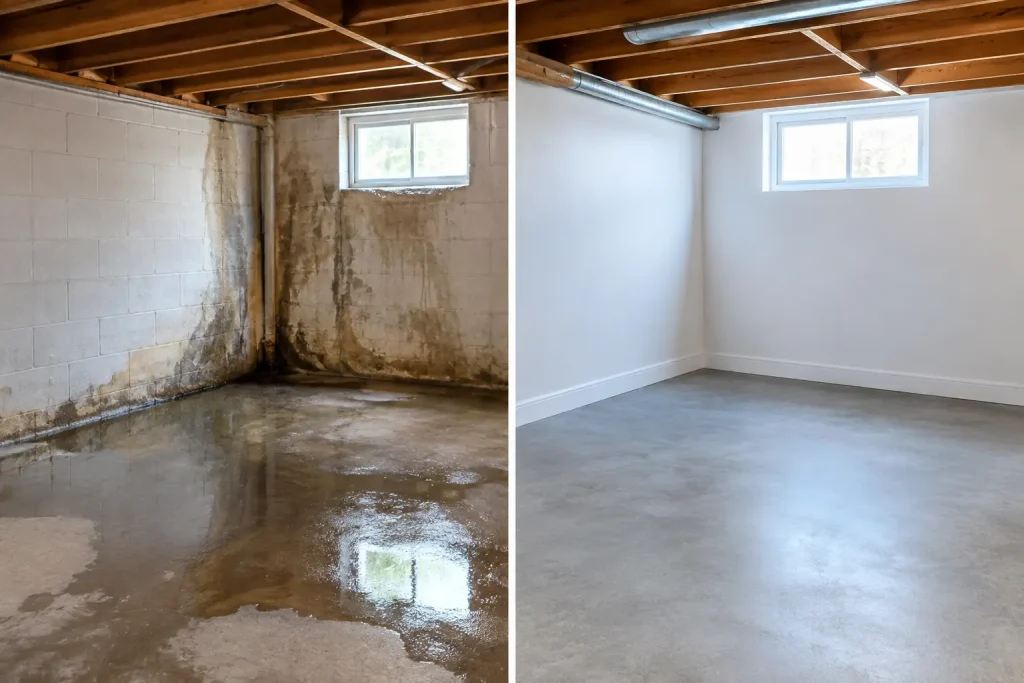
A wet basement rarely stays a basement-only problem. Water that seeps through a wall, rises through a floor joint, or collects around the foundation can damage belongings, feed mold growth, raise humidity throughout the home, and leave homeowners wondering what will happen during the next heavy New Jersey rain. Basement waterproofing before and after is not just a change in appearance. It is a change in how the space performs, smells, feels, and protects the home above it.
The most meaningful results come from identifying where the water is entering and managing it with the right system. A clean-looking wall coating may have a place in limited situations, but it will not solve every drainage or groundwater issue. No Problems, Just Solutions starts with an honest inspection and a plan based on the actual source of moisture.
What a Basement Looks Like Before Waterproofing
Before waterproofing, the signs are not always dramatic. Some basements have standing water after a storm. Others have a damp line along the wall, white powdery residue called efflorescence, peeling paint, or a musty smell that never quite goes away. Homeowners may run a dehumidifier constantly and still find the room feels clammy.
Water often enters at the cove joint, where the foundation wall meets the floor. Hydrostatic pressure can force groundwater through this natural joint or through small cracks in concrete. In other homes, roof runoff, poor grading, clogged gutters, or exterior drainage problems direct too much water toward the foundation.
The visible conditions can include more than damp concrete. Cardboard boxes soften, carpeting develops odors, finished walls stain, and wood framing may become a food source for mold. A finished basement can hide the problem longer, which is why a persistent odor, warped baseboard, or recurring discoloration deserves attention even if there is no puddle on the floor.
Foundation cracks should be evaluated as well. A narrow crack may be a route for water without creating a structural concern. A wider, changing, horizontal, or stair-step crack can point to movement that requires foundation repair in addition to waterproofing. The right answer depends on what the inspection reveals, not on a one-size-fits-all sales pitch.
Basement Waterproofing Before and After: What Actually Changes
After a properly designed waterproofing project, the first difference homeowners often notice is simple: the basement stays dry during weather that once caused worry. But the improvements go further than the absence of puddles.
An interior drainage system collects groundwater before it reaches the basement floor. Water is directed to a sump basin, where a properly sized sump pump discharges it safely away from the home. The system manages water pressure rather than asking the foundation to hold it back indefinitely.
The after-condition should feel cleaner and more predictable. Humidity is easier to control. Musty odors often improve once active moisture is eliminated and affected materials are properly addressed. Storage can be moved off the floor, and homeowners can use the basement with more confidence, whether it remains a utility area or becomes finished living space.
There is also a practical change that photographs do not always show. Instead of watching the forecast and checking the basement after every storm, homeowners have a drainage path and pump system working in the background. That peace of mind matters, especially in areas where saturated soil and seasonal storms put repeated pressure on foundations.
The Work Behind the Results
Good before-and-after results are built below the surface. In many basements, the installation begins with carefully removing a narrow section of the concrete floor around the perimeter. A drainage channel and clean stone are installed beside the footing, then the system is connected to a sump pump. The floor is restored with concrete, leaving a clean serviceable edge along the wall.
If water is entering through a wall crack, crack repair may be part of the project. If moisture is coming from outside runoff, exterior corrections such as extending downspouts or improving grading may be recommended. A sump pump without a reliable discharge location is not a complete solution, just as a drainage system cannot compensate for a serious structural issue that has been ignored.
Not every basement needs the same scope of work. One home may need a targeted drainage section and sump pump. Another may need a full perimeter system because water is entering in several places. A finished basement may require careful planning for wall removal, restoration, and mold remediation. Clear explanations matter because the lowest initial price is not always the lowest long-term cost if the underlying water path remains untreated.
What to Expect During a Professional Installation
A waterproofing project should not feel chaotic. Before work begins, homeowners should understand the recommended system, where the sump pump will be located, how water will leave the property, and what areas will be affected. If walls or flooring need to be removed, that should be discussed plainly before the project starts.
During installation, dust control and site protection are part of professional workmanship. Concrete work is naturally disruptive, but experienced in-house crews keep the work area organized, protect nearby areas, remove debris, and leave the basement in a clean condition. The goal is to solve the problem without creating unnecessary stress for the homeowner.
After installation, the contractor should explain how the system works and what basic maintenance is needed. Sump pumps are mechanical equipment, so they should be checked periodically. A battery backup can be a wise addition where power outages are common, since storms that bring heavy rain can also interrupt electricity.
The Aftercare That Protects the Investment
Waterproofing manages basement water, but a dry home also benefits from routine exterior maintenance. Keep gutters clear, make sure downspouts carry water well away from the foundation, and avoid allowing soil or mulch to slope toward the house. These simple habits reduce the amount of water your drainage system needs to handle.
Pay attention to changes rather than assuming any new moisture is normal. A new stain, a pump that runs continuously, unusual noise from the sump, or water near a discharge line should be checked promptly. Early attention can prevent a small maintenance issue from becoming a larger repair.
If mold was present before waterproofing, it should be addressed correctly. Stopping the moisture source is essential, but existing mold-damaged materials may still need professional remediation or removal. Waterproofing and mold control work together: one prevents the wet conditions mold needs, while the other helps restore a healthier space.
Choosing a Waterproofing Partner You Can Trust
Basement work is difficult for homeowners to judge from a quick estimate. Much of the system will be beneath the floor, and its value becomes most clear during the next major rain. That makes the contractor’s process, crew quality, warranty, and communication especially important.
Look for a company that inspects the full situation instead of leading with fear. You should receive an explanation of the cause, the proposed solution, the expected work, and the guarantee in plain language. Ask whether the work is completed by trained employees or subcontractors, and make sure you understand who will stand behind the system years from now.
A-1 Basement Solutions approaches waterproofing as long-term home protection, with in-house W2 crews and a transferable Life-of-the-House Guarantee on qualifying systems. That kind of protection is meaningful because a basement waterproofing decision should support both daily comfort and the future value of the property.
A dry basement does not have to remain a question mark after every storm. When water is diagnosed honestly and managed with the right system, the before-and-after difference becomes something homeowners can feel every day: a cleaner space, a healthier home, and one less concern when the rain starts.