
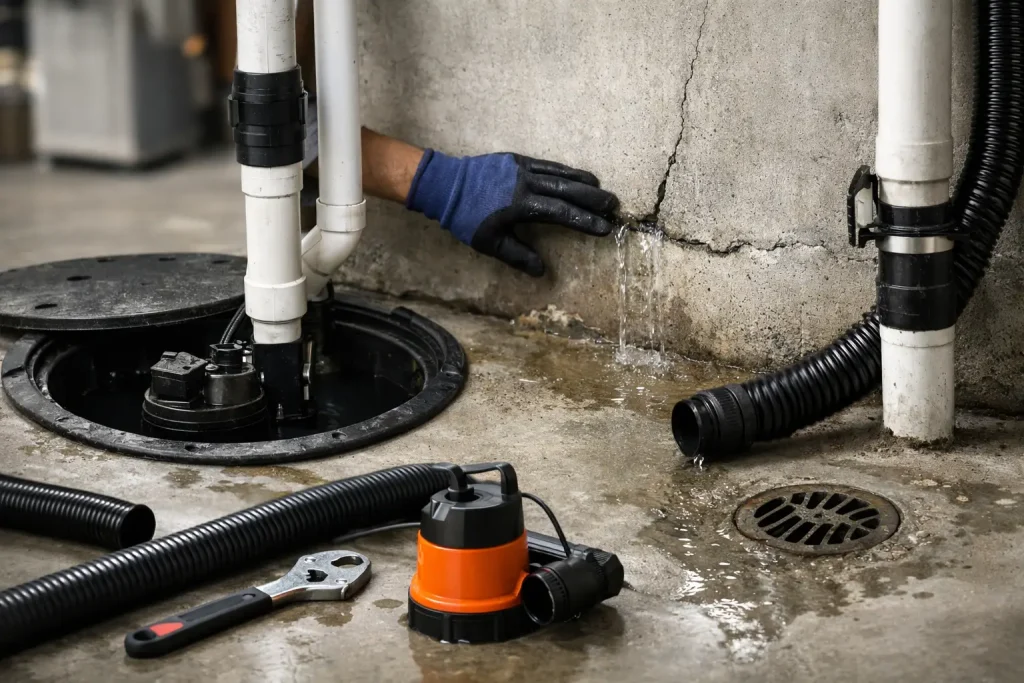
A wet basement usually does not start with a dramatic flood. More often, it starts with a damp corner, a musty smell, a white chalky stain on the wall, or a puddle that shows up after heavy rain and then disappears. That is exactly why a homeowner guide to basement drainage matters. Small drainage problems have a way of turning into bigger repair bills when they are ignored.
For New Jersey homeowners, basement drainage is rarely about one single issue. Water may be pushing in from outside soil, running toward the foundation because of poor grading, slipping through wall cracks, or collecting under the slab with nowhere to go. The right fix depends on where the water is coming from, how often it happens, and what condition the basement and foundation are already in.
Why basement drainage problems happen
Basements sit below grade, which means they are surrounded by soil that holds water. After rain or snowmelt, that soil becomes heavy and saturated. If the water around your home cannot drain away properly, it presses against the foundation walls and floor. That pressure can force moisture through weak points, including cracks, cove joints, porous concrete, and pipe penetrations.
Some homes have outside drainage issues only. Others have a mix of interior and exterior problems. A clogged gutter may dump roof runoff next to the house, while a failing footing drain allows groundwater to build up below the slab. In older homes, it is also common to find that the original drainage system simply cannot keep up anymore.
This is where homeowners sometimes get bad advice. Painting over a damp wall or running a dehumidifier may help with symptoms, but neither one solves water pressure around the foundation. Drainage has to be addressed at the source or managed properly before the problem becomes mold, rot, or structural damage.
A homeowner guide to basement drainage warning signs
Not every drainage issue looks like standing water. In fact, some of the most important signs are easy to miss if you are only looking for a flooded floor.
A musty odor is often one of the earliest clues. Moisture trapped in basement materials creates the conditions mold needs to grow, even when you do not see active water. Efflorescence, the white powdery residue left behind on masonry surfaces, is another sign that water has been moving through the foundation. Peeling paint, warped paneling, rust on appliances, and damp carpeting all point to moisture that should not be there.
You should also pay attention to what happens outside. Soil that slopes toward the house, downspouts that discharge too close to the foundation, low spots near basement walls, and overflowing gutters can all feed a basement drainage problem. Inside, cracks in walls or floors may be cosmetic, but if they are allowing water in, they should be evaluated with drainage in mind.
The main types of basement drainage solutions
The best basement drainage plan is based on the actual path of the water. That is why a proper inspection matters. The goal is not to sell the biggest system. It is to match the solution to the problem.
Exterior grading and runoff control
Sometimes the first fix is also the simplest. If roof runoff is pouring next to the foundation or the yard pitches toward the house, water is being invited in. Correcting grading, extending downspouts, and controlling surface runoff can make a meaningful difference.
That said, surface improvements have limits. If groundwater is rising under the slab or hydrostatic pressure is already affecting the basement, better grading alone may not be enough. It helps, but it may not solve the whole issue.
Interior French drain systems
An interior French drain is one of the most effective ways to manage basement water when moisture is entering at the floor edge or building up under the slab. This system is installed below the basement floor along the perimeter to collect water and direct it to a sump pump.
For many homeowners, this is a practical answer because it manages water before it reaches the living space. It does not rely on trying to hold back water pressure forever. Instead, it gives water a controlled path out.
The trade-off is that this is not a cosmetic patch. It is a real drainage system, which means professional installation matters. Design, pitch, basin placement, and clean execution all affect long-term performance.
Sump pump systems
A sump pump is often the heart of an interior drainage system. Once water is collected, it needs to be removed safely and reliably. A properly sized sump pump discharges that water away from the foundation so it does not circle back.
Not every home with a sump pump has the right pump for its water volume. And not every pump system includes basic protections like battery backup for storms and outages. Since many basement water events happen during severe weather, backup protection is not an extra for many homes. It is part of a dependable plan.
Exterior waterproofing and footing drainage
In some cases, the right approach is exterior excavation and foundation waterproofing. This may be necessary when foundation walls are taking on significant water, existing exterior drainage has failed, or there are structural concerns that need direct access from outside.
Exterior work can be highly effective, but it is also more invasive and often more expensive than interior drainage. That does not make it wrong. It simply means the choice should be based on the home, not on a one-size-fits-all sales pitch.
How to tell which drainage solution your basement needs
If the basement gets wet only during heavy rain, surface drainage may be part of the problem. If water appears where the wall meets the floor, an interior perimeter drain may be appropriate. If the issue is persistent seepage through walls, or if there are signs of foundation deterioration, the drainage conversation may need to include exterior waterproofing or structural repair.
Finished basements add another layer. Homeowners often focus on protecting flooring, drywall, and storage, but the real priority is controlling the water before those materials are replaced. Otherwise, the same damage returns. A dry finished basement depends on the same thing as an unfinished one – proper drainage and moisture control.
This is also why clear, honest recommendations matter. A good contractor should explain what they found, what the water is doing, and why a specific repair makes sense. If the recommendation feels oversized, vague, or driven by urgency instead of evidence, it is fair to ask more questions.
Why quick fixes often fail
Sealants and waterproof paints are commonly marketed as basement solutions, but they usually work best as supplemental protection, not primary drainage control. If water pressure remains outside the wall or below the floor, coatings alone will not stop the underlying cause.
The same goes for treating mold without addressing moisture. Mold remediation has value when contamination is present, but moisture control has to come first or the problem can return. Basement drainage is not just about getting rid of water you can see. It is about creating conditions where water does not keep causing damage in hidden areas.
What homeowners should expect from a professional inspection
A real drainage inspection should look at the whole system, not just the wet spot. That includes exterior grading, gutter discharge, foundation wall conditions, floor cracks, humidity levels, sump pump performance, and signs of previous water movement.
Homeowners deserve straightforward answers. Where is the water coming from? Is this a surface runoff problem, subsurface pressure problem, structural issue, or some combination? What repair options are available, and what are the pros and cons of each one?
At A-1 Basement Solutions, that solutions-first mindset matters because homeowners need clarity, not pressure. Basement drainage work is an investment in the house, and people should understand what they are buying and why it protects the property long term.
Basement drainage and long-term home value
A dry basement does more than make the space usable. It protects framing, lowers the chance of mold, reduces damage to finishes and stored belongings, and helps preserve the condition of the foundation itself. It also matters when it is time to sell. Water history, musty odors, and visible moisture damage can raise immediate concerns for buyers.
Good drainage work is rarely the most visible upgrade in a home, but it is one of the most practical. It supports health, comfort, and structural stability all at once. And unlike temporary fixes, a properly designed system gives homeowners something better than hope after the next storm – it gives them a plan that works.
If your basement has been giving you small warning signs, trust them. Water problems are easier to solve when they are understood early, and the right drainage solution can turn a recurring headache into lasting peace of mind.