
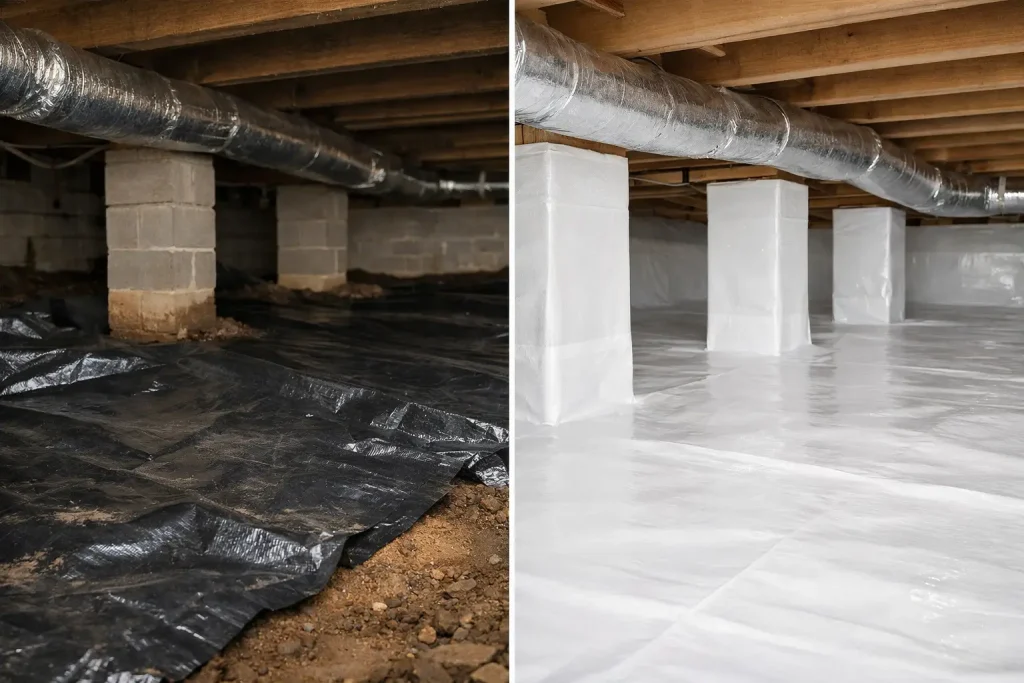
A crawl space can look dry during a quick visit and still send moisture, musty odors, and mold-friendly air into the home above it. That is why the choice between vapor barrier versus encapsulation matters. Both approaches address moisture from the earth, but they solve different levels of the problem. The right answer depends on where the water is coming from, how damp the space stays, and whether the crawl space is affecting the rest of your home.
For New Jersey homeowners, this is rarely just a cosmetic decision. Seasonal humidity, heavy rain, high water tables, and older construction can all create conditions that allow crawl space moisture to return year after year. A clear inspection should identify the cause before recommending the fix – no pressure, just solutions that fit the home.
What a vapor barrier does
A vapor barrier is a heavy plastic liner installed over the exposed dirt floor of a crawl space. Its primary job is to reduce the amount of water vapor that rises from the soil into the air below your home.
Bare earth constantly releases moisture. Even if there is no standing water, that moisture can raise crawl space humidity. Wood framing can absorb it, insulation can become damp, and condensation may form on pipes or HVAC equipment. A properly installed ground vapor barrier creates a physical separation between the soil and the crawl space air.
For a crawl space with minor ground moisture and no active water intrusion, this can be a meaningful improvement. It is generally the simpler and less expensive option because it focuses on the floor rather than converting the entire crawl space into a controlled environment.
However, a vapor barrier is not automatically a complete moisture-control system. If water enters through the foundation walls, collects after storms, or flows beneath the liner, covering the soil alone will not stop those problems. The material can also be punctured or shifted when it is loosely laid, which reduces its effectiveness over time.
What crawl space encapsulation does differently
Crawl space encapsulation is a more complete approach. It typically includes a durable vapor barrier across the floor and up the foundation walls, with seams and edges sealed. Open vents, gaps, and penetrations are addressed so humid outdoor air cannot freely enter the space.
The goal is not simply to cover dirt. It is to control the crawl space environment. Depending on the conditions, an encapsulation system may also include drainage, a sump pump, insulation improvements, and a dehumidifier to keep humidity at an appropriate level.
That added scope makes encapsulation a stronger option when a crawl space has recurring dampness, visible mold, wood deterioration, condensation, pest activity, or persistent musty odors. It can also help homeowners who notice cold floors, uneven indoor temperatures, or elevated humidity in the living areas above the crawl space.
Encapsulation is a larger investment, and it should not be treated as a one-size-fits-all upgrade. Sealing a crawl space before correcting active water entry can trap water where it does not belong. A quality plan handles bulk water first, then addresses ground vapor and humid air.
Vapor barrier versus encapsulation: the practical difference
The simplest distinction is this: a vapor barrier limits moisture evaporating from the ground, while encapsulation is designed to manage the entire crawl space moisture environment.
A basic vapor barrier may be appropriate when the crawl space is structurally sound, the soil is the main source of dampness, and the area does not show evidence of ongoing leaks or high humidity. It can reduce moisture exposure without adding unnecessary work.
Encapsulation is usually the better fit when multiple moisture sources are involved. A damp foundation wall, open vents during humid summers, poor exterior drainage, and wet soil can work together. In that situation, a floor liner by itself may improve one source while leaving the others in place.
The difference also comes down to durability and detail. An encapsulation system uses sealed transitions, wall coverage, careful work around piers and plumbing, and a plan for maintaining lower humidity. Those details help make the system perform as intended rather than looking finished on installation day and failing after the next wet season.
Signs a vapor barrier may be enough
A vapor barrier can be a reasonable solution when moisture is limited and the crawl space does not have a history of flooding or widespread dampness. During an inspection, a specialist may find that the ground is exposed but the foundation walls are dry, framing is in good condition, and humidity levels are not excessively high.
It may also make sense for homeowners who need to address soil moisture first and monitor the space afterward. The key is to use an appropriately durable liner, extend it correctly around obstacles, and avoid treating a simple installation as a substitute for drainage repairs.
Even in a relatively dry crawl space, the vapor barrier should be installed neatly and secured where needed. Thin plastic that is loosely spread across the soil can tear easily and may not provide lasting value.
Signs encapsulation is the better investment
Encapsulation deserves serious consideration when the crawl space has a pattern of moisture-related problems rather than one isolated concern. Common warning signs include a lingering musty smell, visible mold growth, damp or falling insulation, condensation on ducts or pipes, rusted metal components, and soft or discolored wood framing.
It is also often appropriate after water-control work is completed. For example, if a perimeter drainage system and sump pump are needed to collect groundwater, encapsulation can protect the space from soil vapor and humid outdoor air once the active water is under control.
Homeowners sometimes focus only on what they can see in the crawl space. But the effects can show up elsewhere. Air naturally moves upward through a home, so a damp crawl space can contribute to odors and humidity indoors. Protecting that lower area can support a healthier, more comfortable home above it.
Do not overlook drainage and humidity control
Neither a vapor barrier nor encapsulation can compensate for a serious drainage issue that has been left unresolved. If rainwater is being directed toward the foundation, gutters are overflowing, grading slopes toward the house, or groundwater regularly enters the crawl space, water management must be part of the conversation.
Interior drainage and a sump pump may be necessary when water collects around or below the foundation. Exterior improvements can also help limit the amount of water reaching the home. The right scope depends on the property, soil conditions, foundation design, and evidence found during an inspection.
Humidity control matters after the space is sealed as well. A dehumidifier may be recommended to maintain stable conditions, particularly in New Jersey’s humid summer weather. It should be properly sized, installed with reliable drainage, and checked periodically. Encapsulation reduces moisture entry, but managing the remaining moisture is what helps keep the space consistently dry.
Questions to ask before choosing a system
Before approving either option, ask what moisture source the recommendation is intended to address. A contractor should be able to explain whether the concern is soil vapor, groundwater, rainwater runoff, humid air, plumbing leakage, or a combination of factors.
Ask how the proposed system handles active water, whether vents will remain open or be sealed, and whether a dehumidifier is recommended. It is also reasonable to ask about liner thickness, seam sealing, drainage discharge, cleanup practices, and warranty coverage. Clear answers are a sign that the work is being designed for your home rather than sold as a generic package.
At A-1 Basement Solutions, crawl space recommendations are built around the conditions found during the inspection. Some homes need a straightforward moisture barrier. Others need a coordinated plan that includes drainage, a sump system, encapsulation, and humidity control. The value is in correcting the source, not adding services that the home does not need.
Protect the crawl space before small issues become costly
The best choice is the one that matches the actual moisture conditions beneath your home. If you smell mildew, see damp insulation, notice water after rain, or have never looked closely at an exposed dirt crawl space, an inspection can replace guesswork with a practical plan. Addressing the problem while it is contained can help protect your home’s air quality, structural materials, and long-term value.