
A puddle along a basement wall after a hard New Jersey rain can make one question feel urgent: should you fix the yard or install a drainage system inside? The answer to interior drain versus grading is rarely one-size-fits-all. Both methods manage water, but they manage different water paths. Choosing the wrong one can mean spending money on a visible improvement while the basement continues to get wet.
A reliable solution starts with identifying where the water is coming from, how it travels, and what happens below the surface. No Problems, Just Solutions means looking beyond the stain on the floor to find the conditions causing it.
Interior Drain Versus Grading: The Core Difference
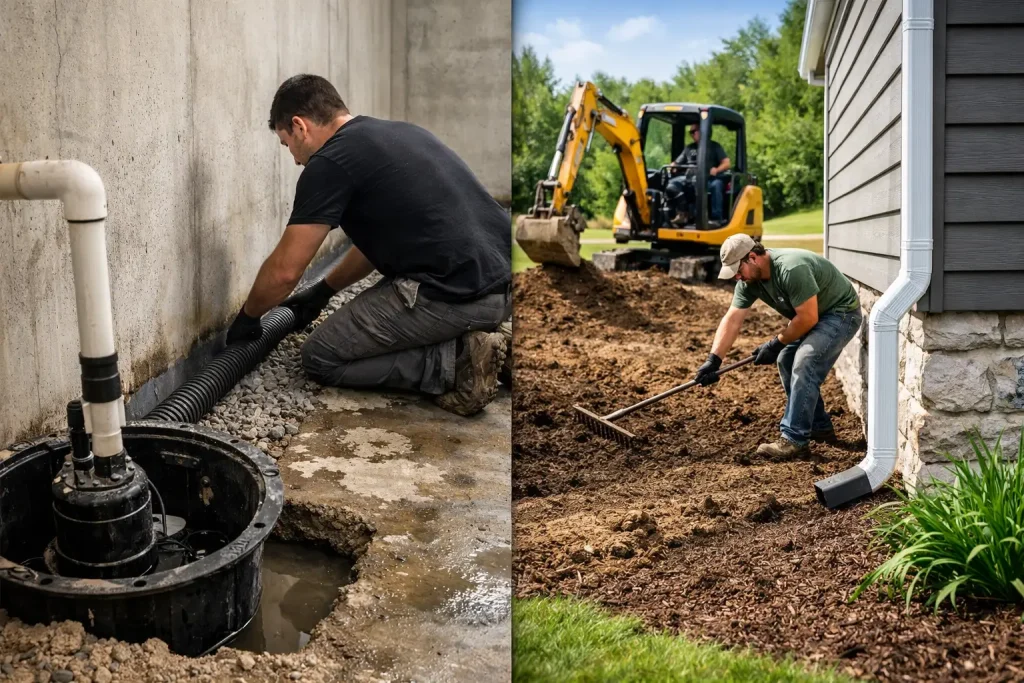
Grading is an exterior water-management strategy. It changes the slope of the soil around the foundation so rainwater moves away from the house rather than collecting near the walls. Properly installed downspout extensions and well-maintained gutters support that work by keeping roof runoff from dumping beside the foundation.
An interior drain is a below-floor drainage system installed around the inside perimeter of the basement. Water entering through wall-floor joints, foundation cracks, or the surrounding soil is directed into the system and carried to a sump pump, which discharges it safely away from the home.
Put simply, grading helps prevent surface water from becoming a problem. An interior drainage system controls water that reaches the foundation or finds its way into the basement anyway. One is preventive at the surface; the other is a dependable collection and discharge system for water pressure and intrusion below grade.
When Grading Is the Right First Step
Grading can be highly effective when the issue is clearly tied to surface runoff. If the ground slopes toward the house, mulch beds have built up too high against the siding, or a downspout releases water next to the foundation, correcting those conditions may significantly reduce moisture.
This is especially true when water appears only after rain, only on one side of the home, and near an obvious exterior drainage problem. A low area beside the house can hold water against the foundation long after a storm has passed. In freezing weather, repeated saturation and freeze-thaw cycles can also add stress to masonry and concrete.
A proper grading correction is more than adding a few bags of topsoil against the wall. Soil should slope away from the house while preserving clearance below siding and exterior finishes. Covering weep holes, burying wood siding, or pushing soil too high against the foundation can create new moisture and pest problems. The finished grade also needs to blend into the larger yard so water has somewhere to go.
Grading is often the less disruptive option when it is truly the needed repair. However, it has limits. Many New Jersey properties have tight side yards, patios, walkways, retaining walls, mature landscaping, or neighboring homes that restrict how much the grade can be changed. Clay-heavy soil can also hold water near the foundation even when the surface slope looks acceptable.
When an Interior Drain Makes More Sense
An interior drain is usually the stronger choice when water is entering at the wall-floor seam, when the basement has recurring dampness, or when the soil around the home becomes saturated. Water does not need to pour through a crack to justify drainage. Damp edges, white mineral deposits on concrete, peeling paint, a musty odor, and periodic puddles can all indicate water movement around the foundation.
This approach is also valuable when exterior excavation would be impractical or unnecessarily disruptive. Installing an interior system allows trained crews to access the problem from inside the basement, create a drainage channel at the foundation perimeter, and connect it to a properly sized sump pump system. The goal is not to pretend groundwater will never reach the foundation. The goal is to give that water a controlled path out.
For many homeowners, this is the difference between hoping the next storm stays manageable and having a system designed for the storms that do not. An interior drain is particularly useful for basements that sit below the surrounding water table or receive water through the footing area during prolonged rain.
That said, an interior drainage system is not a substitute for basic exterior maintenance. Clogged gutters and short downspouts can overload the soil around any foundation. Even a good drainage system should not be asked to handle avoidable roof runoff day after day.
Signs You May Need Both
The best answer is often not interior drain versus grading, but interior drain and targeted grading. These approaches work well together because they address different parts of the same water problem.
Consider a home where the rear yard slopes toward the foundation and the basement takes on water at the wall-floor joint during heavy storms. Regrading the yard may reduce the volume of surface water reaching that wall. But if groundwater pressure remains high or water has already found pathways beneath the slab, an interior drain can provide the dependable backup that grading alone cannot.
A combined approach is commonly appropriate when several conditions exist at once:
- Water pools near the foundation after rain.
- Downspouts discharge too close to the home.
- The basement has a history of seepage or damp wall-floor joints.
- The problem continues during long wet periods, even after obvious exterior drainage issues are corrected.
The key is not to add every possible service. It is to address each confirmed source of water with the right repair. An honest inspection should distinguish between a simple surface-drainage correction and a basement system that needs long-term water control.
Why Water Can Still Enter After You Improve the Grade
Homeowners sometimes feel frustrated when new grading improves the yard but does not completely stop basement seepage. That does not necessarily mean the grading work failed. It may mean the home has more than one moisture pathway.
Rainwater can move through soil below the visible surface. As the ground becomes saturated, hydrostatic pressure can push water toward foundation walls and under basement floors. Older foundations may also have joints, porous sections, or small cracks that allow moisture through. A basement can receive water from a high water table, underground soil conditions, and surface runoff all at the same time.
This is why a visual inspection of the yard alone is not enough. The basement itself tells an important part of the story. The location of staining, the timing of moisture, the condition of wall finishes, and the operation of the sump pump all help identify whether water is coming over the top, through the side, or from beneath the floor.
Questions to Ask Before Choosing a Solution
Before approving either repair, ask what evidence supports the recommendation. A qualified waterproofing specialist should be able to explain where the water is likely entering, why that route makes sense, and what the proposed system will control.
Ask whether the problem occurs only during heavy rain or also after snowmelt and long wet stretches. Ask whether water is visible at the wall-floor joint, on the wall itself, or near a floor drain. Ask where the sump pump will discharge and whether the discharge location sends water far enough from the foundation. If grading is recommended, ask how the new slope will handle water at the property line, patio, or landscaping beds.
It is also reasonable to ask about installation practices, cleanup, warranty coverage, and who will perform the work. A-1 Basement Solutions uses in-house W2 crews because accountability matters when work affects your home’s foundation, finished spaces, and long-term value.
Do Not Let a Dry Day Decide the Repair
A basement may look fine during a short stretch of dry weather while hidden moisture continues to affect materials below the surface. Waiting until water returns can lead to damaged flooring, stored belongings, mold growth, and a more stressful repair decision.
If your yard slopes toward the house, start by correcting the obvious drainage issues. If the basement has a pattern of seepage or water pressure, an interior drain may be the protection that gives you real peace of mind. The most helpful next step is a clear inspection that explains what your home needs, what it does not need, and how to keep the next heavy rain from becoming a basement emergency.