
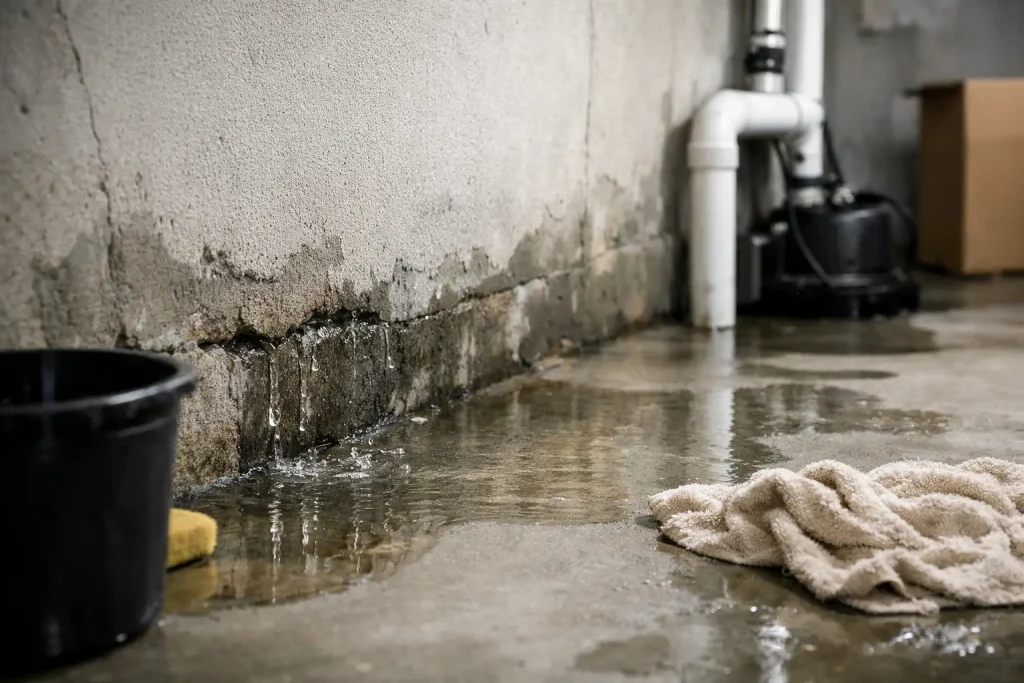
You go downstairs after a storm and spot it right away – a damp wall, a puddle near the corner, or that musty smell that tells you water got in again. If you are asking, why is my basement leaking, the real answer is usually not just “rain.” Basement leaks happen because water is finding pressure points around your home and taking the easiest path inside.
That path can come from outside grading, clogged gutters, hydrostatic pressure, foundation cracks, window wells, or a failing drainage system under the floor. Sometimes it is one obvious issue. More often, it is a combination of small problems that add up every time the ground gets saturated. The good news is that a leaking basement is usually fixable once the true source is identified.
Why is my basement leaking after rain?
If the leak shows up during or right after heavy rain, surface water is the first place to look. Rainwater should move away from your home quickly. When it does not, the soil around the foundation becomes oversaturated and starts pressing moisture against basement walls and floor joints.
In New Jersey, this is especially common because homes often deal with periods of heavy rain, changing groundwater conditions, and older drainage setups that were never designed for today’s weather patterns. Even a well-built basement can start leaking when exterior water management is poor.
The most common reason is improper grading. If the ground around the home slopes toward the foundation instead of away from it, water collects along the basement walls. That water then seeps through cracks, porous concrete, or the cove joint where the wall meets the floor.
Gutters and downspouts are another major culprit. If gutters overflow or downspouts dump water too close to the house, thousands of gallons of roof runoff can end up right beside the foundation over the course of a season. Homeowners are often surprised by how much damage a simple drainage issue can create.
The most common basement leak sources
A basement leak is not always dramatic. Sometimes it shows up as staining, peeling paint, efflorescence, or a humid smell before you ever see standing water. Those early signs matter because they can point to the source.
Foundation wall cracks
Concrete walls can crack over time from settlement, soil movement, or pressure from expanding wet soil. Not every crack is a structural emergency, but any crack can become a water entry point. Vertical cracks are common, and while some are relatively straightforward to repair, they still should not be ignored if moisture is coming through.
Horizontal cracks deserve closer attention because they can suggest lateral pressure against the wall. If leaking is paired with bowing, shifting, or widening cracks, that moves beyond a waterproofing concern and into foundation repair territory.
Floor cracks and the wall-floor joint
Water often enters at the seam where the basement wall meets the floor. This area is vulnerable because hydrostatic pressure pushes groundwater upward and inward. When the soil around and under the home becomes saturated, the water needs somewhere to go. If there is no effective relief system in place, it can force its way into the basement.
That is why some basements leak even when the walls themselves look fine. The issue may be under the slab, not just through the wall.
Window wells and basement windows
A leaking basement window can send water down the wall and across the floor, making it look like the whole basement is failing when the problem is actually more localized. Window wells can fill with water if drains are clogged, covers are missing, or grading sends runoff directly into them.
Old window frames, deteriorated seals, and poor installation can also let water in during wind-driven rain.
Porous masonry and aging materials
Concrete and block foundations are strong, but they are not naturally waterproof forever. Over time, water can move through pores in masonry, especially if exterior waterproofing is missing, damaged, or outdated. If your basement walls look damp over large areas rather than leaking from a single crack, this may be part of the problem.
Failed sump pump or interior drainage system
Some homes already have waterproofing systems, but leaks still happen because the system is not functioning properly. A sump pump may have failed, a discharge line may be blocked, or an interior drain may be overwhelmed or partially clogged.
This is one reason quick patch jobs can be frustrating. If the underlying drainage issue is still there, sealing a visible leak may only hide the symptom for a while.
Why is my basement leaking if I do not see a crack?
Not all basement leaks come through obvious openings. Water can pass through tiny gaps, porous block walls, pipe penetrations, cold joints, or the cove joint at the base of the wall. In finished basements, the real entry point may be hidden behind drywall, flooring, or insulation.
This is where homeowners can lose time and money. You may clean up the same corner repeatedly without realizing the water is traveling from a different area and simply showing up there because that is the lowest point or easiest route.
That is why leak detection should focus on patterns, not just puddles. When does the leak happen? Is it only after heavy rain, during snowmelt, or all the time? Is there staining along one wall, or does the moisture seem to rise from the floor? Those details help narrow down whether the source is surface runoff, groundwater pressure, plumbing, or condensation.
When it is not a leak from outside
Sometimes a “leaking basement” is actually an indoor moisture issue. Condensation can form on cool basement walls, pipes, or floors when humid air meets a cold surface. This is common in summer and can create dampness, mildew odor, and even visible water droplets.
Plumbing leaks can also mimic foundation water problems. A small supply line leak, a slow drain issue, or an HVAC condensation problem may appear near walls or under flooring and get blamed on rain.
The difference matters because the fix is completely different. Exterior water intrusion calls for drainage and waterproofing solutions. Interior moisture problems may call for pipe repair, insulation, ventilation improvements, or dehumidification. It depends on what is really happening, which is why a proper inspection matters more than guesswork.
What will not solve the problem for long
Many homeowners understandably start with the fastest fix. They paint over the wall, seal the visible crack from the inside, or run a fan and hope the issue goes away. That can help cosmetically, but it rarely addresses the pressure causing the leak.
Waterproof paint has limits. Caulk has limits. Even some crack repairs have limits if the area around the home is still collecting water. If hydrostatic pressure keeps building outside or under the slab, the water usually finds another way in.
A lasting repair starts by answering a basic question: are you dealing with surface water, groundwater, structural movement, or a combination of the three? Once that is clear, the right fix becomes much easier to identify.
The right fix depends on the cause
Some basement leaks can be reduced with exterior drainage corrections such as extending downspouts, regrading soil, or improving water flow away from the house. Those steps are worthwhile, especially when the problem is isolated and caught early.
But if the basement leaks regularly, if water enters at the wall-floor joint, or if there are signs of pressure below the slab, the more reliable solution is often a full waterproofing approach. That may include an interior drainage system, sump pump installation, crack repair, vapor management, or in some cases foundation repair if structural movement is part of the issue.
The best contractors do not jump straight to the biggest job. They inspect the full picture, explain what they see, and recommend what fits the house. That is the standard homeowners should expect. At A-1 Basement Solutions, that means looking for the source, not selling fear.
When to act on a leaking basement
If the leak is minor, it is tempting to wait. But basement water problems rarely stay small. Repeated moisture can damage flooring, drywall, stored belongings, and air quality. It can also contribute to mold growth and worsen foundation issues over time.
A basement does not need to flood to be a serious problem. Persistent dampness is enough reason to have it checked, especially if the smell lingers, the walls are staining, or you are seeing the same issue after every storm.
The goal is not just to dry the basement once. It is to understand why the water is getting in and fix it in a way that protects your home for the long term. That starts with a clear inspection, honest answers, and a solution built around the actual cause – not just the visible mess.
If your basement is leaking, trust what the house is telling you. Water always leaves clues, and the sooner those clues are read correctly, the easier it is to protect the space below your home and everything above it.