
A basement can stay dry for years, then take on water during the one storm that also knocks out the power. That is why a sump pump backup system guide matters for New Jersey homeowners. A primary sump pump is a critical part of a waterproofing system, but it cannot protect your home if it loses power, becomes overwhelmed, or stops working when you are away.
A backup system gives your basement another line of defense. The right choice depends on your home’s water volume, utility setup, budget, and the kinds of failures you are most likely to face. The goal is not to buy the most complicated equipment. It is to create dependable protection that works when your primary pump cannot.
What a Sump Pump Backup System Does
A sump pump collects groundwater that reaches the sump pit and sends it safely away from the foundation through a discharge line. During normal conditions, the primary pump handles that work. A backup system activates when water rises above the primary pump’s operating level or when the main pump cannot run.
That distinction is important. A backup pump is not a replacement for a properly sized primary pump, a good drainage system, or a clear discharge line. If your basement regularly receives heavy water volume, the main system must be designed to manage it. The backup is there for the unexpected: a power outage, a failed float switch, a burned-out motor, or a storm that pushes the primary pump beyond its capacity.
For many homes, a backup system is especially valuable because major rain events often bring the exact conditions that create risk: saturated soil, high water tables, fast runoff, and utility interruptions. A homeowner may not know there is a problem until water is already across the basement floor.
Sump Pump Backup System Guide: Your Main Options
Most homeowners choose between a battery backup pump and a water-powered backup pump. Some homes can also benefit from a generator, but generators serve a broader purpose and should not be confused with a dedicated sump pump backup.
Battery Backup Sump Pumps
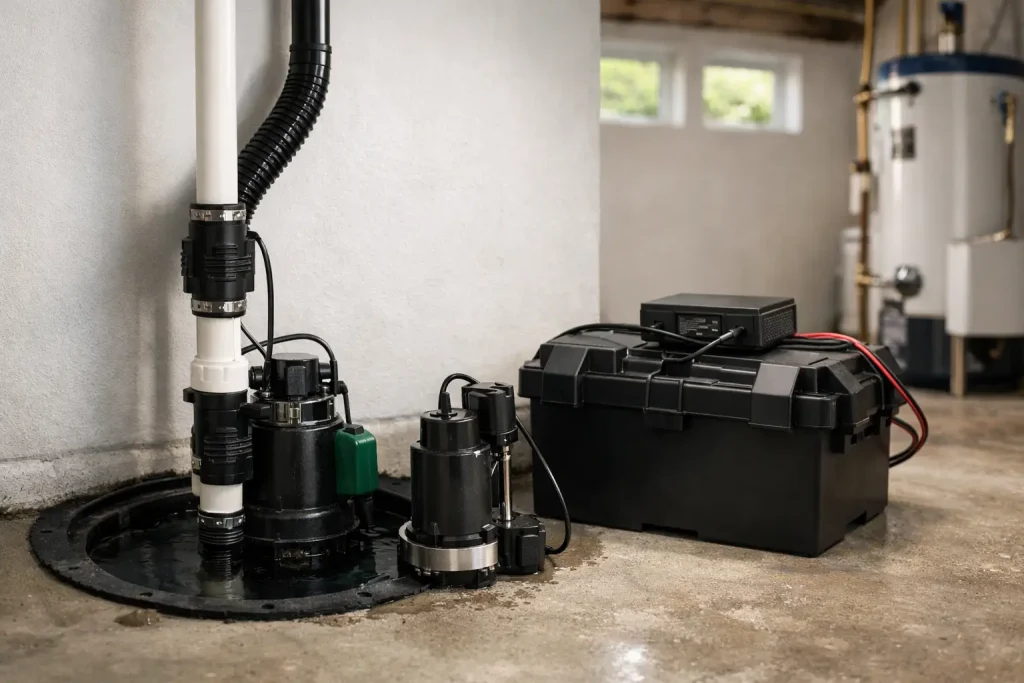
A battery backup sump pump uses a separate DC-powered pump and battery. When the primary pump fails or utility power goes out, the backup pump turns on automatically.
This is the most common option for homes with municipal water or well water. It can provide dependable short-term pumping during an outage, and many systems include alarms that alert you to high water, a low battery, or pump activation.
Battery systems do have limits. Their runtime depends on battery capacity, the amount of water entering the pit, and how hard the backup pump must work. A modest amount of seepage may allow a battery to last for many hours. Heavy stormwater entering the system continuously can drain it much faster. The battery also needs routine testing and eventual replacement.
A battery backup is often a practical choice when your primary concern is keeping the sump pit protected during a typical power outage. It is also a good fit where a water-powered system is not possible or where homeowners want alerts and monitoring features.
Water-Powered Backup Pumps
A water-powered backup uses your home’s municipal water pressure to create suction and remove sump water. It does not rely on electricity or a battery, which makes it appealing during long outages.
The trade-off is straightforward: it uses a significant amount of municipal water while it runs. It also requires adequate water pressure and proper plumbing installation. Homes served by a private well generally cannot rely on this type of backup during a power outage because the well pump also needs electricity.
For a home with reliable municipal water pressure and a history of extended outages, a water-powered backup can offer strong protection. Homeowners should understand the potential water use and confirm that local plumbing requirements and their water supply support the installation.
Generator Support
A portable or standby generator can keep a primary sump pump running during an outage, assuming it is properly sized and connected. A standby generator can be an excellent whole-home solution, especially for homeowners who also need to protect refrigerators, HVAC equipment, well pumps, or medical devices.
Still, a generator is not always automatic protection for the sump system. A portable generator must be started, fueled, and safely connected. If no one is home, it may not help. A standby unit starts automatically, but it is a larger investment. Even with a generator, a separate alarm or backup pump can provide additional peace of mind.
How to Choose the Right Backup for Your Home
Start with the reason you need backup protection. If your neighborhood experiences frequent short power outages, a battery backup may be enough. If outages can last a day or more and you have municipal water, a water-powered backup may be worth considering. If your home relies on a well, battery capacity and generator planning become more important.
Then look at the water itself. A basement that sees occasional minor seepage needs a different solution than one with a high water table or repeated heavy inflow during storms. Pump capacity is measured in gallons per hour, but the right capacity is not just a number on a box. It depends on how high the pump must lift water, the condition and length of the discharge line, and the volume entering the pit.
The sump pit also matters. A pit that is too small can cause pumps to cycle too frequently, which can shorten equipment life. A properly installed system should have enough room for the pumps, floats, and incoming water to operate without obstruction.
Finally, consider where the water goes after it leaves the house. A powerful pump cannot help if the discharge line is frozen, clogged, disconnected, or draining too close to the foundation. The discharge should carry water away from the home without creating a new drainage problem for your property or your neighbors.
Installation Details That Protect Performance
Backup systems work best when they are installed as part of a complete approach to water control. The primary and backup pumps should have separate float switches so one failure does not prevent both pumps from activating. Check valves should be installed correctly to prevent water from flowing back into the pit after pumping.
The electrical setup deserves attention as well. The primary sump pump should be on a properly grounded outlet, ideally with a dedicated circuit where appropriate. Avoid plugging a sump pump into an overloaded extension cord or power strip. Battery backup systems need a charger that remains connected and monitored.
An alarm is one of the most useful features available. A high-water alarm can alert you before water reaches the basement floor, while a battery system may also warn you about low battery power or a charger issue. An alarm cannot remove water, but it gives you time to respond before a small equipment problem becomes property damage.
Professional installation helps prevent the common mistakes that homeowners cannot easily see: incorrect discharge routing, poorly adjusted floats, improper check valve placement, undersized piping, or a backup pump that cannot handle the home’s actual water conditions. A clear explanation of the system, its limits, and its maintenance needs should be part of the installation process.
Maintenance Is Part of the Protection
A backup system is only dependable if it is maintained. Test the primary and backup pumps several times a year, especially before spring rains and hurricane season. Pour water into the pit slowly enough to confirm that each float activates and that water moves through the discharge line as expected.
For battery backups, inspect the battery terminals for corrosion, make sure the charger is operating, and follow the manufacturer’s guidance for battery replacement. Do not assume a battery is good simply because the indicator light is on. Batteries lose capacity over time, and an old battery may not provide meaningful runtime during a long storm.
Keep the sump pit reasonably clean. Dirt, gravel, and debris can interfere with float switches or clog the pump intake. Outside, inspect the discharge outlet for blockages, ice, animal nests, or landscaping that prevents water from flowing away.
If your pump runs constantly, cycles unusually often, makes new noises, or triggers alarms, treat it as a service issue rather than waiting for the next storm. Those symptoms can point to a failing pump, a drainage concern, or groundwater conditions that require a more complete waterproofing solution.
A sump pump backup system is not about expecting the worst. It is about giving your home a dependable answer when weather, power, and equipment do not cooperate. With a correctly sized system, professional installation, and simple routine testing, you can protect the space below your home before water has a chance to take it over.