
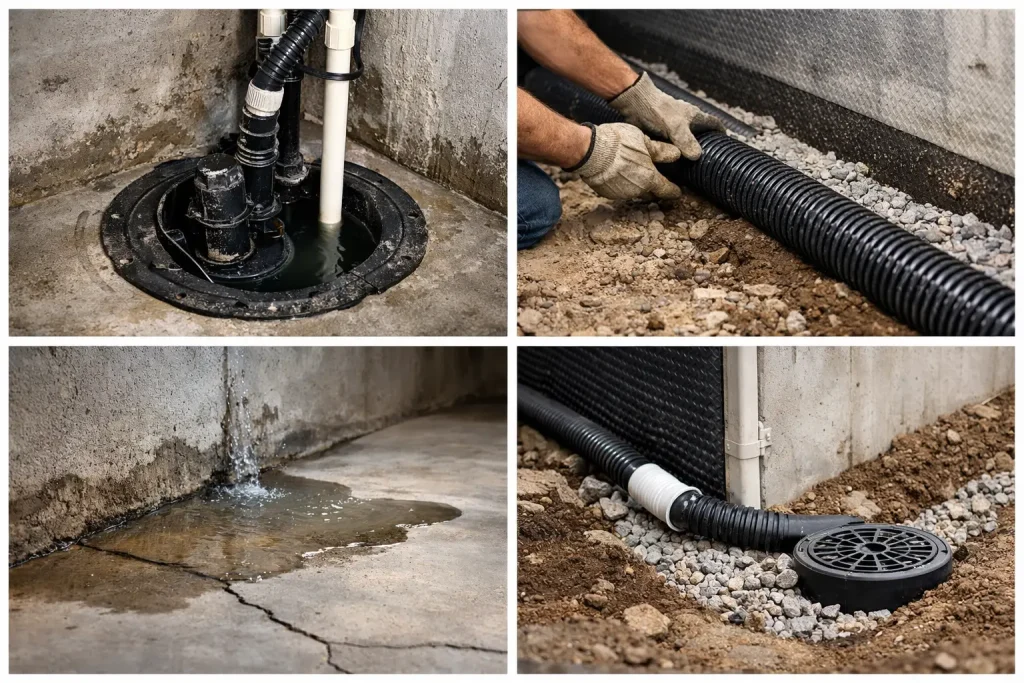
A wet basement usually does not start in the basement. It starts outside, where water is allowed to collect, run toward the house, or press against the foundation until it finds a way in. That is why the best basement drainage solutions are rarely a single product. The right fix depends on where the water is coming from, how often it happens, and how your home is built.
For New Jersey homeowners, that matters. Heavy rains, high water tables in some areas, older foundations, and seasonal freeze-thaw cycles can all work together against your basement. A quick patch may hide the problem for a while, but real protection comes from choosing the drainage approach that matches the cause.
What makes the best basement drainage solutions work
Good drainage does two jobs. First, it keeps as much water as possible away from the foundation. Second, it gives any water that does reach the home a controlled path to move out safely.
That is why drainage work often includes both exterior and interior systems. If a contractor recommends only one piece of the puzzle without explaining the full water path, it is fair to ask more questions. Water management should make sense from roofline to footing, not just at the spot where you see a puddle.
1. Regrading the soil around the foundation
If the ground around your home slopes toward the foundation, rainwater will follow it. This is one of the most common and most overlooked causes of basement moisture.
Proper grading creates a gentle slope away from the house so surface water drains outward instead of pooling along the wall. This can be a strong first step when water shows up after storms but the basement is otherwise dry. It is also one of the more cost-effective fixes when the issue is clearly outside.
The trade-off is that grading alone will not solve deeper groundwater problems or water entering through wall-floor joints under hydrostatic pressure. It helps with runoff, not every form of seepage. Still, when the yard is pitched the wrong way, no interior system is addressing the full problem without it.
2. Extending gutters and downspouts
A roof sheds an enormous amount of water during a storm. If that water dumps next to the house, it quickly saturates the soil around the foundation.
Clean gutters and properly sized downspout extensions can make a bigger difference than many homeowners expect. When downspouts discharge several feet away from the home, they reduce the volume of water collecting at the base of the foundation. In many cases, this simple correction can reduce dampness, wall staining, and minor seepage.
This solution works best when the problem is clearly tied to roof runoff. If water is rising from below the slab or entering continuously even in lighter weather, you are likely dealing with something more than gutter discharge.
3. Exterior foundation drainage
Exterior drainage systems are designed to intercept water before it pushes against the basement wall. This often involves excavating around the foundation, applying waterproofing materials to the wall, and installing drainage components that direct water away from the home.
When done correctly, exterior drainage can be very effective because it addresses the problem at the source. It is often a strong option for homes with serious foundation wall seepage, failed exterior waterproofing, or persistent moisture around below-grade walls.
The drawback is cost and disruption. Excavation is labor-intensive and may affect landscaping, patios, walkways, or other structures near the home. It is not always necessary for every wet basement, especially if the water is entering at the cove joint where the floor meets the wall and can be managed effectively from the interior. The right choice depends on access, budget, and the actual entry point.
4. Interior French drain systems
When homeowners ask about the best basement drainage solutions, interior French drains are often part of the conversation for good reason. These systems are installed along the perimeter of the basement floor to collect water that seeps in at the wall-floor joint or rises beneath the slab, then direct it to a sump pump for discharge.
This is one of the most reliable options for ongoing groundwater pressure. It does not stop water from reaching the exterior of the foundation, but it does relieve the pressure by giving that water a controlled route out. For many basements, especially those with recurring seepage during heavy rain, it is a practical long-term answer.
The quality of installation matters. Drain placement, stone bed preparation, wall drainage details, and proper discharge all affect how well the system performs. Homeowners should also understand that an interior drain is part of a system, not a stand-alone miracle fix. If exterior runoff is severe, grading and downspout improvements may still be necessary.
5. Sump pump installation and backup protection
A drainage system is only as good as its discharge point. In many homes, that means a sump pump.
A sump pump collects water from the drain system and pumps it away from the house before it can flood the basement. If your basement takes on water during storms, a dependable pump is not a luxury. It is a core protection system.
The best setup often includes more than the main pump. A battery backup or water-powered backup can keep the system operating during power outages, which is exactly when many basements are at the highest risk. Alarm features can also alert homeowners before a small issue becomes a major cleanup.
There is an important trade-off here too. Even the best pump needs maintenance and periodic replacement. Homeowners should test it, keep the pit clear, and make sure the discharge line stays open. A neglected sump pump is a common reason a previously dry basement suddenly becomes a wet one again.
6. Window well drainage for below-grade windows
Basement windows are another common entry point. If window wells fill with rainwater and have nowhere to drain, that water can leak through window frames and into the basement.
A proper window well drainage setup usually includes a drain connection, clean gravel, and covers where appropriate to reduce direct water collection. This can be the right fix when leaking is localized around one or two basement windows rather than appearing along the full perimeter.
It is a targeted solution, which is both its strength and its limitation. It solves a specific problem well, but it will not address whole-basement groundwater seepage.
7. Crack repair tied to a drainage plan
Foundation crack repair can be part of the best basement drainage solutions, but only when it is handled honestly. A crack may be the visible opening where water appears, but the bigger issue is often the pressure driving water toward it.
Repairing the crack can stop direct intrusion at that point. That is especially useful for isolated wall cracks with limited leakage. But if the surrounding drainage problems remain, water may simply find the next weak spot.
This is where homeowners should be cautious about one-step sales pitches. If a basement has multiple signs of moisture, recommending crack injection alone without discussing drainage is often too narrow. The repair should fit into a broader plan for managing water around and beneath the home.
How to choose the right drainage solution for your home
The best basement drainage solutions are the ones matched to the source of the water, not the most dramatic option or the cheapest quick fix.
If your issue is mostly roof runoff, gutters, downspouts, and grading may solve a lot. If water is coming up where the wall meets the floor after heavy rain, an interior French drain and sump pump may be the better path. If the problem involves wall penetration from outside, exterior drainage or waterproofing may need to be part of the conversation.
Age of the home matters. Foundation type matters. Whether the basement is finished matters. So does how often the problem occurs. A damp smell once a year after a record storm is different from standing water every time it rains.
That is why a real inspection matters more than a generic estimate. A good contractor should explain what they see, what they are ruling out, and why they recommend one solution over another. The goal is not to sell fear. The goal is to solve the water problem in a way that holds up over time.
For homeowners who want a dry, healthy basement, the strongest results usually come from a complete approach: control roof runoff, improve grading where needed, capture seepage with a properly installed drain system, and back it up with a reliable sump pump. Companies like A-1 Basement Solutions build their reputation on that kind of practical thinking – no pressure, just the right fix for the home in front of them.
If your basement has started to smell musty, show efflorescence, or take on water after storms, do not wait for the next heavy rain to confirm what you already suspect. The sooner the drainage issue is identified correctly, the easier it is to protect the space, the structure, and your peace of mind.