
A basement rarely gets “a little damp” for no reason. If you are searching for the best ways to dry basement areas, the real goal is not just getting rid of water you can see. It is figuring out why moisture is getting in, how long it has been happening, and what will actually keep it from coming back after the next storm.
That matters for New Jersey homeowners because basements here deal with a mix of heavy rain, changing water tables, older foundations, and grading issues around the home. A fan and a dehumidifier can help with cleanup, but if the source of the moisture is still active, you are just drying the same problem over and over again.
The best ways to dry basement areas start with the source
The fastest mistake homeowners make is treating every wet basement like a humidity problem. Sometimes it is indoor moisture from laundry, storage, or poor ventilation. More often, it is liquid water entering through the walls, floor joint, cracks, window wells, or plumbing failures.
That distinction matters because the right fix depends on the cause. If the basement feels damp but there is no standing water, you may be dealing with condensation and elevated humidity. If you see puddles after rain, staining along the cove joint, or damp walls near the perimeter, that points to water intrusion from outside. If only one area is wet, a pipe leak or appliance issue may be the real culprit.
Drying the basement effectively means handling both parts of the problem – removing existing moisture and stopping new moisture from entering.
Step one: remove standing water safely
If there is visible water on the floor, start there. Standing water keeps materials saturated, raises humidity, and gives mold a head start.
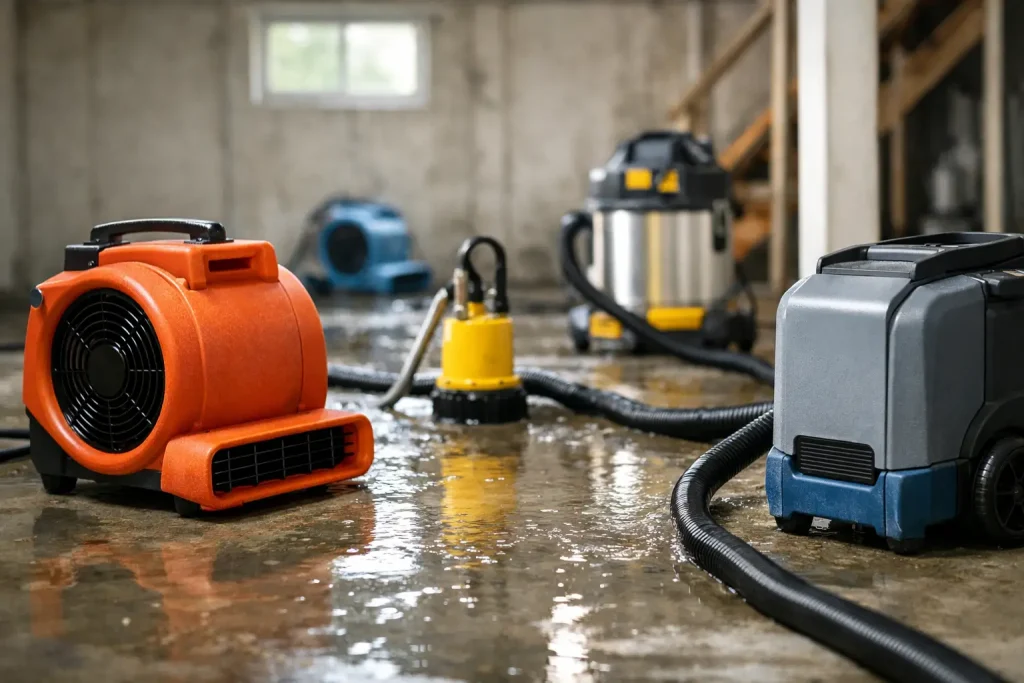
For minor water, a wet vac may be enough. For heavier flooding, a sump pump or professional extraction equipment is usually the safer choice. If the water level is significant, or if outlets, appliances, or extension cords are near the water, shut off power to the basement before doing anything else. If you cannot do that safely, call a professional.
This is also the point where homeowners should slow down and assess the source. If water came in after a storm, simply pumping it out is not a fix. If the basement flooded from a broken water heater or pipe, that plumbing issue has to be corrected before drying can really begin.
Drying air matters, but drying materials matters more
After water is removed, many homeowners set up a box fan and assume the basement is drying. That helps a little, but wet concrete, framing, insulation, drywall, carpeting, and stored contents can hold moisture much longer than the air does.
A dehumidifier is often one of the best ways to dry basement air because it pulls moisture out continuously instead of just moving damp air around. For a basement with chronic moisture, a high-capacity unit is usually worth it. Residential portable units can help, but they may struggle in larger or very damp spaces.
Air movement still matters. Fans help moisture evaporate from surfaces, especially if the basement is partially finished. But air movement without dehumidification can simply push humidity around the room. The best results usually come from using both together.
If carpet, padding, insulation, or finished wall materials got wet, they need close attention. Some can be dried if addressed quickly. Others, especially porous materials that stayed wet too long, may need to be removed to avoid mold and odor problems.
When a dehumidifier is enough – and when it is not
A lot depends on what kind of moisture problem you have. If your basement gets muggy in summer but never takes on actual groundwater, a dehumidifier may be a practical long-term solution. This is common in basements with cooler concrete surfaces that attract condensation during humid weather.
But if water enters during rain, seeps up from the floor, or leaves white chalky residue on masonry walls, a dehumidifier is managing symptoms, not solving the cause. It can keep the space more comfortable, but it will not stop hydrostatic pressure or exterior drainage issues.
That is where many homeowners lose time and money. They buy stronger fans, then a bigger dehumidifier, then mold-resistant paint, but the water keeps showing up because the real problem is outside the living space and under pressure.
The best ways to dry basement problems caused by water intrusion
When moisture is entering from the foundation, drainage is usually the real fix. That may involve one solution or a combination, depending on the home.
Improve exterior drainage first
Sometimes the problem starts with roof runoff and surface water. Clogged gutters, short downspout extensions, and negative grading can send a large volume of water toward the foundation. In those cases, improving drainage outside can make a noticeable difference.
That said, exterior grading fixes are not always enough on their own. If the water table is high or the basement has ongoing seepage at the floor joint, surface corrections may help but not fully solve the issue.
Install an interior drainage system
For recurring seepage, an interior drainage system is often one of the most dependable ways to keep a basement dry. These systems collect groundwater at the perimeter and direct it to a sump pump before it reaches the finished floor.
Homeowners sometimes worry that if water is getting inside the system, that means the basement is still “wet.” In practice, the point is controlled water management. You are relieving pressure and redirecting water safely instead of letting it build under the slab or against the wall.
Add or replace a sump pump
A sump pump is critical when groundwater needs to be discharged away from the home. If your basement already has one but still gets wet, the pump may be undersized, aging, improperly installed, or missing a battery backup.
This is one of those areas where details matter. A reliable pump system should fit the water conditions of the property, discharge properly, and keep working during storms when power interruptions are more likely. A good system is not just about pumping water out. It is about being ready when the worst weather shows up.
Seal cracks and address foundation entry points
Not every crack leaks, but some do. Wall cracks, floor cracks, pipe penetrations, and window well areas can all allow water into the basement. Crack repair can be a very effective part of drying the space, especially if there is an isolated entry point.
Still, crack repair has to be matched to the overall problem. If the entire perimeter is under water pressure, fixing one visible crack may not stop the broader seepage issue.
Don’t overlook mold and hidden moisture
A basement can look dry and still have a moisture problem behind finished walls, under flooring, or in stored materials. Musty odor is often the clue homeowners notice first.
If water has been present for more than a day or two, mold becomes a real concern. That is especially true in finished basements where drywall, wood trim, carpet, and insulation can trap moisture out of sight. Drying the basement properly may require opening affected areas, removing damaged materials, and cleaning contaminated surfaces.
This is also why quick cosmetic fixes usually backfire. Fresh paint over a damp wall may improve the look for a while, but it does not remove moisture or protect indoor air quality.
What homeowners can do now and when to call a specialist
If the issue is minor humidity, start with a dehumidifier, improve airflow, and make sure gutters and downspouts are moving water away from the house. If the basement recently took on water, remove standing water immediately, dry contents fast, and watch for signs that materials stayed wet too long.
If moisture returns after rain, if the walls show staining, if there is repeated seepage at the floor edge, or if the basement smells damp even after cleanup, it is time for a real inspection. At that stage, the best value usually comes from identifying the exact entry path and designing a permanent solution rather than trying one more temporary fix.
That is the approach A-1 Basement Solutions believes in: no scare tactics, no guesswork, just clear answers about what is causing the water and what will keep your basement dry for the long term.
The best basement drying plan is the one that matches the problem you actually have. Sometimes that means better humidity control. Sometimes it means drainage, a sump system, crack repair, or a more complete waterproofing strategy. Either way, a dry basement is not about masking moisture. It is about protecting the home you plan to keep.