
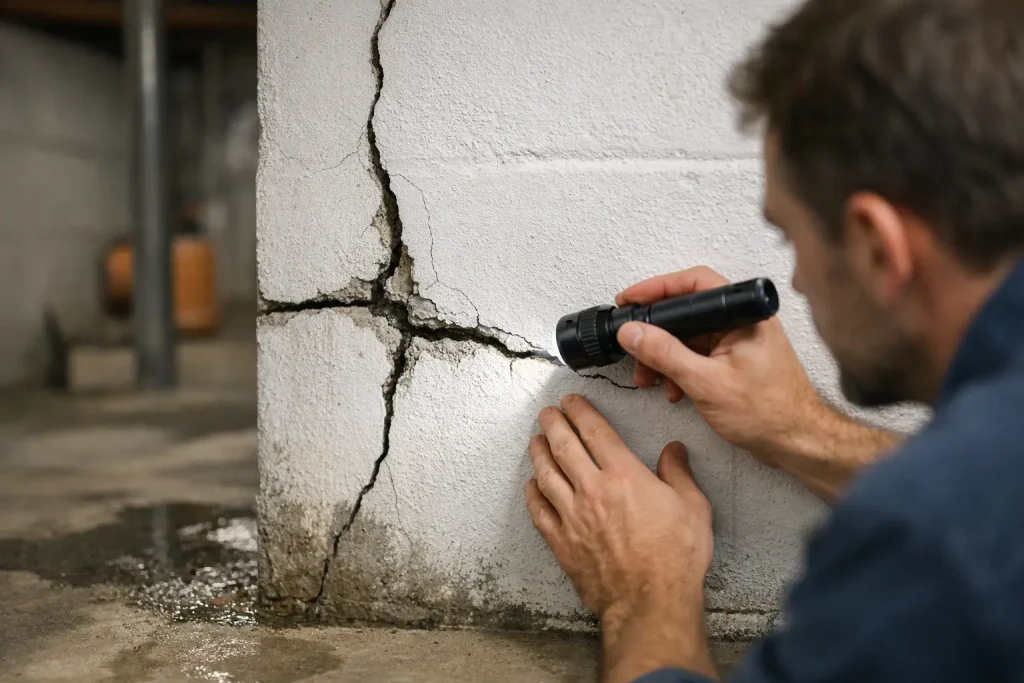
A crack in a basement wall has a way of getting your attention fast. You go downstairs for storage, laundry, or a quick look after rain, and suddenly you are wondering what causes basement wall cracks, whether water is coming next, and how serious the problem really is.
The honest answer is that basement wall cracks can happen for several reasons, and not all of them mean your home is in immediate danger. Some are minor signs of normal concrete movement. Others point to pressure, drainage problems, settlement, or structural stress that should not be ignored. The key is understanding what the crack is telling you.
What causes basement wall cracks in the first place?
Basement walls sit under constant pressure. Soil pushes from the outside, the weight of the house presses downward, and moisture conditions around the foundation change throughout the year. In New Jersey, freeze-thaw cycles, heavy rains, high water tables in some areas, and older housing stock can all add stress to foundation walls.
Concrete and masonry are strong materials, but they are not flexible. When they expand, shrink, settle, or carry more force than they were meant to handle, cracking can follow. That is why the cause matters more than the crack alone. Two cracks may look similar at first glance, but one could be cosmetic while the other signals a drainage or structural issue that keeps getting worse.
Concrete shrinkage and curing
Some basement wall cracks start very early, often not long after the wall was poured. Concrete naturally shrinks as it cures. That small amount of movement can create hairline vertical cracks, especially in poured concrete walls.
These cracks are often narrow and fairly straight. On their own, they may not indicate structural failure. The problem is that even a non-structural crack can still become a water entry point. If groundwater is pressing against the wall, a small crack can turn into a wet basement problem.
Soil pressure from the outside
One of the most common reasons basement walls crack is lateral pressure from surrounding soil. After heavy rain or snowmelt, the soil around the foundation becomes saturated and heavier. That added weight pushes inward on the wall.
If drainage is poor, pressure builds over time. This is especially hard on block foundation walls, which are more vulnerable to inward movement than many homeowners realize. Horizontal cracks, stair-step cracks in masonry joints, or walls that appear to bow inward are often signs that outside pressure is doing real damage.
Expansive or shifting soil
Soil does not stay the same year-round. It swells when it holds water and shrinks when it dries out. That repeated movement can stress the foundation, particularly when moisture levels are uneven around the house.
For example, one section of the home may stay wet because of poor grading or a clogged gutter discharge, while another section dries out faster. That uneven support can lead to differential settlement, where parts of the foundation move more than others. The result may be diagonal cracks, vertical cracks, or cracking around corners and window openings.
Foundation settlement
Homes settle over time, but not all settlement is equal. Minor settling can create small cracks that remain stable for years. More significant settlement can shift the foundation enough to create wider cracks, sticking doors, uneven floors, or gaps around trim and windows upstairs.
Settlement happens when the soil beneath the footing compresses, erodes, or loses its ability to support the structure properly. In some cases, poor compaction during construction is part of the story. In others, water is the bigger issue. Too much water can weaken the soil, while repeated washout near the footing can change how the load is supported.
Hydrostatic pressure and water buildup
Hydrostatic pressure is one of the biggest drivers of basement problems. This is the force created when groundwater builds up in the soil around the foundation. That water does not just look for a way in. It also pushes against basement walls and floors.
Over time, that pressure can widen existing cracks or contribute to new ones. If you see cracks along with white chalky residue, damp spots, or water seepage after storms, groundwater pressure may be involved. In that case, simply sealing the crack from the inside may not be enough. If the outside pressure remains, the problem often returns.
Which basement wall cracks are more serious?
Not every crack deserves the same level of concern. Pattern, width, direction, and change over time all matter.
Vertical cracks
Vertical cracks in poured concrete are common. Many come from shrinkage or minor settlement. If they are thin, not shifting, and not letting in water, they may be less urgent than other types. Still, they should be monitored.
If a vertical crack gets wider, shows displacement where one side is pushed in or out from the other, or starts leaking, it deserves professional attention.
Horizontal cracks
Horizontal cracks are usually more concerning because they often point to pressure from outside soil. When a basement wall is being pushed inward, the wall can crack across the middle or along a mortar joint in block construction.
This type of crack can be an early warning sign of bowing or structural weakening. It is not something to watch casually for the next few years.
Diagonal and stair-step cracks
Diagonal cracks and stair-step cracks in block or brick foundation walls often suggest settlement or uneven movement. Sometimes the issue is moderate and stable. Sometimes it means the foundation is continuing to shift.
What matters is whether the crack is widening, whether sections of the wall are offset, and whether other symptoms are appearing in the home.
Hairline cracks versus wider cracks
A hairline crack is different from a crack you can easily fit a coin or fingertip into. Wider cracks generally raise the level of concern, but size alone does not tell the full story. A thin horizontal crack can be more serious than a wider old shrinkage crack that has not changed in years.
That is why context matters. Water intrusion, wall movement, musty odors, and visible bowing all add to the urgency.
What makes basement wall cracks worse over time?
Many foundation problems start small and grow because the underlying cause is still active. Poor drainage is a major one. If roof water is dumping too close to the house, gutters are clogged, or the yard slopes toward the foundation, the soil around the basement stays saturated longer than it should.
Tree roots can also influence moisture levels in the soil, though they are not always the main problem. Seasonal freezing and thawing adds another layer of stress. Water in the soil expands when it freezes, which increases pressure against foundation walls.
Another issue is waiting too long because the crack “has always been there.” A crack that stayed the same for years may not be urgent. But once it begins admitting water or showing movement, the timeline changes.
When should a homeowner get cracks inspected?
If a crack is leaking, widening, running horizontally, or appearing with wall bowing, uneven floors, or sticking doors, it is time for an inspection. The same is true if you notice repeated dampness, moldy smells, or white mineral staining near the crack.
A good inspection should focus on cause, not just coverage. That means looking at the crack itself, the condition of the wall, drainage around the home, and whether water pressure is part of the problem. The right repair depends on what is driving the damage.
In some homes, a crack can be sealed and monitored. In others, the real fix involves waterproofing, drainage correction, wall stabilization, or a combination of solutions. That is where a specialist matters. A-1 Basement Solutions works with homeowners who want a clear explanation, not a pressure pitch, and that approach is especially valuable when foundation concerns are involved.
What homeowners should not do
It is tempting to paint over a crack or fill it with a store-bought patch and hope for the best. For very minor cosmetic cracking, that may improve the appearance. But if water pressure, settlement, or wall movement is causing the crack, a surface patch does not solve the real issue.
It also helps to avoid self-diagnosing based on one photo online. Basement cracks are one of those home issues where the details matter. The wall type, crack direction, moisture conditions, and age of the home all affect what the crack means.
A basement wall crack is not always a disaster, but it is always worth understanding. The sooner you know whether the cause is simple shrinkage or something more serious like settlement or outside pressure, the easier it is to make a smart decision and protect the home you worked hard to own.