
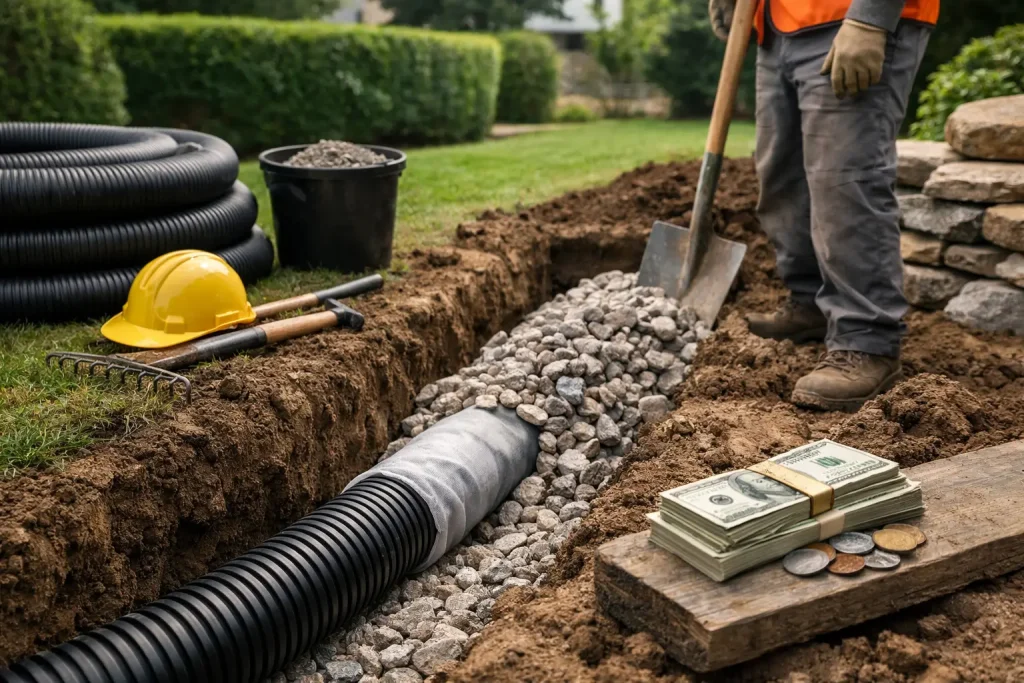
A wet basement usually starts the same way – a little water along the wall, a damp smell that does not go away, or a puddle that shows up after heavy rain. Once that pattern starts, most homeowners want the same answer fast: what is the french drain installation cost, and what exactly are you paying for?
The honest answer is that cost depends on the kind of drain the home actually needs. A simple exterior yard drain is one thing. A full interior basement waterproofing system with drainage channel, sump connection, and concrete restoration is another. If you are comparing proposals, the price makes a lot more sense once you know what changes the scope.
What affects french drain installation cost?
French drain pricing is driven by labor, access, water volume, and how much of the home has to be protected. In most cases, homeowners are not just paying for pipe in the ground. They are paying for diagnosis, excavation or slab removal, drainage materials, discharge planning, cleanup, and the workmanship needed to make the system last.
The biggest cost factor is location. An exterior French drain installed around part of the yard may involve trenching through soil and stone, but it usually does not require breaking concrete floors. An interior basement French drain often means removing a strip of slab along the perimeter, creating a drainage path beside the footing, installing pipe and stone, connecting to a sump pump system, and then restoring the floor. That is more labor-intensive, but in many homes it is also the more reliable solution for recurring basement seepage.
Water behavior matters too. If the issue is limited to one wall, the repair may be more targeted. If hydrostatic pressure is pushing water in along multiple basement walls, a larger system may be needed. Homes with finished basements can add another layer of work because crews may need to protect or remove parts of the finished space before installation begins.
Typical price ranges homeowners see
There is no single number that fits every property, but there are practical ranges homeowners can use as a starting point.
For exterior French drains in the yard, costs often start in the low thousands and rise based on trench length, depth, discharge route, grading issues, and whether hardscapes or landscaping need to be disturbed and restored. A short run that redirects surface water away from the house will cost far less than a deeper perimeter system that has to work around patios, walkways, or tight property lines.
For interior basement systems, french drain installation cost is usually higher because the work is more specialized. Homeowners may see pricing range from several thousand dollars for a limited perimeter section to a more significant investment for full-perimeter drainage tied into a sump pump and discharge system. In New Jersey homes with older foundations, uneven slab conditions, or chronic groundwater problems, pricing can move upward because the system has to address more than a simple leak path.
That spread in pricing is why very low bids deserve a closer look. Sometimes they reflect a smaller scope than the homeowner actually needs. Other times they leave out key parts of the job, such as vapor barriers, proper stone depth, discharge improvements, or concrete restoration.
Interior vs. exterior systems
Homeowners often ask which option is cheaper, but the better question is which option solves the water problem with the fewest future headaches.
An exterior French drain can be effective when the main issue is surface water collecting near the foundation. If downspouts dump too close to the home, the yard slopes inward, or runoff pools against one side of the house, exterior drainage may be the right fix. It can also help reduce the amount of water reaching the foundation in the first place.
An interior system is typically recommended when groundwater pressure is forcing water through the cove joint, wall-floor seam, or cracks below grade. Instead of trying to stop all water from reaching the outside of the foundation, the system manages it once it enters the drainage zone and directs it to a sump pump for removal. In many basements, that is the more dependable long-term approach.
So yes, exterior work can be less expensive in some cases. But if it does not address the true source of the intrusion, it is not really the lower-cost option. Paying twice is always more expensive than doing the right repair once.
Why two estimates can be far apart
If you receive one quote for a few thousand dollars and another that is much higher, it does not automatically mean one contractor is overpriced. It may mean the two companies are proposing different solutions.
One estimate may cover only a trench and pipe. Another may include demolition, drainage stone, perforated pipe, sump basin work, discharge line improvements, cleanup, and warranty coverage. One company may use subcontractors. Another may use trained in-house crews who specialize in basement waterproofing every day. Those differences affect both price and accountability.
This is where homeowners should slow down and ask better questions. What problem is the system designed to solve? How will water be redirected? What happens if the sump pump fails? Will the slab be restored cleanly? Is the work guaranteed, and if so, for how long? A cheaper number on paper can become expensive if the installation is incomplete or poorly executed.
Cost factors that are easy to overlook
A few variables regularly surprise homeowners because they are not obvious at first glance.
Soil conditions can change the job. Heavy clay holds water differently than loose soil, and rocky conditions make excavation slower and harder. Access matters too. If equipment cannot get into the yard easily, labor goes up. The same is true when a basement has tight corners, low ceilings, or finished areas that need extra protection.
Discharge planning is another important detail. A French drain is only as effective as where it sends water. If the property needs a longer discharge line, a pop-up emitter, or a more involved route to move water safely away from the house, the price can increase. On interior systems, sump pump capacity and battery backup options also affect total cost.
Then there is finish work. Replacing removed concrete, cleaning up thoroughly, and leaving the basement in good shape takes time. It is part of a professional installation, but not every estimate treats it the same way.
How to compare proposals the right way
When evaluating french drain installation cost, start by comparing scope before price. Look for a clear description of where the drain will go, how long the run will be, what materials are included, and how the system will discharge water.
You should also understand whether the proposal addresses the symptom or the cause. If water is entering because of hydrostatic pressure beneath the slab, adding an exterior trench alone may not solve it. If roof runoff is saturating one side of the foundation, an interior system without exterior water management may leave part of the problem untouched.
A strong proposal should explain the logic behind the recommendation in plain language. Homeowners should not have to guess what they are buying. At A-1 Basement Solutions, that kind of clear explanation matters because no one benefits from a drainage system that sounds good in a sales appointment but fails during the next heavy storm.
Is financing worth considering?
For many homeowners, yes. Basement water problems tend to get more expensive when delayed. Moisture can damage flooring, drywall, stored belongings, and indoor air quality long before the foundation issue becomes obvious. If financing allows the right system to be installed now instead of a temporary patch, it can be the more practical choice.
That said, financing should support a durable solution, not push a homeowner into more work than the house needs. The best approach is straightforward: get the basement properly evaluated, understand the scope, and choose the fix that fits the actual condition of the home.
The real value behind the price
French drain installation is not a cosmetic upgrade. It is protective work. When installed correctly, it helps keep the basement usable, reduces moisture-related damage, and supports the long-term health of the home.
That is why the lowest price is rarely the best benchmark. The better benchmark is whether the system is designed for your house, installed with care, and backed by people who will stand behind it. If you are getting estimates, ask for clarity, not pressure. A good contractor should help you understand the cost, the reason for the recommendation, and what kind of peace of mind you are actually buying.
A dry basement is not just about comfort after the next rainstorm. It is about protecting the home you plan to keep.