
A painted-over damp spot is one of the most expensive false fixes a homeowner can make. If your basement walls are wet, stained, or showing white chalky residue, the problem is rarely just on the surface. The right wet basement wall solutions start with understanding how water is getting in, why the wall is staying wet, and what it will take to stop the cycle for good.
For many New Jersey homeowners, basement wall moisture shows up gradually. You may notice a musty smell after rain, bubbling paint, rust on stored items, or darker sections along the lower part of a foundation wall. Sometimes the issue is obvious, like water seeping through a crack. Other times it is slower and easier to dismiss until mold, damage, or repeated cleanup forces action.
Why basement walls get wet in the first place
Water around a foundation is common. The real question is why that water is building pressure against the wall or finding an opening into the basement. In many homes, the issue starts outside with poor grading, clogged gutters, short downspouts, or soil that holds water against the foundation. In others, hydrostatic pressure pushes groundwater through porous concrete, tie-rod holes, cove joints, or wall cracks.
Concrete and block walls are not immune to moisture just because they look solid. Block foundations are especially prone to water intrusion because water can collect inside the hollow cores. Poured concrete walls can seep through cracks or through the wall itself if conditions are right. If your basement wall feels damp even when there is no visible trickle, that still points to a moisture problem worth addressing.
The important part is this: wall moisture is usually a symptom, not the root problem. That is why simple patch jobs often fail.
Wet basement wall solutions depend on the source
There is no single fix that works for every basement. Effective wet basement wall solutions depend on where the water is entering, how often it happens, and whether there is also a drainage or structural issue involved.
If the problem is minor exterior runoff, correcting grading and extending downspouts may reduce the amount of water reaching the foundation. That can help, and in some cases it is enough. But if water is already pushing up from below the slab or entering at the wall-floor joint, exterior runoff improvements alone will not solve the whole problem.
If the wall has active cracks, crack repair may be part of the answer. A properly repaired crack can stop direct seepage through that section of wall. Still, crack repair treats a specific entry point. It does not relieve overall water pressure around the basement.
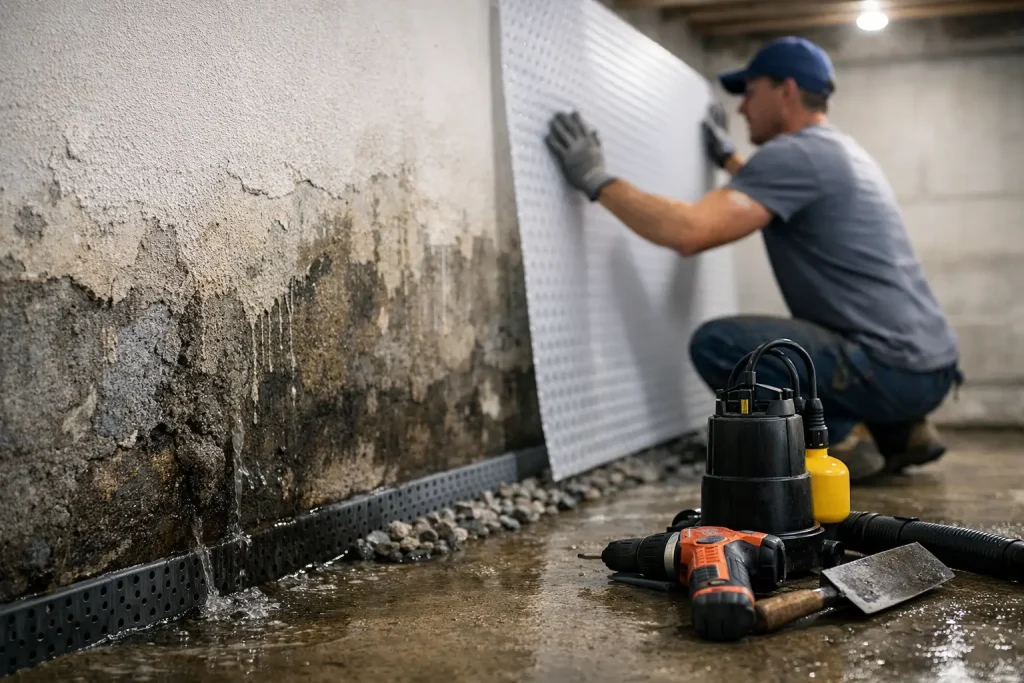
When moisture is recurring along the base of the wall, interior drainage is often the more reliable long-term approach. An interior waterproofing system is designed to capture water before it reaches the floor and direct it safely to a sump pump system for discharge. For many homes, that is the difference between chasing symptoms and controlling the water consistently.
When waterproof paint is not enough
Homeowners are often told to start with waterproof paint or masonry sealer. The appeal is understandable. It looks simple, affordable, and fast. The problem is that coatings do not stop the pressure behind the wall.
If water is being forced through concrete or block, a coating may temporarily hide stains or slow minor vapor transmission, but it usually will not hold back ongoing seepage. In some cases, it peels, flakes, or traps moisture in a way that makes the wall look worse later. That does not mean every product is useless. It means coatings should not be mistaken for a full waterproofing plan when active intrusion is already happening.
A good inspection should tell you whether you are dealing with humidity, condensation, seepage, or direct water penetration. Those are different issues, and they should not all be treated the same way.
Interior drainage systems for wet basement walls
For many basements, the most dependable solution is an interior drainage system installed along the perimeter. This type of system collects water entering at the wall base or beneath the floor and moves it to a sump pump, where it can be discharged away from the home.
This approach works well because it manages the water pressure instead of pretending it is not there. In practical terms, that often means less repeated damage, fewer cleanup headaches, and better protection for finished or partially finished basement areas.
The details matter. A drainage system should be installed cleanly, pitched correctly, and paired with a sump pump sized for the home’s needs. If the pump is unreliable, undersized, or poorly installed, the whole system is weakened. That is one reason homeowners should pay attention not just to what is being installed, but who is installing it.
Wall cracks, bowing, and signs of structural trouble
Not every wet wall is just a waterproofing issue. Sometimes water and structural stress show up together. If you see horizontal cracks, stair-step cracking in block walls, inward bowing, or movement that seems to be getting worse, that deserves immediate attention.
Water can contribute to foundation pressure, but structural damage needs its own solution. Depending on the wall type and severity, that may involve crack repair, carbon fiber reinforcement, wall anchors, or other foundation repair methods. A proper evaluation should separate cosmetic moisture symptoms from actual structural risk.
This is where honest guidance matters. Homeowners should not be pushed into major structural work if the issue is only surface seepage. Just as importantly, they should not be sold a waterproofing-only fix if the wall itself is failing.
Exterior waterproofing has a place, but it is not always the first answer
Some wet basement wall solutions involve excavation and exterior waterproofing. That can be the right move in certain cases, especially when there is severe exterior foundation deterioration or a known entry point that must be addressed from outside. But exterior work is usually more disruptive and more expensive than interior systems.
That does not make it wrong. It just means the recommendation should fit the house. A contractor should be able to explain why exterior excavation is necessary, what it will solve, and whether a less invasive interior option could do the job just as effectively.
Homeowners are often relieved to hear that the most expensive approach is not automatically the best one. The right solution is the one that addresses the actual water path and holds up over time.
What to expect from a professional inspection
A useful basement inspection should feel clear, not confusing. You should come away understanding where the water is likely entering, what conditions are making it worse, and which repair options make sense for your home.
That usually includes looking at wall conditions, floor joints, cracks, signs of mold or efflorescence, sump pump performance if one exists, exterior drainage patterns, and any grading issues around the house. In a lot of homes, the final recommendation is not a single fix but a combination of improvements.
For example, you may need downspout extensions outside, crack repair on one wall, and an interior drainage system to manage groundwater. That kind of layered solution is often more realistic than expecting one product or one patch to solve everything.
Choosing wet basement wall solutions that actually last
Homeowners tend to regret two things: waiting too long and choosing a shortcut that never had a real chance to work. Moisture problems usually get more expensive as they continue. Stored items are damaged, air quality gets worse, and basement finishing plans stay on hold.
When comparing contractors, look for clear explanations, written scope, strong warranty coverage, and crews who do this work regularly. Ask whether the company uses its own trained employees or outsources the job. Ask what happens if water returns. Ask whether the recommendation is designed to control the source of the moisture or just cover the evidence.
At A-1 Basement Solutions, that solutions-first mindset matters because homeowners need straight answers, not pressure. The goal should be a dry, healthy basement and confidence that the repair was done correctly.
Wet basement walls are frustrating, but they are also fixable. The best next step is not guessing. It is getting a real diagnosis, understanding your options, and choosing a repair that protects your home for the long run.