
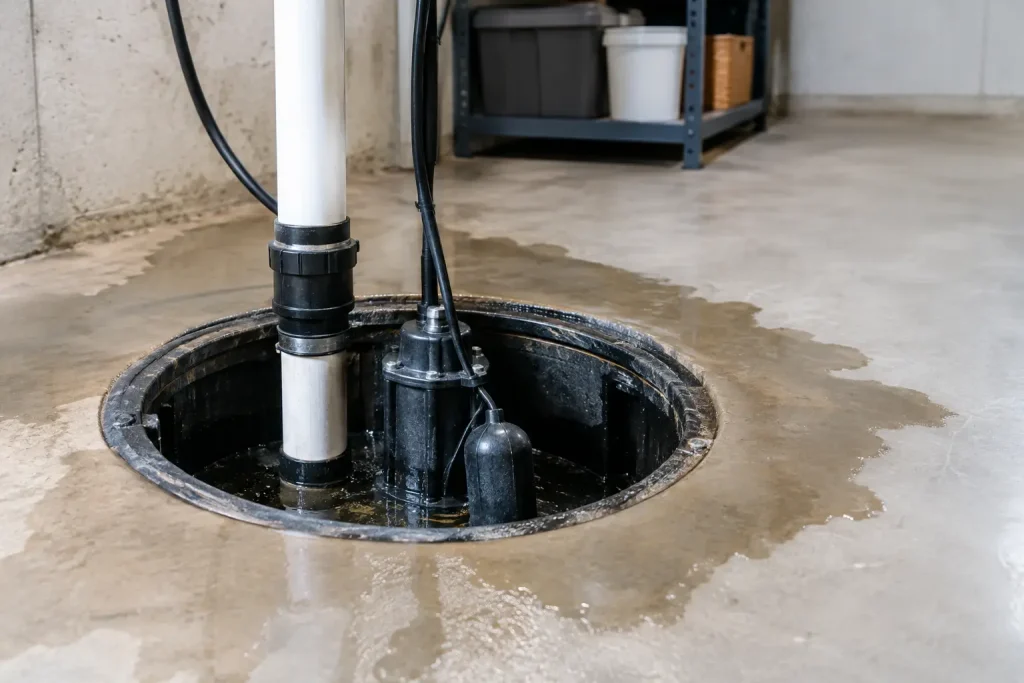
A sump pump usually gets noticed at the worst possible moment: after a hard New Jersey rain, when water is rising around the basement floor drain or pushing through a low foundation wall. Sump failure is not always dramatic at first. A pump may run less often than it should, make a new noise, or leave standing water in the pit. But when the system cannot move groundwater away from the home, a small mechanical issue can become water damage, mold growth, and a stressful cleanup.
The good news is that most sump problems give homeowners warning signs. A clear inspection and the right repair or drainage solution can prevent a wet basement without guesswork or pressure.
What sump failure actually means
A sump system is designed to collect groundwater in a basin, or sump pit, typically at the lowest point of the basement. When the water reaches a set level, the pump should activate, send water through a discharge pipe, and direct it safely away from the foundation.
Sump failure simply means one part of that process is not working as intended. The pump may not turn on, it may run but fail to remove water, or it may discharge water only for it to return to the foundation. The pump itself gets the blame most often, but the real cause can be a clogged discharge line, a stuck float switch, a failed check valve, inadequate drainage around the home, or a power outage.
That distinction matters. Replacing a pump can be the right answer, but it will not solve a system that is undersized or a yard that sends roof and surface water back toward the house.
Warning signs of sump failure
A working sump pump should operate quietly and consistently during wet conditions. You do not need to stand over the pit during every rainstorm, but a few changes deserve attention before the next major storm.
Water in the basement is the most obvious signal. This may appear as a puddle around the sump pit, damp edges along finished flooring, water marks on walls, or moisture near the base of the stairs. Even if the water dries, the source still needs to be identified.
Other signs are less visible. A pump that runs constantly may be struggling with a blocked line, a faulty switch, or an unusually high water load. A pump that never runs during a period of heavy rain may have lost power, failed mechanically, or have a float that cannot rise freely. Loud grinding, rattling, or humming can point to a worn motor or debris in the pump.
You may also notice musty odors, peeling paint, or new mold spots around the basement perimeter. Those conditions do not prove that the sump pump has failed, but they do show that moisture control is not where it needs to be.
Common causes of a failed sump pump
Power loss during a storm
Many sump pumps rely entirely on household electricity. Unfortunately, severe storms can bring the heaviest groundwater levels and power outages at the same time. Without a battery backup system or properly maintained backup pump, the primary pump cannot do its job when the basement may need it most.
A backup is not a substitute for a sound primary system. It is an added layer of protection for a foreseeable risk. Battery condition, alarm function, and backup capacity should be checked periodically rather than assumed.
A stuck or failed float switch
The float switch tells the pump when to turn on and off. If it is tangled, blocked by debris, or worn out, water can rise in the pit while the pump stays silent. In some cases, the pump runs continuously because the switch does not reset.
This is one reason a sump pit should not be used for storage. Cords, loose items, and debris can interfere with the switch and turn a simple system into an avoidable failure point.
Clogged or frozen discharge piping
The pump may be operating correctly but still fail to remove water if the discharge line is clogged, crushed, frozen, or blocked at the outlet. A disconnected pipe can also send water into the basement instead of outside.
In New Jersey, discharge routing needs to account for freezing temperatures, grading, and the distance from the foundation. Water should move away from the home without creating an icy walkway, draining toward a neighbor’s property, or cycling back into the soil beside the basement wall.
An undersized, aging, or poorly installed pump
Sump pumps do not last forever. A unit that has handled years of frequent cycling can wear down, particularly if it was not sized for the volume of water entering the system. A pump may also be installed in a pit that is too small, on an uneven base, or without a dependable check valve.
There is no single replacement schedule that fits every home. A dry basement with occasional pump use is different from a home where high groundwater keeps the system active throughout much of the year. Age, run time, performance, and the overall drainage design are more useful measures than age alone.
Drainage problems outside the home
A sump pump manages water that reaches the drainage system. It should not be asked to compensate for every exterior water problem. Clogged gutters, short downspout extensions, negative grading, and heavy runoff near the foundation can overwhelm an otherwise capable setup.
Sometimes the right solution includes exterior corrections. In other homes, an interior French drain system is needed to collect groundwater at the footing and direct it to a properly sized sump basin. The best approach depends on where the water is coming from, not on a one-size-fits-all recommendation.
What to do if your sump pump stops working
Start with safety. If there is standing water near electrical outlets, appliances, or the electrical panel, do not step into the area or attempt to handle the pump. Shut off power only if it can be done safely, and contact a qualified professional when electrical hazards are present.
If the area is safe and the pump has power, check whether the unit is plugged in and whether the breaker has tripped. Look into the pit for obvious debris or a float that appears jammed. Do not force parts or continue resetting a breaker that trips again. Those are signs that the pump or electrical connection needs professional attention.
Next, confirm whether the discharge line is carrying water away. If the pump runs but water remains in the pit, the problem may be in the line rather than the motor. If water is already entering the basement, move valuables to a dry area when safe to do so and document the affected spaces for insurance purposes.
A professional assessment should look beyond the immediate pump issue. The important questions are how water entered, whether the drainage system is collecting it effectively, where it is discharged, and whether the home has backup protection for the next storm.
How to reduce the risk before the next storm
A simple maintenance routine can catch many problems early. Test the pump several times a year by slowly adding water to the pit until the float activates. Watch to make sure it turns on, pumps the water down, and shuts off properly. If it does not, schedule service rather than waiting for a storm.
Keep the pit clear, make sure the lid is secure, and inspect visible discharge components for damage. Check that gutters are clean and downspouts direct water well away from the foundation. If your system has a battery backup, follow the manufacturer’s maintenance guidance and verify that its alarm works.
Homeowners should also pay attention to patterns. Does the basement smell damp after rain? Does the pump run constantly during moderate weather? Has water appeared in the same corner more than once? Repeated symptoms are useful information, and they often point to a drainage issue that deserves a full inspection.
When a sump pump replacement is not enough
It is tempting to treat every wet-basement problem as a pump problem because the pump is visible and familiar. But a new pump will not seal a foundation crack, correct poor grading, or create drainage where none exists.
A careful inspection may show that the existing system only needs a new switch, check valve, or backup unit. It may also reveal a larger need, such as interior drainage, a new sump basin, foundation repair, or crawl space moisture control. Honest recommendations should match the condition of the home, the water source, and the homeowner’s long-term plans.
At A-1 Basement Solutions, the focus is on explaining those options clearly and completing the work with in-house crews, not using fear to sell work a home does not need. When long-term waterproofing is the right solution, homeowners should understand what it addresses, what it does not address, and how the warranty protection applies.
A sump pump is a small piece of equipment with a big job. Checking it before the forecast turns ugly gives you time to make a calm decision, protect the space below your home, and keep a manageable repair from becoming a flooded-basement emergency.