
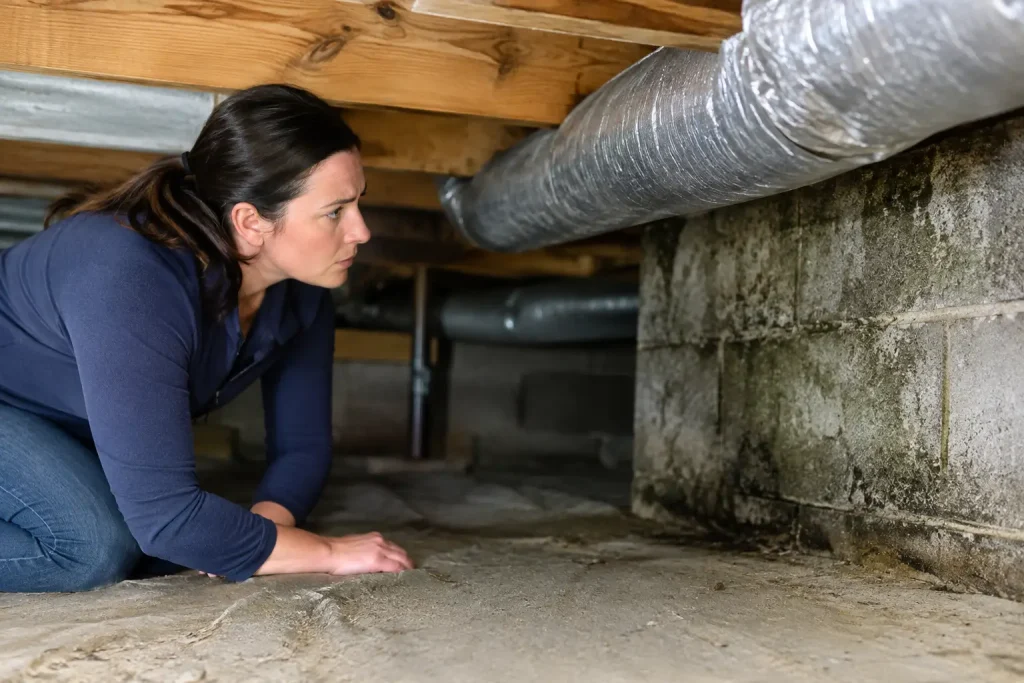
A crawl space is out of sight, but it is not separate from the rest of your home. Air, moisture, and odors can move upward through floor openings, utility penetrations, and the natural stack effect that pulls air from lower levels into living areas. So, does crawl space mold affect health? It can, particularly for people with allergies, asthma, respiratory conditions, or weakened immune systems. The right response is not panic. It is finding the moisture source, understanding the extent of the issue, and correcting it properly.
How Crawl Space Mold Can Affect Health
Mold is a natural part of the outdoor environment. Problems begin when it grows indoors on damp wood, insulation, cardboard, debris, or other organic materials. A wet crawl space creates the conditions mold needs: moisture, moderate temperatures, and a surface to feed on.
As mold grows, it can release spores and tiny fragments into the air. Not every homeowner will react the same way, and the appearance of mold does not automatically mean someone will become ill. Still, exposure can irritate the eyes, nose, throat, and lungs. Some people may notice congestion, coughing, wheezing, itchy eyes, skin irritation, or a persistent musty smell that seems stronger at home.
For people with asthma or mold allergies, even a relatively small amount of airborne mold can aggravate symptoms. Young children, older adults, and people with chronic lung conditions may also be more sensitive. If a household member has ongoing respiratory symptoms, speak with a qualified medical professional. A crawl space inspection can address the home conditions, but it is not a substitute for medical advice.
Why a Crawl Space Can Affect Indoor Air
Many homes in New Jersey experience what building professionals call the stack effect. Warm air rises and exits through upper levels of the home, creating a slight draw that pulls replacement air from below. If your crawl space is damp, musty, or moldy, some of that air may enter the rooms where your family spends time.
This is why a crawl space should not be treated as an unimportant storage void. It is part of the building system. A bare dirt floor, open foundation vents, plumbing leaks, poor exterior drainage, and uninsulated ducts can all contribute to moisture problems below the home.
The mold you see may also be only part of the issue. Wood framing can hold moisture long before visible growth appears, while wet insulation can lose effectiveness and create a home for mold growth. A proper assessment looks beyond surface staining to identify why moisture is staying in the crawl space.
Symptoms That Should Prompt a Home Inspection
A medical symptom alone cannot identify mold as the cause. However, certain home conditions are good reasons to inspect the crawl space rather than ignore it. Pay attention if you notice:
- A musty or earthy odor that returns after cleaning
- Condensation on ducts, pipes, or insulation beneath the home
- Discolored wood framing, insulation, or vapor barrier material
- Higher indoor humidity, cupped floors, or recurring pest activity
- Water after heavy rain, plumbing leaks, or standing moisture on the crawl space floor
These signs often point to a moisture-control problem. The sooner it is addressed, the more likely you are to avoid wider mold growth, wood damage, and expensive repairs.
Not All Mold Situations Are the Same
Homeowners often hear alarming claims about “toxic mold.” The reality is more measured. Mold type, the size of the affected area, the amount of moisture present, ventilation, and each person’s individual sensitivity all matter. You cannot reliably identify mold species or health risk by color alone.
What matters most for the home is that visible mold indicates excess moisture. Even if a particular growth is not causing noticeable symptoms, it should not be left to spread across joists, subflooring, or insulation. Removing surface growth without correcting water intrusion is usually a temporary fix. Mold can return because the conditions that supported it are still there.
A trustworthy contractor should explain what they see, show you the moisture source, and recommend work based on the actual conditions. Fear-based sales tactics do not solve crawl space problems. Clear diagnosis and lasting moisture control do.
The Real Solution Is Moisture Control
Effective crawl space mold remediation starts with stopping the water or humidity that caused the growth. Depending on the home, that may involve improving exterior grading, extending downspouts, repairing a plumbing leak, installing an interior drainage system and sump pump, or sealing groundwater entry points.
Once water management is addressed, crawl space encapsulation can help control ground moisture and humid outside air. This typically includes a durable vapor barrier across the floor and up the foundation walls, sealed seams, and attention to penetrations. In some homes, a dehumidifier is also needed to maintain appropriate humidity levels.
The best approach depends on the specific crawl space. A home with occasional seepage after storms needs a different solution than a home with chronic high humidity or a leaking pipe. Installing a vapor barrier over active water intrusion, for example, may hide the symptom without protecting the structure. A thorough inspection should determine whether water is coming from outside, below the foundation, plumbing, or humid air.
What Proper Mold Cleanup Should Include
When mold is present, cleanup should be handled carefully so spores are not spread through the home. The scope depends on the size and location of the affected materials. Small, isolated areas may be manageable with appropriate protective measures, while extensive growth, contaminated insulation, or damaged structural materials may require professional remediation.
A sound remediation plan generally includes containment when needed, removal of contaminated porous materials that cannot be effectively cleaned, cleaning of salvageable structural surfaces, and drying the area thoroughly. The final and most important step is preventing recurrence through drainage, waterproofing, encapsulation, or humidity control.
Be cautious of anyone who promises to “kill all mold” with a spray alone. Cleaning products may be part of the process, but they do not fix wet framing, groundwater seepage, or humid conditions. If the crawl space remains damp, mold can return.
Can You Prevent Mold From Returning?
Yes, but prevention requires continued attention to moisture. Keep gutters clear, carry downspout discharge away from the foundation, and make sure the soil slopes away from the home. Check for plumbing drips, especially around kitchens, bathrooms, laundry areas, and HVAC equipment located above the crawl space.
Inside the crawl space, periodic checks are worthwhile, especially after major storms. Look for standing water, wet insulation, torn vapor barrier sections, or new odors. If your crawl space is encapsulated or has a dehumidifier, verify that the system is operating and draining as intended.
For many homeowners, the most valuable step is getting an honest assessment before a small dampness issue becomes a larger project. A qualified crawl space professional can identify where moisture is entering, explain the practical options, and recommend only the work your home needs.
A dry crawl space supports more than cleaner air. It helps protect your floors, framing, insulation, and long-term peace of mind. If you smell mildew, see moisture, or suspect hidden mold beneath your home, addressing the cause now is a sensible way to protect the home and the people living in it.