
A basement wall that bows inward is not a cosmetic issue to watch from a distance. It is a sign that outside soil pressure, water, or both may be pushing harder than the wall can safely resist. Homeowners often ask, when are wall anchors needed? The answer depends on the wall’s movement, the condition causing it, and whether the structure can be stabilized before the damage becomes more extensive.
Wall anchors are one proven way to permanently stabilize certain failing foundation walls. They are not the right repair for every crack or every damp basement, but when they fit the problem, they can help protect the home above from continued structural movement.
What Foundation Wall Anchors Actually Do
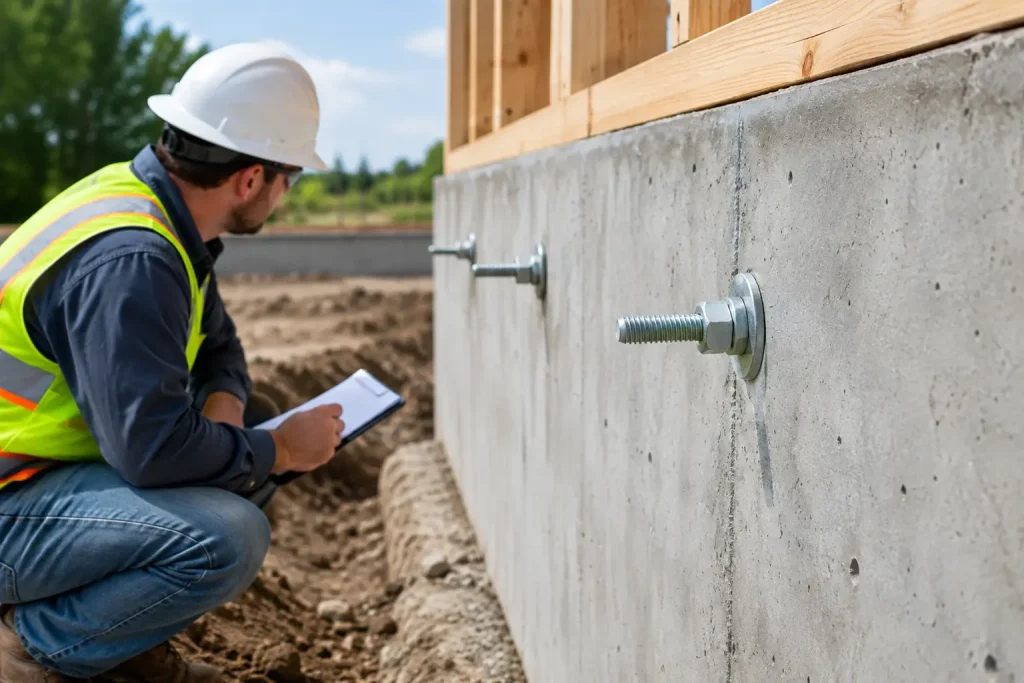
Foundation wall anchors are structural repair systems used to support basement walls that are bowing, leaning, or shifting inward. A steel wall plate is installed against the interior foundation wall. A long steel rod extends through the soil to an exterior earth anchor installed at a safe distance from the house.
Once installed and tightened, the system counters the lateral pressure pushing against the foundation. In many cases, anchors can be adjusted over time to gradually improve the wall’s position, provided the wall has not deteriorated too far.
This is very different from the small plastic or metal anchors used to hang shelves or pictures. Foundation wall anchors are engineered structural systems. Their purpose is to stop ongoing movement in a foundation wall and provide lasting support.
When Are Wall Anchors Needed? Key Signs to Watch
Wall anchors are generally considered when a foundation wall is under lateral pressure and shows visible evidence of inward movement. That pressure commonly comes from saturated soil, poor exterior drainage, expansive clay soils, freeze-thaw cycles, or improper grading around the home.
A horizontal crack is one of the clearest warning signs. Unlike a thin vertical shrinkage crack, a horizontal crack across a block or poured concrete wall often indicates that the wall is bending inward under outside pressure. Stair-step cracking in block walls, especially when paired with bowing, can point to the same concern.
You may also notice that the wall looks curved when viewed from one end of the basement. In some homes, individual concrete blocks begin to shift out of alignment. Doors or windows near the affected area may stick, and basement finishes can conceal conditions that are already progressing behind drywall or paneling.
Wall anchors may be appropriate when you see:
- Horizontal cracks, particularly through the middle section of a basement wall
- A wall that is bowing or leaning inward
- Concrete block walls with displaced, cracked, or rotated blocks
- Recurring movement after previous patch repairs
- Water-related soil pressure outside the foundation
These signs do not automatically mean anchors are the only solution. They do mean the wall deserves a professional evaluation before the next heavy rain, spring thaw, or seasonal change adds more pressure.
The Cause of the Movement Matters
A structural repair should address the reason the wall moved, not only the movement itself. If poor drainage is allowing water to collect against the foundation, the pressure can return year after year. Waterlogged soil becomes significantly heavier, and during winter, frozen soil can expand and push against basement walls.
For that reason, a wall anchor repair may need to be paired with moisture control work. Exterior grading adjustments, gutter discharge improvements, interior drainage, French drain installation, sump pump service, or waterproofing may all be part of a complete solution. The right scope depends on the property, soil conditions, and source of water.
A-1 Basement Solutions approaches these concerns with a solutions-first inspection. The goal is not to sell a repair based on a single crack. It is to identify what is happening around and beneath the home, explain the options clearly, and recommend work that protects the structure for the long term.
When Wall Anchors May Not Be the Best Repair
Wall anchors require enough usable space outside the home to install the exterior earth anchors. Typically, that means there must be clear soil beyond the foundation wall. A neighbor’s house, driveway, deck, utility line, retaining wall, or property line can limit whether this method is practical.
In those situations, other foundation stabilization systems may be a better fit. Carbon fiber reinforcement, for example, can be effective for walls with relatively minor inward movement where the objective is to prevent further bowing. Steel I-beams or wall braces may be considered when exterior access is limited or when the wall needs a different form of support.
Severe deterioration changes the conversation as well. If block walls are badly crumbling, sections have collapsed, or a wall has moved beyond what a stabilization system can safely address, partial or full wall rebuilding may be necessary. That is never the answer a homeowner wants to hear, but an honest recommendation is better than covering a serious condition with a repair that cannot perform as intended.
Why a Crack Repair Alone Is Often Not Enough
Filling a crack can help reduce water seepage in some cases, but it does not stop a foundation wall from moving. If the wall is bowing because of soil pressure, a sealant may hide the visible opening while the underlying structural issue continues.
The same is true of painting over stains or installing finished basement walls in front of the problem. Those steps may improve appearance temporarily, but they can make future inspection more difficult. A basement should be dry, healthy, and structurally sound before it is finished.
That does not mean every foundation crack requires a major structural project. Small vertical cracks can result from normal concrete shrinkage and may remain stable. The difference is pattern, location, wall movement, moisture conditions, and whether the crack changes over time. A trained inspection helps separate a manageable maintenance issue from a repair that should not be delayed.
What to Expect During a Foundation Wall Inspection
A thorough inspection begins with the wall itself. A foundation specialist will look for crack direction, bowing, block displacement, water staining, efflorescence, and signs of prior repair. They should also evaluate exterior conditions, including grading, downspouts, surface drainage, and areas where water may be collecting near the foundation.
Measurements matter. The amount of inward deflection helps determine whether a wall anchor system, carbon fiber reinforcement, steel bracing, or another repair is appropriate. The inspector should also consider access around the exterior of the home and whether underground utilities or hardscaping affect installation.
Homeowners should expect clear answers, not pressure. Ask what is causing the problem, whether the movement appears active, what repair options are available, and how the recommended solution will be warranted. A reputable contractor should explain the trade-offs in plain language and give you the information needed to make a confident decision.
Do Not Wait for the Wall to Move More
Foundation wall movement rarely improves on its own. The longer outside pressure acts on a bowed wall, the greater the risk of wider cracks, water intrusion, reduced structural support, and more costly repairs. Early stabilization can often preserve more of the existing wall and prevent a manageable concern from becoming a major reconstruction project.
If you have noticed a horizontal crack, inward bowing, shifting blocks, or repeated water problems near a basement wall, start with an inspection. The right repair may be wall anchors, or it may be a different solution entirely. What matters is addressing the actual condition with clean workmanship, clear communication, and a plan built to protect your home for the years ahead.