
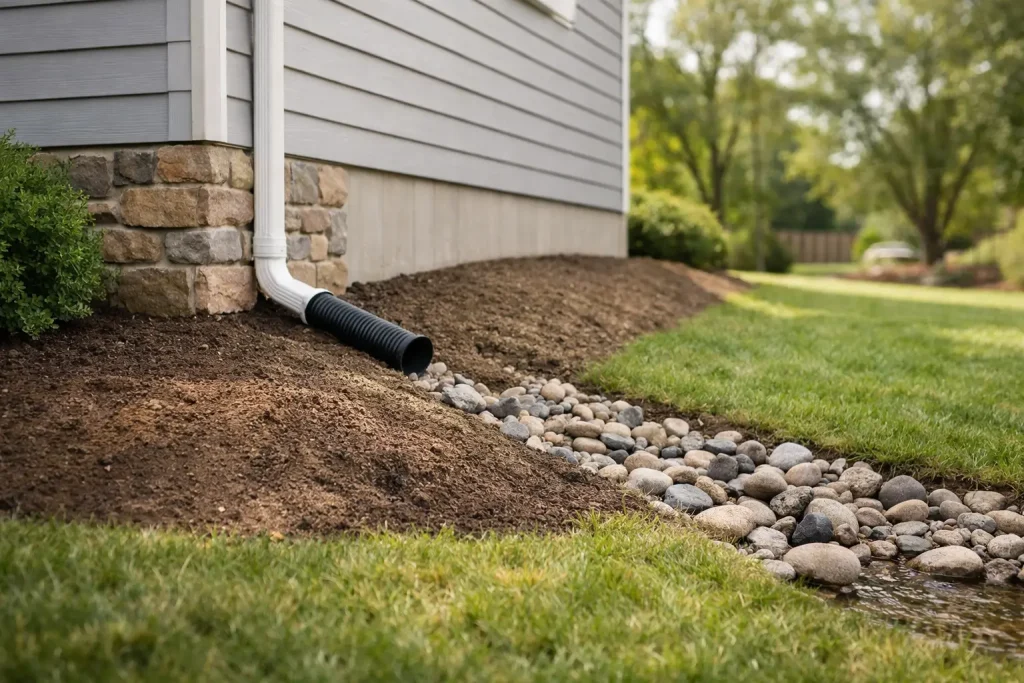
A basement can stay dry through a light rain and still be at risk during the next hard New Jersey storm. Often, the issue starts outside. Proper grading around house for drainage gives rainwater a clear path away from the foundation instead of allowing it to collect against the walls, seep into the soil, and find its way indoors.
This is one of the most practical ways to protect a basement, crawl space, and foundation. It is also easy to overlook because the warning signs may appear slowly: a damp corner after storms, peeling paint near the basement floor, musty odors, or mulch that keeps washing toward the house. No problems, just solutions starts with understanding where the water is going.
Why Grading Around a House Matters
Soil around a foundation is not just landscaping. It is part of the home’s first line of water management. When the ground slopes away from the house, surface water is directed toward a yard, swale, drain, or other safe discharge area. When the soil slopes toward the house, water pools beside the foundation and increases the pressure against below-grade walls.
That pressure matters. Saturated soil becomes heavy, and water can work through cracks, construction joints, utility penetrations, and porous masonry. Even if water does not visibly enter the basement, repeated saturation can contribute to efflorescence, mold-friendly humidity, deteriorating finishes, and foundation movement over time.
A good exterior grade will not solve every wet-basement problem. Homes with high groundwater, failed footing drains, foundation cracks, or an active interior drainage issue may need additional protection. But correcting surface drainage can reduce the amount of water the foundation must handle and prevent a manageable issue from becoming a larger repair.
What Proper Drainage Slope Looks Like
A common guideline is for the finished grade to fall at least 6 inches over the first 10 feet away from the foundation. That is roughly a 5% slope. The exact layout depends on the property, but the basic goal remains the same: water should not settle near the house.
Walk around the home after a steady rain. Look for puddles beside the foundation, soft or muddy soil, water marks on siding, and downspouts that empty directly into a planting bed next to the wall. Those are clear signs that the grade or roof drainage needs attention.
The first few feet next to the house are especially important. Soil should be high enough to direct water outward, but it should not be piled against siding, wood trim, brick weep holes, or other vulnerable materials. Maintaining proper clearance protects the building materials while still allowing the ground to shed water away.
Do not create a new low spot
Adding topsoil near the foundation can help only when it is shaped and compacted correctly. Simply dumping loose soil along the house often creates a mound that settles after a season or two. It may also redirect water toward a neighboring area of the home, a patio, or a basement stairwell.
The finished grade needs a continuous path for water. If a driveway, walkway, retaining wall, or property line interrupts that path, the solution may require a swale, catch basin, drain channel, or carefully planned extension rather than more dirt.
Start With the Water Coming Off the Roof
Roof runoff can overwhelm otherwise decent grading. A short downspout that discharges beside the foundation sends concentrated water into the exact area you are trying to keep dry. During a heavy storm, one roof section can release hundreds of gallons of water in a short period.
Keep gutters clean and securely pitched toward their downspouts. Then direct the discharge well away from the house, ideally onto an area that slopes safely away without sending water toward a neighbor’s property. Extensions should remain connected, clear, and positioned so mowing or foot traffic does not crush them.
Buried downspout lines can be a clean-looking option, but they need a reliable outlet and enough pitch to drain. A buried pipe with nowhere for water to go can back up, clog, or release water right beside the foundation. This is one of those cases where a professional evaluation can prevent a neat-looking project from becoming an expensive hidden problem.
Common Grading Problems Around New Jersey Homes
Many drainage issues develop gradually. Settling soil is common around new additions, porches, utility trenches, and previously repaired foundation areas. Landscapers may add mulch year after year until the grade is too high against the siding. Older homes may also have patios and walkways that have settled toward the house.
Here are four problems homeowners commonly find:
- Negative grade: The soil slopes back toward the foundation, creating a trough where water gathers.
- Settled backfill: Soil placed after construction or excavation sinks over time and leaves a low area beside the wall.
- Blocked drainage paths: Dense shrubs, edging, compacted soil, and raised garden borders trap water near the home.
- Hardscape runoff: Driveways, patios, and sidewalks shed water toward the foundation instead of away from it.
The right repair depends on the source of the water. Regrading may be enough for a shallow settled area. A large patio that slopes inward may need to be lifted, replaced, or drained. Water collecting at the bottom of a sloped yard may require a more comprehensive drainage plan.
How to Check Your Yard Before Making Changes
Begin with observation, not guesswork. Check the property during rain if it is safe to do so, then return after the storm to see where water remains. Note whether the wet area is near a downspout, a basement entry, a window well, or a specific corner of the foundation.
Use a long straight board and a level, or a string line, to check the direction of the slope. You do not need survey-grade measurements to identify an obvious problem, but you do need to confirm that the ground is actually falling away from the house. Yards can look level while still directing water the wrong way.
Also look beyond the first 10 feet. Water that leaves the foundation area must continue somewhere useful. If the yard flattens immediately, the water may still pond and soak back toward the house. The best drainage plan considers the entire route from roof to ground to final discharge.
Know when grading is not the whole answer
Exterior grading is a valuable first step, but it cannot always overcome hydrostatic pressure or water entering beneath the foundation. If your basement takes on water even when the exterior grade appears sound, an interior French drain and sump pump system may be the dependable solution. If water enters through visible cracks, those cracks should be assessed and repaired rather than covered up.
Persistent moisture in a crawl space also deserves attention. Damp soil and poor exterior drainage can raise humidity below the home, creating conditions for mold, wood rot, and unpleasant odors. Encapsulation, drainage improvements, and a sump system may work together depending on the structure and water conditions.
A thorough inspection should explain what is happening, what needs to be addressed now, and what does not. A-1 Basement Solutions takes that solutions-first approach because homeowners deserve clear information, clean work, and a repair plan that fits the actual problem rather than a one-size-fits-all sales pitch.
A Better Way to Protect the Foundation
Avoid treating a wet basement as an indoor-only issue. The foundation is affected by what happens at the roofline, across the yard, and below the soil. Correcting the grade can reduce surface water, but it should be coordinated with gutters, downspouts, landscaping, hardscapes, and any existing drainage system.
If you are adding soil yourself, use clean fill suitable for grading, shape it in gradual layers, and compact it enough to limit future settling. Keep an eye on the area through several storms and through a freeze-thaw season. New Jersey weather can expose weak drainage plans quickly.
When water keeps returning, there is no benefit in waiting for stains, mold, or damaged finishes to confirm the problem. A careful drainage assessment can identify whether regrading, exterior collection, interior waterproofing, or a combination of solutions will give your home the lasting protection it needs.