
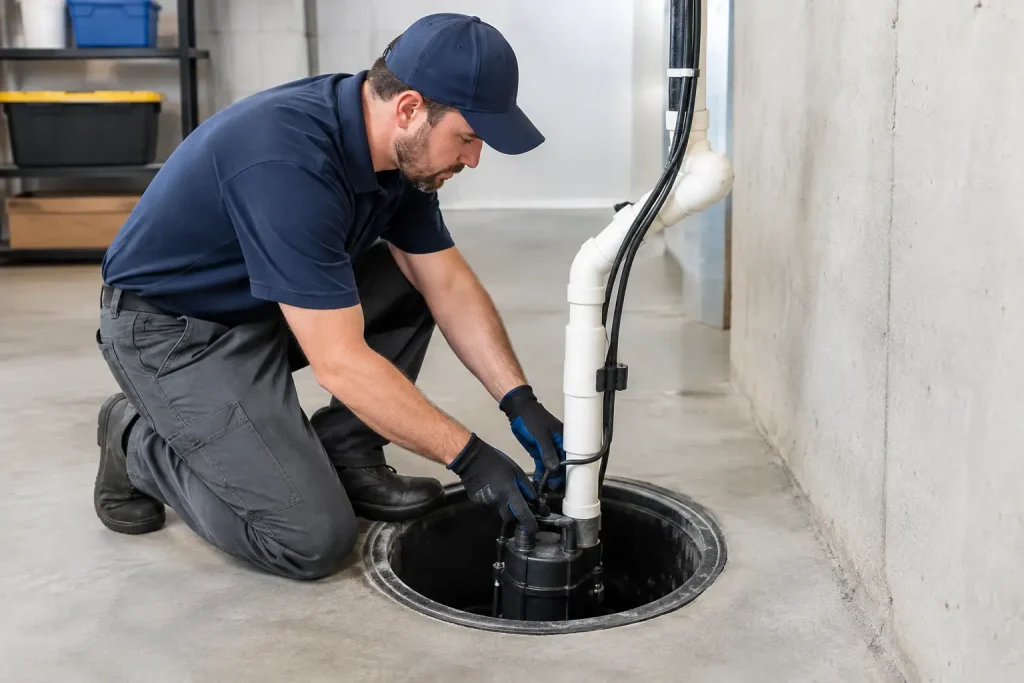
A sump pump should not be the only thing standing between your basement and several inches of water. Yet many New Jersey homeowners discover too late that an undersized pump, poor drainage layout, or failed discharge line leaves them exposed during the exact storm when protection matters most. Experienced sump installers look beyond the pump itself to identify where water is entering, how it moves around the foundation, and where it can be directed safely.
For a finished basement, stored belongings, mechanical equipment, or simply peace of mind, that broader approach matters. A reliable system is built around the conditions at your home, not around a one-size-fits-all pump installation.
What Sump Installers Should Evaluate First
A sump pump removes water that has already reached a collection point. It does not stop a foundation crack from leaking, correct saturated soil outside the home, or solve a clogged footing drain by itself. That is why the inspection should come before the recommendation.
A qualified contractor starts by asking practical questions. Does water appear along one wall or throughout the basement? Does the issue occur only during heavy rain, after snowmelt, or even during dry weather? Is there standing water in the crawl space? Have you noticed musty odors, peeling paint, mold growth, or efflorescence – the white mineral residue left behind as moisture evaporates?
The answers help determine whether a sump pump is the primary solution or part of a larger waterproofing plan. In many homes, an interior French drain directs groundwater into a sump basin, where the pump sends it away from the foundation. In another home, the immediate concern may be an exterior grading problem or a damaged discharge line. No problems, just solutions means explaining the cause clearly instead of selling equipment that will not address it.
The water source changes the solution
Groundwater pressure is common in New Jersey, particularly in low-lying areas and after extended rain. As soil becomes saturated, water can press against foundation walls and find its way through joints, cracks, and floor-wall seams. An interior drainage system and sump pump are often effective for this type of water.
Surface water creates a different problem. Overflowing gutters, short downspouts, negative grading, and leaking window wells can send rainwater directly toward the house. A sump pump may still be useful, but exterior drainage corrections should not be ignored. Otherwise, the system may be forced to handle water that should never have reached the foundation.
Plumbing leaks and sewer backups also require a different response. A careful inspection keeps homeowners from paying for the wrong repair.
A Sump Pump System Is More Than a Pump
When homeowners compare sump installers, it is easy to focus on horsepower, brand name, or the lowest quoted price. Those details matter, but a dependable installation depends on several connected components working together.
The basin must be properly sized and positioned to collect water efficiently. The pump must have enough capacity for the expected water volume and vertical lift required to move water out of the basement. A check valve prevents discharged water from flowing back into the basin after the pump shuts off. The discharge pipe needs a safe route that carries water far enough from the home so it does not cycle back toward the foundation.
A poorly routed discharge line is one of the most common reasons a system underperforms. If the water exits too close to the wall, drains onto a walkway, freezes near the outlet, or connects improperly to another system, the basement can remain at risk. Local conditions, yard layout, and municipal requirements all deserve consideration before the work begins.
Installation quality also affects how your basement looks and functions afterward. Clean work means protecting finished areas where possible, managing dust and debris, restoring concrete carefully, and leaving homeowners with a clear explanation of what was installed. The goal is not merely to make the pump run on installation day. The goal is to give the property a drainage system built for years of use.
When a Battery Backup Is Worth Adding
Heavy storms often bring the power outages that make a standard sump pump vulnerable. If your neighborhood loses power during severe weather, a battery backup pump can provide essential protection while electricity is out. It is especially valuable when the basement contains a finished living area, furnace, water heater, electrical panel, or belongings that would be costly to replace.
A backup system is not identical to a primary pump. It is designed to support the system during an outage or when the main pump cannot keep up. The right setup depends on expected water volume, how long outages typically last, and the level of risk in the basement.
Homeowners should also understand the limits. A battery backup requires periodic testing and eventual battery replacement. It does not eliminate every possible failure, particularly during a long outage combined with unusually high water flow. Still, for many homes, it provides valuable time and protection when the primary system needs help most.
Questions to Ask Before Hiring Sump Installers
A contractor should be able to explain the recommendation in plain language. If the conversation begins and ends with a pump model, ask what investigation was done to identify the source of water. You deserve a solution that fits the problem, not a quick sale.
Ask who will perform the work. Companies that use trained, in-house crews can maintain stronger control over workmanship, communication, and jobsite standards. It is also reasonable to ask how the contractor handles unexpected conditions found during excavation or concrete removal, and whether the proposed work includes a clear written scope.
Guarantee coverage deserves close attention as well. A manufacturer warranty on the pump is not the same as a warranty on the installation or the waterproofing system around it. Read what is covered, how long coverage lasts, and whether the guarantee can transfer to a future homeowner. A transferable Life-of-the-House Guarantee can add confidence because basement protection is a long-term property concern, not a short-term patch.
Price should be transparent, but it should not be the only deciding factor. A lower estimate may leave out the drainage work, backup protection, discharge routing, or cleanup needed for a complete result. Conversely, the most expensive proposal is not automatically the best. Compare the scope, materials, warranty, crew qualifications, and explanation behind each recommendation.
Signs Your Current System Needs Attention
A sump pump can run for years with little thought, which is exactly why routine checks are useful. If the pump cycles constantly, makes unusual noises, runs but does not lower the water level, or has an outlet that is blocked or frozen, schedule an evaluation before the next major storm.
Other warning signs can appear away from the pit. A persistent damp smell, new wall staining, puddles near the foundation, or water returning to the discharge area may point to a drainage issue rather than a pump failure. If water is entering around basement walls, the pump may be doing its job while the drainage system feeding it is inadequate.
Testing is simple but should be done carefully. Pour enough water into the basin to activate the float, then confirm that the pump turns on, discharges water, and shuts off properly. Check that the outlet remains clear and that the water is moving away from the home. If anything seems inconsistent, do not wait for a storm to reveal the problem.
Choose a Plan Built Around Your Home
The best sump installation begins with an honest assessment of your basement, foundation, drainage conditions, and goals for the space. A homeowner with occasional groundwater may need a different plan than a family protecting a newly finished basement or a homeowner dealing with recurring crawl space moisture.
At A-1 Basement Solutions, the focus is on explaining those options clearly and completing the work with trained in-house crews. Whether the answer is a sump pump, interior drainage, discharge improvements, or a combination of services, the right recommendation should feel practical, documented, and free from pressure.
If your sump pump has been working harder than usual, or your basement has shown even small signs of moisture, an inspection now can prevent a much more stressful decision during the next storm.