
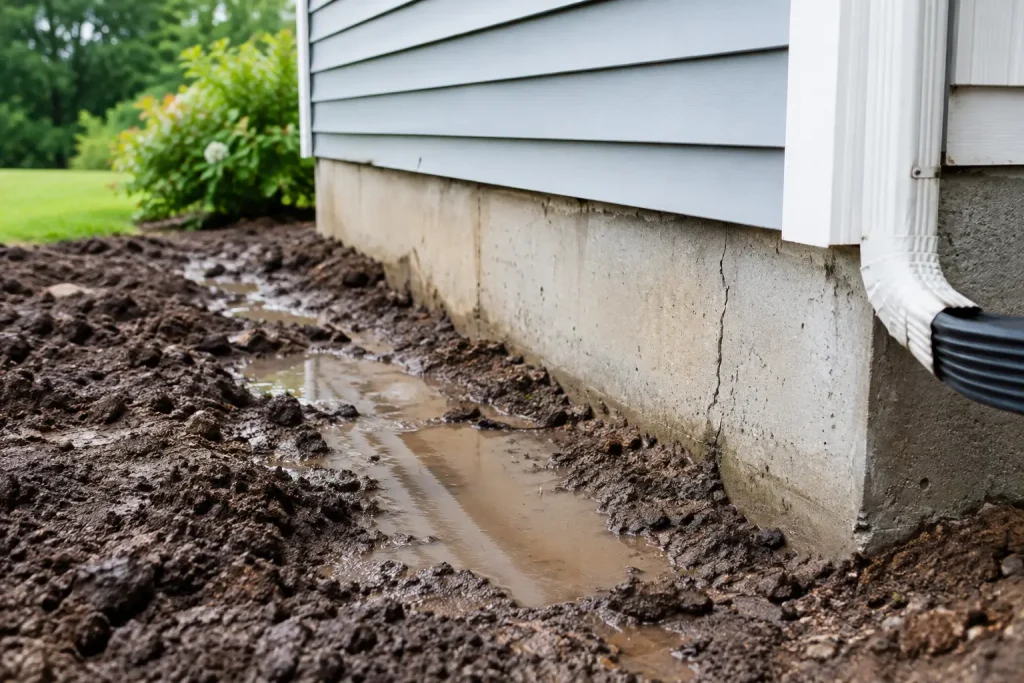
A heavy rain should not make you wonder whether your home is moving. But when water pools beside the foundation, basement walls feel damp, or a familiar crack starts to widen, that concern is reasonable. Can wet soil damage foundations? Yes, it can. The damage usually does not happen because soil is simply wet. It happens when water changes the pressure, stability, and drainage conditions around your home for long enough.
For New Jersey homeowners, this is a common issue. Our mix of clay-heavy soils, seasonal rain, snowmelt, aging drainage systems, and freeze-thaw cycles can create conditions that put real stress on basements, crawl spaces, and foundations. The good news is that moisture-related foundation problems are often manageable when the cause is identified early.
How Wet Soil Affects a Foundation
A foundation is designed to carry the weight of a home and transfer it safely into the ground below. That ground needs to remain reasonably stable. When soil becomes saturated, it can behave very differently than it does when it is properly drained.
Wet soil can press harder against basement walls. Water trapped in the soil creates hydrostatic pressure, which is the force water applies against a structure. Over time, that pressure may push moisture through small cracks, floor-wall joints, utility openings, and porous concrete. In more serious cases, it can contribute to bowing, cracking, or shifting foundation walls.
Saturation can also weaken the soil supporting the foundation. Some soils lose strength when they hold too much water, which can allow sections of the home to settle unevenly. Other soils, particularly clay-rich soil, expand as they absorb water and shrink as they dry. That repeated expansion and contraction can create movement around a foundation year after year.
The concern is not limited to basements. A wet crawl space can lead to damp framing, mold growth, poor indoor air quality, and damage to structural components beneath the home. Moisture follows the path of least resistance, and a small drainage issue outside can become a larger home-protection issue inside.
Can Wet Soil Damage Foundations Even Without Flooding?
Yes. A dramatic flood is not required for wet soil to create trouble. Slow, repeated exposure is often the more overlooked problem.
A downspout that empties beside the house, a clogged gutter, or grading that slopes toward the foundation can keep one area of soil saturated after every storm. The homeowner may not see standing water in the basement right away. Meanwhile, the pressure outside the wall and the moisture level below grade continue to rise.
This is why a crack alone does not tell the whole story. A narrow vertical crack may be a normal result of concrete curing or minor settling. A horizontal crack, a stair-step crack in block walls, or a crack that grows over time deserves closer attention. The condition of the surrounding soil, drainage system, and foundation wall all matter.
It also depends on the type of foundation. A poured concrete basement wall, concrete block wall, slab foundation, and crawl space each respond differently to water and soil movement. An accurate inspection should look at the entire system rather than treating every crack or damp spot as the same problem.
Warning Signs That Wet Soil Is Causing Trouble
Homeowners do not need to diagnose a foundation issue on their own, but a few patterns should prompt a professional evaluation. Pay attention if you notice four or more of these conditions, especially after rain:
- Water seepage where the basement floor meets the wall
- Damp, musty odors or visible mold in a basement or crawl space
- Cracks that are widening, horizontal, diagonal, or stair-stepped
- Bowed, leaning, or bulging basement walls
- Doors or windows that suddenly stick or no longer latch correctly
- Puddles near the foundation, overflowing gutters, or downspouts draining too close to the house
One sign may have a simple explanation. Several signs together can point to excess moisture, soil movement, or a developing structural concern. Taking pictures after storms can also help document whether the issue is recurring or getting worse.
Why New Jersey Homes Are Especially Vulnerable
New Jersey weather puts drainage systems to work. Spring rain, summer storms, fall leaf buildup in gutters, winter snowmelt, and frozen ground can all direct water toward a home at different times of year.
Many established neighborhoods also have mature landscaping, older homes, and drainage patterns that have changed over time. A patio may have settled toward the house. New mulch may have raised the soil level against siding. A previous owner may have extended a downspout underground without confirming that the line still drains correctly. Even a well-built home can develop water-management problems as the property changes.
Clay soil adds another layer of concern. It can hold water longer than sandy soil, increasing pressure around below-grade walls. Then, during drier periods, it can shrink and leave gaps around the foundation. Neither condition is ideal. The goal is not bone-dry soil. It is consistent drainage that moves excess water away from the house.
Start With Water Control, Not Guesswork
When wet soil is affecting a foundation, the right solution starts with finding the source of the water. Sealing a visible crack may be appropriate in some situations, but it will not solve a drainage issue that keeps forcing water against the wall.
Exterior improvements may include correcting the grade, extending downspouts, repairing gutters, or addressing surface drainage. For water that reaches the footing level, an interior French drain system and sump pump can collect and discharge groundwater before it rises into the basement. In some cases, an exterior drainage approach may be the better fit. The right choice depends on access, soil conditions, the foundation type, and where the water is coming from.
If the wall has already moved or cracked due to pressure, drainage control may need to be paired with foundation repair. Reinforcement systems can stabilize a wall and, in certain situations, help address ongoing movement. Structural work should be based on what the wall is doing now, not on a one-size-fits-all recommendation.
That distinction matters. Homeowners deserve a clear explanation of whether they are dealing with a water-intrusion problem, a structural problem, or both. No problems, just solutions starts with honest diagnosis.
Practical Steps You Can Take Now
Walk around your home during the next steady rain. Watch where water comes off the roof, where it collects, and whether it flows toward or away from the foundation. Check that gutters are clear and that downspouts carry water well away from the house. Look for low areas along the foundation where soil has settled.
Keep soil and mulch below the siding level so water does not wick into exterior materials. Avoid piling soil against the house to hide a low spot. That can trap moisture against the foundation instead of correcting the drainage path.
Inside, keep an eye on the basement perimeter, especially where walls meet the floor. If you have a sump pump, test it according to the manufacturer’s guidance and make sure its discharge line is not clogged, frozen, or returning water right beside the foundation. A sump pump is valuable, but it needs a reliable place to send water.
When to Bring in a Foundation and Waterproofing Specialist
Call for an inspection when you see active seepage, recurring dampness, wall movement, growing cracks, or water that remains near the foundation after storms. Waiting can allow a manageable drainage correction to become a larger waterproofing or structural repair project.
A thorough inspection should examine the basement or crawl space, exterior drainage, gutters and downspouts, grading, visible cracks, and the pattern of water around the property. At A-1 Basement Solutions, the goal is to explain what is happening in plain language and recommend work that addresses the cause, not just the symptom.
A dry basement and stable foundation are not luxuries. They protect the space your family uses, the air you breathe, and the value you have built into your home. If the ground around your home stays wet, give the issue attention before the next long stretch of rain turns a small warning sign into a larger repair.