
A stair step crack follows the mortar joints between bricks or concrete blocks, creating a jagged diagonal line instead of a straight break. When homeowners ask how to repair stair step cracks, the honest answer is that the right repair depends on whether the crack is old and stable or evidence that a wall or foundation is still moving.
A cosmetic patch can make a crack less visible, but it cannot stop settlement, soil pressure, water problems, or a failing foundation from creating new damage. The goal is not simply to fill the line. It is to identify why it formed, correct the source when necessary, and make a repair that protects the home for the long term.
Why stair step cracks happen
Masonry is strong under downward weight, but it does not flex well when one part of a structure moves differently from another. As a foundation settles unevenly, or as pressure pushes on a basement wall, the stress often travels through the weaker mortar joints. That creates the familiar stair step pattern.
In New Jersey, changing soil moisture can play a meaningful role. Heavy rain, poor surface drainage, leaking gutters, and high groundwater can soften soil near the foundation. During dry stretches, some soils shrink. Freeze-thaw cycles can add more movement around exterior masonry. None of these conditions automatically means a house has a major structural problem, but they can contribute to one over time.
A stair step crack may also develop because of normal aging, minor settlement after construction, or movement in a brick veneer rather than the foundation itself. That distinction matters. Brick veneer is the exterior facing on many homes and is not usually carrying the home’s structural load. A crack in veneer still deserves attention because it can admit water, but its repair plan may be very different from a crack in a block basement wall.
When a stair step crack needs prompt attention
Not every crack is an emergency. Hairline mortar cracks that have looked the same for years may need maintenance rather than structural work. However, homeowners should arrange a professional evaluation sooner rather than later when the crack is widening, recurring after a prior repair, or appearing alongside other changes.
Watch for these signs in particular:
- A crack wider than about 1/8 inch, especially if it is wider at one end
- Bowed, bulging, or leaning basement walls
- Water entering through the crack or persistent dampness nearby
- Doors or windows that suddenly stick, gaps around trim, or sloping floors
- Cracks that continue from exterior brick into interior walls or the basement
Horizontal cracks in a block foundation wall, severe inward bowing, or crumbling masonry require timely attention. Those conditions can indicate lateral pressure from saturated soil outside the foundation. A repair should address that pressure, not just cover its visible result.
Start with an inspection, not a tube of caulk
Before any work begins, look at the whole area around the crack. A qualified foundation specialist should assess the crack’s location, width, direction, and condition, then consider drainage, grading, gutters, downspouts, basement moisture, and the wall’s alignment. They should also ask whether the crack has changed and inspect for related movement elsewhere in the home.
This inspection-driven approach prevents two common mistakes. The first is treating a superficial mortar joint as though the entire foundation needs extensive work. The second is far more costly: treating an active foundation issue with mortar or sealant alone.
It can be useful to photograph the crack with a ruler for scale and note the date. If a professional determines it is safe to monitor, those records make it easier to spot movement later. Do not rely on monitoring when there is visible bowing, active water entry, or significant separation in the masonry.
How to repair stair step cracks that are stable
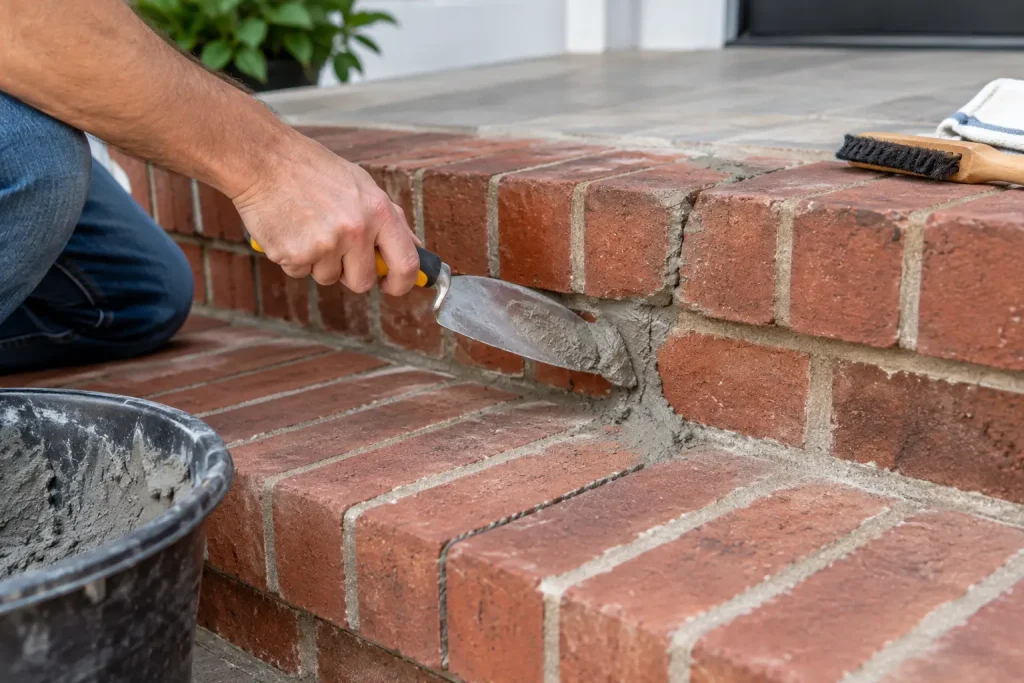
For a stable crack in exterior brick veneer, repair may involve removing loose or damaged mortar and repointing the joints with compatible new mortar. The old joint is carefully prepared, then the new mortar is packed in and finished to match the surrounding work as closely as possible. Using mortar that is too hard for older brick can cause damage over time, so material selection matters.
If individual bricks are cracked, spalled, or loose, they may need replacement before repointing. The repair should also include checking nearby flashing, weep openings, and caulked transitions around windows or doors, where appropriate. These details help keep water from reaching the wall cavity.
For a minor, stable crack in a concrete block wall, a masonry repair product may be part of the solution, but only after the wall is confirmed to be structurally sound. Surface coatings can improve appearance and limit minor moisture entry. They are not a substitute for wall stabilization when the blocks have shifted or the wall is under outside pressure.
A homeowner can clean debris from the area and make sure downspouts direct water away from the foundation. But structural crack repair is not a good place for a trial-and-error DIY approach. Improperly patched cracks often reopen, trap moisture, or hide a condition that needed prompt correction.
Repairing active foundation movement
When stair step cracks are active, the repair starts with the cause of movement. Depending on the wall, soil conditions, and inspection findings, that may include foundation stabilization, wall reinforcement, drainage improvements, or a combination of these measures.
For example, a basement wall that is cracking because of exterior water pressure may need an interior drainage system and sump pump to control groundwater. If surface water is contributing, correcting grading and extending downspout discharge may be part of the plan. Where a wall has bowed or shifted, reinforcement systems may help stabilize it. If settlement is the issue, the foundation may require specialized support designed for the specific load and soil conditions.
There is no single repair that fits every stair step crack. Injecting a crack can be appropriate in certain poured concrete walls with water intrusion, but it does not correct movement in a block wall or repair a cracked brick veneer. Likewise, waterproofing is essential when water is driving the problem, but it does not replace structural stabilization where the wall itself has moved.
A trustworthy contractor will explain what the repair can and cannot accomplish. Ask whether the recommended work addresses the cause, whether any movement needs to be stabilized first, and what warranty applies to the work. Clear answers are more valuable than a quick promise that every crack can be sealed in an afternoon.
Keep water from creating the next crack
Water management is one of the most practical ways to protect foundation walls and exterior masonry. Keep gutters clear, make sure downspouts discharge well away from the foundation, and avoid allowing roof runoff to pool beside the house. The soil around the home should slope away from the foundation so surface water does not collect along the wall.
Inside, pay attention to musty odors, damp baseboards, efflorescence on masonry, or a sump pump that runs constantly or fails to run when needed. These are often early warnings that moisture conditions need attention. A dry basement is not just more usable. It reduces the conditions that can place ongoing stress on foundation materials and create mold concerns.
For homeowners dealing with both cracking and moisture, A-1 Basement Solutions takes a solutions-first approach: inspect the full picture, explain the options clearly, and recommend work based on the condition of the home rather than fear or pressure.
Choosing the right next step
A stair step crack deserves respect, but it does not always call for the most invasive repair. The best next step is a careful evaluation that separates cosmetic masonry maintenance from active structural movement and identifies any water issue that could make the problem worse.
If the crack is changing, letting in water, or appearing with bowed walls and sticking doors, do not wait for a cosmetic patch to fail. A clear inspection and a repair plan built around the cause can protect your basement, your home’s value, and your peace of mind for years to come.