
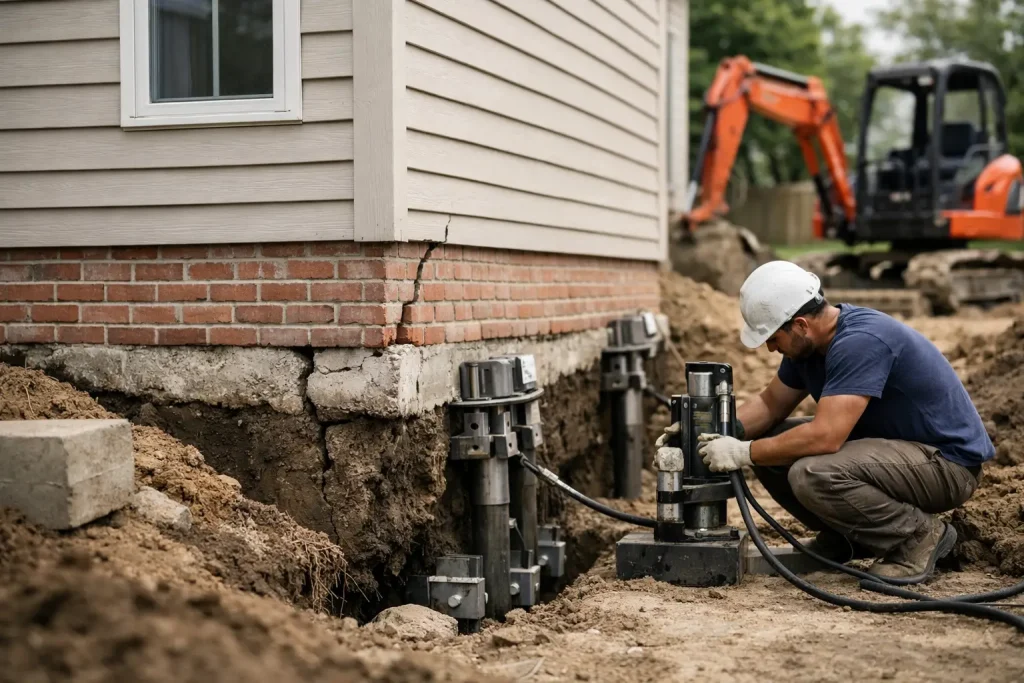
A door that suddenly sticks in July is easy to blame on humidity. A crack above the window might seem cosmetic. But when those little changes start showing up together, they often point to a bigger issue below the house. Foundation repair for settling house problems is really about one thing – stopping movement before it turns into structural damage, water intrusion, and expensive interior repairs.
Most homes settle a little over time. That part is normal. What matters is whether the movement is small and stable or active enough to affect the structure. Homeowners in New Jersey often see the first signs in the basement or lower level because that is where foundation walls, footings, drainage conditions, and soil pressure all come together.
What settling actually means
A settling house is a home whose foundation has moved downward or unevenly because the soil beneath or around it is no longer supporting the structure the way it should. Sometimes the shift is gradual. Sometimes it shows up after a wet season, a drought, poor drainage, or repeated water problems around the foundation.
Not all settling is the same. Uniform settlement means the house drops a little as a whole, which may not create serious stress. Differential settlement is the bigger concern. That happens when one section moves more than another, causing cracks, sloping floors, sticking doors, bowing walls, or separation around trim and masonry.
This is why a blanket answer rarely helps. Two homes can show similar cracks but need very different repairs depending on the soil conditions, foundation type, water exposure, and severity of movement.
Signs you may need foundation repair for a settling house
The most common signs are easy to spot once you know what to look for. Stair-step cracks in brick or block, drywall cracks that keep reopening, basement wall cracks, uneven floors, gaps around windows, and doors that no longer close properly can all indicate settlement.
Outside, you may notice chimney separation, sinking steps, or grading that pitches water back toward the home. Inside the basement, pooling water, damp walls, or musty air may seem like separate problems, but moisture and settlement often feed each other. Wet soil expands. Dry soil contracts. Repeated changes in soil moisture can put stress on the foundation over time.
One crack alone does not always mean major structural failure. The pattern, width, location, and whether it is getting worse matter more than the crack itself. A good inspection should separate cosmetic issues from true foundation movement.
Why houses settle in New Jersey
Soil and water are usually at the center of the problem. In many New Jersey neighborhoods, clay-heavy or poorly drained soils can swell when wet and shrink when dry. That cycle creates movement under footings and slabs. If gutters overflow, downspouts discharge too close to the house, or grading traps water at the foundation, the pressure increases.
Older homes can be more vulnerable because original drainage systems may be limited, footing design may not match current standards, and years of moisture exposure may have weakened surrounding soils. Newer homes are not immune either. Poor compaction during construction, buried organic material, or drainage shortcuts can cause trouble much sooner than homeowners expect.
Tree roots, leaking plumbing lines, and repeated freeze-thaw cycles can also contribute. The key point is that settlement is rarely random. There is usually a cause, and if the cause is not addressed, the repair may not hold up as well as it should.
How foundation repair for settling house issues is diagnosed
A trustworthy contractor should start with the full picture, not a sales pitch. That means looking at crack patterns, measuring floor elevation changes when needed, checking wall movement, examining drainage around the home, and asking when the symptoms first appeared.
This step matters because the right repair depends on the reason the house is moving. If the footing is dropping because supporting soil has weakened, underpinning may be needed. If hydrostatic pressure is pushing on basement walls while outside water saturates the soil, wall stabilization and waterproofing may both be part of the solution. If water is the root cause, fixing the structure without correcting drainage is only half a repair.
Homeowners should expect clear explanations in plain language. You should know what is happening, why it is happening, what repair is recommended, and what the realistic outcome will be.
Common repair options
Underpinning with piers
When part of a home is settling because upper soil layers are unstable, steel push piers or helical piers may be installed to transfer the weight of the structure to deeper, more stable soil. This is one of the most common structural repairs for significant settlement.
Push piers are driven down until they reach load-bearing strata. Helical piers are screwed into the ground and can work well in certain soil conditions. The best option depends on site access, foundation loads, and soil characteristics. In some cases, the home can be lifted closer to its original position. In others, the main goal is stabilization to prevent further movement.
Wall stabilization
If settlement is happening along with lateral pressure from wet soil, basement walls may need reinforcement. Carbon fiber straps, wall anchors, or steel beam systems can help stabilize walls depending on how much movement has occurred.
These systems are not interchangeable. A slight inward bow may be handled differently than a wall that has shifted substantially. This is where experience matters, because overtreating wastes money and undertreating leaves the problem unresolved.
Crack repair and structural sealing
Foundation cracks can sometimes be repaired with epoxy or polyurethane injection, depending on whether the goal is structural bonding, water control, or both. Crack repair is often one part of the larger plan, not the entire fix.
If the house is actively settling, sealing the crack alone will not solve the cause. It may stop water temporarily, but movement can reopen the area or create new cracks elsewhere.
Drainage and waterproofing improvements
Many foundation problems are made worse by bad water management. Interior drainage systems, sump pumps, exterior grading corrections, downspout extensions, and French drain solutions can reduce the moisture conditions that contribute to settlement and wall pressure.
For many homeowners, this is the part that gets overlooked. A foundation repair should not ignore the drainage conditions that caused or accelerated the damage in the first place.
Repair costs and what affects them
There is no honest flat price for foundation settlement repair because too many variables are involved. The type of foundation, extent of movement, repair method, soil conditions, accessibility, and whether waterproofing or drainage work is also needed all affect the cost.
A smaller stabilization project may be far different from a repair that requires multiple piers around a large section of the home. That said, waiting rarely makes the eventual repair cheaper. Ongoing movement can damage floors, drywall, windows, exterior masonry, and utility connections.
Good contractors explain the scope carefully and discuss trade-offs. Sometimes the right move is a targeted repair that stabilizes a specific area. In other cases, a broader plan offers better long-term protection.
Choosing the right contractor
Foundation work is not the place for guesswork or pressure tactics. You want a company that inspects first, explains what it sees clearly, and recommends only what the home actually needs. Ask who will perform the work, how the repair is designed, what warranty is included, and whether drainage conditions are part of the evaluation.
For homeowners, peace of mind often comes down to trust. In-house crews, clean job sites, straightforward communication, and strong warranty protection matter because this is work you should only want to do once. At A-1 Basement Solutions, that solutions-first mindset is exactly how foundation and basement issues should be handled.
When to act
If the signs have been stable for years, you may not need major intervention right away. If cracks are widening, floors are changing, doors are sticking more often, or water is showing up in the basement, it is time to have the home inspected.
The goal is not to create alarm. It is to catch the problem while you still have more options. Foundation issues tend to get easier to understand when someone looks at the structure, the drainage, and the basement as one connected system.
A settling house can feel overwhelming at first, especially when the signs start showing up in different parts of the home. But most problems become more manageable once the cause is identified and the repair plan is built around the house you actually have, not a one-size-fits-all sales script.