
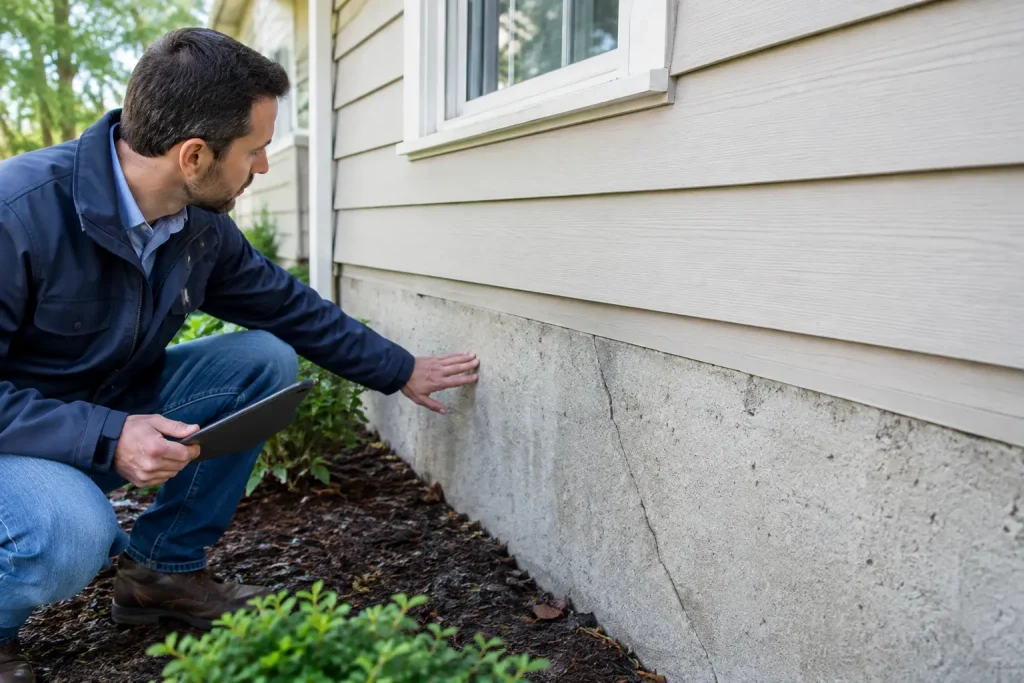
A door that suddenly sticks after years of closing smoothly can be easy to dismiss. So can a small crack near a basement window. But when changes appear in more than one area of the house, they may be among the top warning signs of foundation movement. The key is not to panic over one cosmetic flaw. It is to recognize patterns, understand what may be behind them, and have the home evaluated before a manageable repair becomes a larger project.
Foundation movement does not always mean a foundation is failing. Concrete can develop minor shrinkage cracks as it cures, and homes naturally settle over time. Concern rises when cracks grow, doors and windows become misaligned, floors slope, or water and soil conditions keep changing around the home. In New Jersey, seasonal moisture swings, heavy rain, poor drainage, and expansive soil can all place added stress on a foundation.
Top Warning Signs of Foundation Movement Homeowners Should Watch
Stair-step cracks in brick, block, or masonry
Cracks that follow the mortar joints of a brick or block wall in a stair-step pattern deserve attention, especially when they are new, widening, or visible on both the interior and exterior of the home. This pattern can indicate that one portion of the foundation is moving differently than another.
A thin, older crack is not automatically an emergency. What matters is change. Take a clear photo, note the date, and watch whether the crack lengthens, opens, or reappears after a previous repair. If it does, an inspection can help determine whether the issue is surface-level or related to settlement, soil pressure, or water management.
Horizontal cracks in basement walls
Horizontal cracks in poured concrete or block basement walls are more concerning than many vertical cracks. They can be a sign that wet soil outside the foundation is expanding and pressing inward. This is often called hydrostatic pressure, and it tends to worsen when gutters overflow, grading directs water toward the house, or drainage around the foundation is inadequate.
On block walls, look for a horizontal crack along a mortar joint or a wall that appears to bow inward. On poured concrete walls, a long horizontal crack, particularly near the middle of the wall, should be assessed promptly. The repair approach depends on the wall condition and the source of pressure. Stabilizing a wall without addressing the water that is loading the soil may not deliver a lasting result.
Doors and windows that stick or separate from trim
A single sticky door can result from humidity, a loose hinge, or normal wood movement. However, several doors or windows that become difficult to open at the same time can point to movement in the framing or foundation below.
Pay attention to new gaps between window or door trim and the wall, doors that swing open on their own, and windows that will not latch as they once did. These symptoms carry more weight when they occur alongside wall cracks, uneven floors, or exterior masonry damage. A professional should look at the whole picture rather than treating each symptom as a separate small repair.
Cracks around windows, doors, and interior walls
Diagonal cracks that run from the corner of a door or window toward the ceiling are common places for movement to show up. Drywall is rigid, so it often reveals stress before homeowners notice a more obvious structural change.
Hairline cracks can be cosmetic, particularly in newer homes as materials dry and settle. Wider cracks, recurring repairs, or cracks that continue through drywall, trim, and exterior finishes deserve more attention. The same is true when you can see daylight, feel a draft, or notice a gap that was not there before.
Sloping, dipping, or uneven floors
A floor that feels slightly out of level is not always caused by foundation movement. Older homes can have minor floor variations from original construction, normal settling, or aging floor framing. But a floor that has recently started to slope, dip, bounce, or pull away from the baseboard should not be ignored.
Basement and crawl space conditions matter here. Moisture can weaken wood framing, rust metal supports, and create conditions that allow structural components to deteriorate. If uneven flooring appears above a damp crawl space or a wet basement, moisture control may be part of the solution. The right recommendation depends on whether the issue involves framing, soil support, a foundation wall, or a combination of conditions.
Bowing walls, leaning chimneys, or visible exterior separation
Some of the clearest warning signs are visible from outside. A chimney that appears to pull away from the house, siding or brick separating at corners, or a foundation wall that bows inward should be evaluated quickly. These are not items to cover with caulk and forget.
Movement can affect only one area of a home, which is why exterior observations are valuable. Walk around the property a few times each year, especially after heavy storms or extended wet periods. Look at the foundation line, masonry joints, downspouts, and soil grade. Small changes are easier to document and address when caught early.
Why Foundation Movement Happens
Foundations rely on stable soil and controlled water conditions. When water repeatedly collects near the home, soil can soften, wash away, expand, or exert pressure against foundation walls. Dry periods can also cause certain soils to shrink, reducing support beneath portions of a foundation. The cycle between very wet and very dry conditions can be hard on a home over time.
Poor drainage is a frequent contributor. Clogged gutters, short downspouts, negative grading, and failing exterior drainage can all keep water where it does not belong. A wet basement is not just an inconvenience. It can be a clue that water is affecting the soil and walls around the foundation.
Tree roots, plumbing leaks, inadequate compaction during construction, and natural aging can also play a role. There is no one-size-fits-all explanation, which is why a visual crack alone does not tell the full story. A careful inspection should identify both the symptom and the condition causing it.
When to Schedule a Professional Inspection
Schedule an inspection soon if you see horizontal or widening cracks, bowing basement walls, repeated water intrusion, or several movement signs appearing together. You should also call when a crack is large enough to admit water or pests, or when doors, windows, floors, and walls are all showing new changes.
For less urgent concerns, documentation is useful. Photograph the crack with a ruler beside it, record its location, and check it periodically. Avoid assuming that patching visible cracks solves the underlying issue. Cosmetic repairs may make a wall look better temporarily, but they do not relieve water pressure, correct drainage, or stabilize a moving wall.
A trustworthy contractor should explain what they see in clear language, distinguish between monitoring and repair needs, and discuss practical options without pressure. At A-1 Basement Solutions, that means looking at moisture, drainage, wall condition, and the home’s overall symptoms before recommending a solution.
Protect the Foundation by Managing Water First
Not every foundation concern requires the same repair, but water management is often part of protecting the home going forward. Keeping gutters clear, extending downspouts away from the foundation, correcting grading, and addressing basement or crawl space moisture can reduce the conditions that contribute to movement.
If you have noticed a new crack, a sticking door, or water where it has never appeared before, trust the change enough to investigate it. An early, honest assessment can replace uncertainty with a clear plan and help keep your home dry, stable, and ready for the years ahead.