
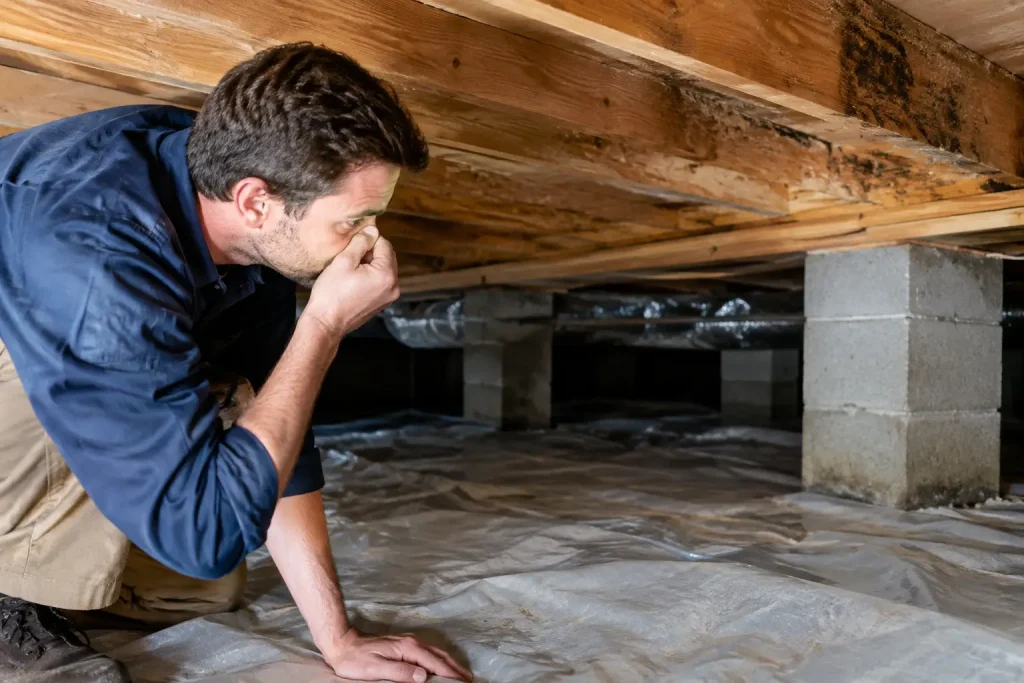
A musty crawl space is rarely just an unpleasant smell. It is usually your home signaling that moisture has been present long enough to affect wood, insulation, soil, or stored materials below the floor. If you are asking, why does crawl space smell musty, the short answer is that damp air and organic materials are creating conditions where mildew, mold, and decay-related odors can develop.
The good news is that a musty odor does not automatically mean your home has major structural damage. The right solution depends on where the water is coming from, how long the space has stayed damp, and whether the moisture has already affected building materials. A careful inspection can separate a manageable humidity problem from a drainage or vapor-control issue that needs a more complete fix.
Why Does a Crawl Space Smell Musty?
Crawl spaces are naturally more vulnerable to moisture than the living areas above them. They are close to damp soil, often have limited airflow, and can be affected by rainwater, groundwater, plumbing leaks, and humid outdoor air. Once moisture enters and cannot dry properly, the space becomes a good environment for microbial growth and wood deterioration.
That familiar earthy, stale odor often comes from microbial volatile organic compounds. These gases can be released by mold and mildew as they grow on damp wood framing, floor joists, insulation facing, cardboard, or debris. Wet soil and decaying organic material can contribute as well.
Because air moves through a house, crawl space odors can travel upward. This is especially common during colder months, when warm air rises through the home and pulls replacement air from lower areas. Homeowners may notice the smell most strongly near first-floor vents, closets, or rooms above the crawl space.
The Most Common Causes of Musty Crawl Space Odors
Ground moisture rising from the soil
Even without standing water, exposed soil releases water vapor continuously. In a crawl space with a dirt floor, that vapor can raise humidity enough to dampen framing and insulation over time. A thin or damaged plastic ground cover may not be enough to control the problem, particularly in New Jersey’s wet seasons.
A properly installed vapor barrier helps reduce the amount of moisture entering from the ground. For ongoing moisture conditions, a more complete crawl space encapsulation system may be the better answer. The best approach depends on the condition of the crawl space, the amount of groundwater pressure, and how the home is constructed.
Water entering after rain
A musty smell that gets worse after storms is a strong clue that exterior water management may be part of the problem. Rainwater can enter through foundation wall cracks, gaps around utility penetrations, poor grading, overflowing gutters, short downspouts, or failing exterior drainage.
Sometimes the source is obvious, such as a puddle beneath a foundation wall. Other times, water enters slowly and is absorbed into the soil or insulation before it becomes visible. That is why an inspection should look beyond the odor itself and trace the moisture back to its source.
High humidity and poor air movement
A crawl space can smell damp even when there is no active leak. During humid weather, outdoor air entering through crawl space vents can condense on cooler surfaces. This is a common misconception: more ventilation does not always make a crawl space drier.
In some homes, vented crawl spaces bring in humid summer air faster than the space can dry. Sealing and conditioning the crawl space, along with proper moisture control, can be more effective than relying on vents alone. A dehumidifier can help manage humidity, but it should not be used to mask active water intrusion.
Plumbing leaks and HVAC condensation
A slow leak under a kitchen, bathroom, laundry room, or water line can keep a small section of crawl space damp for months. Condensate lines from air conditioning equipment can create similar issues if they are clogged, disconnected, or draining improperly.
These problems may not cause widespread flooding, but even a small, steady source of water can produce a persistent odor. Signs may include wet insulation, staining on wood, corrosion around pipes, or a noticeably stronger smell in one area of the crawl space.
Mold, mildew, and damaged organic materials
Mold needs moisture and a food source. Crawl spaces provide plenty of organic materials, including wood joists, subflooring, paper-faced insulation, and construction debris. When those materials stay damp, mold can grow and create the musty odor homeowners recognize.
Not every dark mark on wood is active mold, and not every musty smell confirms a serious contamination issue. Still, visible growth, wet insulation, or odor that persists after drying are reasons to have the area evaluated. Mold remediation should address the affected materials and the moisture source. Cleaning or spraying alone will not provide a lasting result if water continues to enter.
Animal activity and old debris
Rodent nests, insects, dead animals, wet cardboard, abandoned insulation, and old wood scraps can all worsen crawl space odors. These conditions often coexist with moisture problems because damp, unprotected crawl spaces are more attractive to pests.
Removing debris can improve the smell, but cleanup is only one part of the job. If the area remains wet or humid, new odors and pest activity can return.
What a Musty Crawl Space Can Mean for Your Home
A damp crawl space can affect more than the air below your floors. Over time, moisture may contribute to wood rot, sagging floors, rusting metal components, damaged insulation, and higher indoor humidity. The longer the conditions continue, the more likely repairs become more involved.
There can also be indoor air quality concerns. A musty smell entering the home is not something to ignore, especially for households with allergies, asthma, or respiratory sensitivities. While odor alone cannot identify a specific health risk, it does tell you that the space deserves attention.
The trade-off is simple: a small humidity issue may need targeted improvements, while recurring water entry typically requires drainage, waterproofing, or encapsulation work. Applying a fragrance, running a fan, or placing moisture-absorbing products in the crawl space may temporarily reduce the smell, but those measures do not stop the source of the moisture.
How to Find the Source of the Odor
Start by looking for patterns. Does the smell increase after heavy rain, during summer humidity, or when the air conditioning runs? Is it strongest in one room or throughout the first floor? These details can point toward groundwater, exterior drainage, plumbing, or condensation.
If it is safe to enter the space, look for standing water, wet soil, damp insulation, visible staining, dripping pipes, disconnected drain lines, or white residue on foundation walls. Avoid disturbing suspicious growth or damaged insulation unnecessarily. Crawl spaces can have low clearance, exposed wiring, pests, and poor air quality, so professional help is often the safer choice.
A thorough crawl space inspection should evaluate the foundation walls, floor system, exterior drainage conditions, sump pump needs, vapor barrier condition, humidity level, plumbing, and evidence of mold or wood damage. That full picture matters because the smell may be only the first symptom.
Lasting Ways to Stop a Musty Crawl Space Smell
A lasting repair begins with controlling water before focusing on odor. Exterior grading and downspout discharge may need correction. If groundwater is entering, an interior drainage system and sump pump may be appropriate. Foundation openings and wall leaks may need to be sealed as part of a broader waterproofing plan.
Once bulk water is addressed, crawl space protection can include removing wet or contaminated materials, installing a durable vapor barrier, sealing the space where appropriate, and managing humidity with properly sized equipment. In some cases, repairing damaged joists or subflooring is also necessary.
There is no single product that solves every crawl space problem. A dehumidifier is useful when the area is otherwise dry but stays humid. A vapor barrier helps with soil moisture. A sump pump handles collected water. Each component has a job, and the right combination should match the cause of the problem.
If your crawl space smells musty, do not wait for the odor to become a larger repair. A-1 Basement Solutions can assess what is creating the moisture, explain the options clearly, and recommend a solution built to protect your home for the long term. No problems, just solutions.