
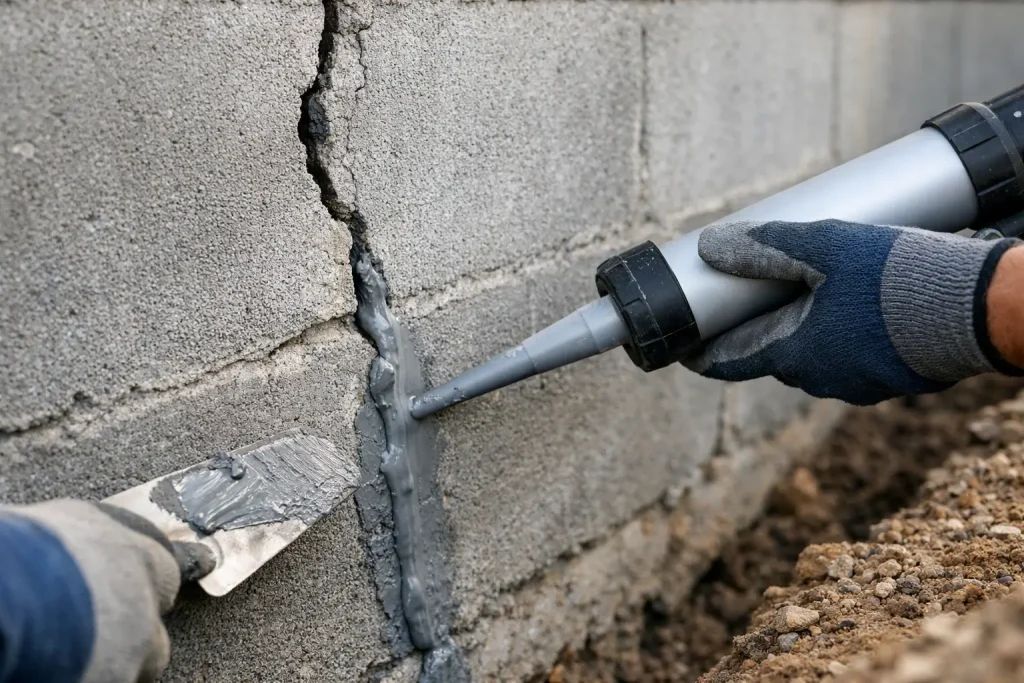
A hairline crack on a basement wall can be easy to ignore – until a heavy New Jersey rain leaves a damp streak, a musty smell, or a puddle along the floor. Knowing how to seal foundation wall cracks starts with understanding what the crack is telling you. Some cracks are straightforward moisture-entry points. Others are signs that water pressure, settlement, or structural movement needs more than a tube of sealant.
The right repair should stop water at the source while protecting the foundation for the long term. No problems, just solutions means looking beyond the visible crack and choosing a repair that fits its size, location, condition, and cause.
Start by Identifying the Type of Foundation Crack
Foundation walls crack for different reasons, and the pattern matters. Concrete naturally shrinks slightly as it cures, so thin vertical cracks are common in poured concrete foundations. These are often nonstructural, but they can still allow water to enter when saturated soil presses against the outside wall.
Vertical or diagonal cracks may also develop as a home settles. If the crack is narrow, stable, and not accompanied by wall movement, it may be a suitable candidate for crack injection or a surface repair. A horizontal crack, however, deserves more caution. Horizontal cracking can indicate that wet soil is exerting significant lateral pressure against the foundation wall.
Step cracks in block foundations, wide cracks, cracks that continue to grow, and cracks paired with bowing walls, sticking doors, or uneven floors should be evaluated by a foundation professional. Sealing the surface may temporarily hide the symptom, but it will not correct a wall that is moving.
Before any repair, look for evidence of active water entry. This may include white mineral deposits, peeling paint, damp drywall, rusty support posts, mold growth, or a dark line that becomes visible after rain. Mark the ends of the crack with a pencil and date it. If the mark changes over time, the foundation may still be moving.
When a Simple Seal Is Appropriate
A simple surface seal can be useful for a very small, dry, non-moving hairline crack. It is generally a maintenance measure, not a dependable waterproofing solution for an actively leaking wall. Caulk, hydraulic cement, and patching compounds may improve appearance and block minor air leaks, but they often fail when water pressure builds behind the wall.
For a narrow vertical crack in poured concrete that leaks during rain, a professional polyurethane or epoxy injection is usually a more durable option. Polyurethane is flexible and reacts with moisture to fill the crack and help stop water intrusion. Epoxy creates a rigid bond and is often used when restoring structural continuity is part of the goal. The appropriate material depends on whether the crack is wet, dry, active, and structural.
A block foundation is different. Water can travel through mortar joints or the hollow cores of concrete blocks, so sealing one visible line may not solve the full problem. In those cases, drainage management and interior waterproofing may be needed to relieve water before it reaches the living space.
How to Seal Foundation Wall Cracks Safely
If you are dealing with a small, stable, nonstructural crack and plan to handle a minor repair yourself, preparation is the part most homeowners underestimate. Sealant will not bond properly to a dusty, wet, crumbling surface.
First, remove loose concrete, old paint, efflorescence, and debris around the crack with a wire brush. Vacuum the area thoroughly. Follow the repair product’s instructions regarding moisture. Some materials require a dry surface, while others are designed for damp concrete.
Next, open the crack only if the manufacturer specifically recommends it. For a basic patch, a small V-shaped groove can provide more surface area for the repair material to grip. Avoid aggressively chipping at the wall or widening a crack when you are unsure why it formed.
Apply the chosen material in thin, firmly pressed layers rather than packing on one oversized bead. Allow it to cure for the full recommended time before painting, finishing the basement, or exposing the area to heavy moisture. If water is actively coming through the crack, stop and reassess. Surface patches are rarely reliable against active hydrostatic pressure.
For injection repairs, the process is more exacting. Injection ports are installed along the crack, the surface is sealed between ports, and repair resin is injected from the lowest port upward. This helps fill the crack through the wall thickness rather than merely covering the interior face. Poorly installed injections can leave voids, so this is often a job best handled by an experienced foundation repair team.
Do Not Ignore the Water Outside the Foundation
A crack is frequently where water enters, but not always why water is present. When soil around the house stays saturated, water pressure builds against the foundation. Even a well-sealed crack can be tested repeatedly if roof runoff and grading direct water toward the home.
Check that gutters are clean and downspouts discharge well away from the foundation. The ground should slope away from the house, not toward it. Low areas beside the foundation, short downspout extensions, overflowing gutters, and patio surfaces that pitch back toward the home can all send rainwater exactly where it does the most harm.
This is where repair decisions become more practical. If the crack leaked once after an unusual storm and exterior drainage is clearly poor, correcting grading and runoff may prevent a repeat. If the basement gets wet during ordinary rain, the water table is high, or seepage appears in several areas, a larger waterproofing approach may offer better protection than repeated crack repairs.
When Interior Drainage Makes More Sense
Some homes need more than crack sealing because water is entering at the floor-wall joint, through porous walls, or from beneath the slab. An interior French drain system collects water before it reaches the basement floor and directs it to a sump pump for discharge away from the home.
This approach does not require excavating the entire exterior foundation, and it can be especially effective for homes with persistent groundwater issues. It also addresses a key limitation of surface crack sealing: water pressure still exists outside the wall, even when one crack has been patched.
A careful inspection should identify whether the best solution is a targeted crack injection, exterior water management, an interior drainage system, structural stabilization, or a combination. Homeowners should be wary of anyone who treats every crack as an emergency or, just as concerning, dismisses every crack as cosmetic without inspecting the surrounding conditions.
Warning Signs That Call for Professional Foundation Repair
Call for a professional evaluation promptly if you see a horizontal crack, a bowed or leaning wall, a crack wider than about one-quarter inch, recurring leakage after prior repairs, or a crack that has grown since you first noticed it. Water that returns after each rainstorm is also a sign that the repair plan needs to address drainage, not just the visible opening.
The same is true if mold, strong basement odors, damp insulation, or finished-wall damage is present. Moisture problems can affect indoor air quality and lead to expensive repairs if they are allowed to continue behind walls and flooring.
A-1 Basement Solutions approaches these issues with an inspection-driven process and clear recommendations, not pressure. The goal is to explain what the foundation is doing, where the water is coming from, and what repair level makes sense for the home.
Protect the Repair After the Crack Is Sealed
Once the crack is repaired, keep an eye on it through changing seasons and major storms. Maintain gutters, extend downspouts, monitor the sump pump, and avoid piling mulch or soil high against the siding and foundation. If the basement is finished, leave reasonable access to the repaired area whenever possible so new moisture is not hidden behind drywall.
A sealed crack can be a lasting repair when the wall is stable and water is properly managed. The best peace of mind comes from treating the whole moisture picture – foundation condition, drainage, and basement protection – before a small crack becomes a larger problem.