
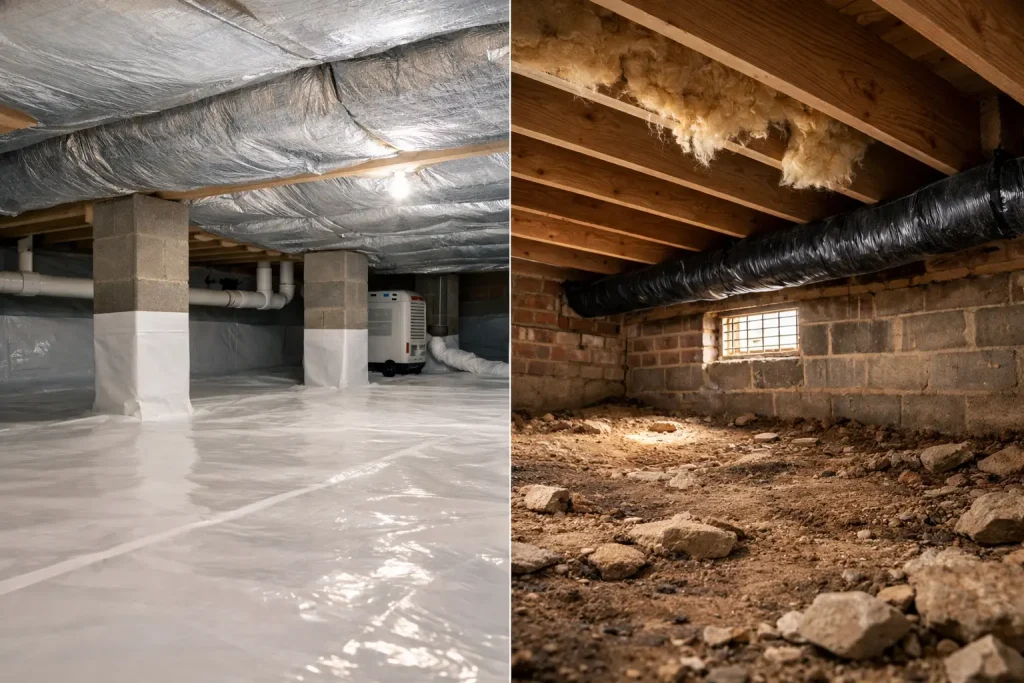
A crawl space can look dry from the access door and still be feeding damp air, mold-friendly conditions, and musty odors into the home above it. When homeowners compare a sealed crawl space vs vented crawl space, the real question is not which approach is newer or cheaper. It is which system will control moisture reliably for the specific home, soil conditions, drainage layout, and climate.
For many New Jersey homes, leaving a crawl space open to outdoor air creates more moisture problems than it solves. But sealing the space is not simply a matter of covering the ground with plastic and closing the vents. A proper solution addresses water at its source, manages humidity, and protects the structure for the long term.
Sealed Crawl Space vs Vented: The Core Difference
A traditional vented crawl space has openings in the foundation walls that allow outside air to move below the home. The original thinking was straightforward: airflow would carry moisture out. In practice, that does not always happen, especially during New Jersey’s humid spring and summer months.
Warm, humid outdoor air enters the cooler crawl space and can condense on framing, ductwork, pipes, and masonry surfaces. The result may be damp insulation, wood rot, mold growth, rusted metal components, and a persistent odor that reaches the living area. Since air naturally moves upward through a home, crawl space air can affect indoor comfort and air quality.
A sealed crawl space, often called an encapsulated crawl space, limits contact with outdoor air and ground moisture. Foundation vents are closed and sealed, a durable vapor barrier is installed over the crawl space floor and typically up the foundation walls, and gaps around penetrations are addressed. Depending on the home, the finished system may include drainage, a sump pump, insulation, and a dehumidifier or conditioned-air strategy.
The goal is not to trap moisture below the house. The goal is to keep moisture from entering and to actively control any humidity that remains.
Why Vented Crawl Spaces Often Struggle in New Jersey
A vented crawl space is not automatically a failure. A high, dry crawl space in an area with excellent grading, good drainage, and limited humidity may remain in acceptable condition for years. Some homes also have existing designs or local requirements that make a vented approach the practical choice.
Still, vents cannot overcome water problems. If rainwater runs toward the foundation, gutters discharge too close to the house, groundwater rises around the footing, or plumbing leaks go unnoticed, outside openings do not provide a dependable answer. They may allow damp air and wind-driven rain into the space while giving pests another entry point.
Seasonal conditions make the difference more noticeable. In summer, humid air entering a cool crawl space can raise relative humidity instead of lowering it. In winter, cold outside air can chill floors, expose pipes to freezing temperatures, and increase heating demands. Homeowners may notice cold rooms above the crawl space, high utility bills, buckling hardwood floors, or a musty smell that returns every year.
The condition of the structure matters most. Dark staining on joists, sagging or softened insulation, white mineral deposits on foundation walls, standing water, condensation on ducts, and visible mold are all signs that the space needs more than open vents.
What a Properly Sealed Crawl Space Includes
Encapsulation should be built around the source of the moisture, not around a one-size-fits-all product. Installing a vapor barrier over a wet floor without correcting water entry can conceal the problem rather than solve it.
A complete crawl space protection plan commonly begins with an inspection of the interior and exterior. The contractor should look at grading, downspout discharge, foundation wall condition, plumbing, existing insulation, drainage paths, and the amount of moisture in the air. That inspection determines whether the home needs simple moisture control or a more comprehensive waterproofing system.
A sealed system may include:
- A heavy-duty vapor barrier installed across the crawl space floor, sealed at seams, and extended up the walls where appropriate.
- Closed and sealed foundation vents, along with air-sealing at utility penetrations and access points.
- Interior drainage or a French drain system when groundwater or recurring water intrusion is present.
- A sump pump to collect and discharge groundwater safely away from the foundation.
- Insulation placed in the right location for the crawl space design, often at the foundation walls rather than between floor joists.
- A crawl space dehumidifier or a properly designed conditioned-air connection to maintain safe humidity levels.
Not every home needs every component. That is why a clear inspection matters. A homeowner with dry soil and minor humidity may not need the same drainage system as a home with standing water after every heavy storm.
The Benefits of Sealing a Crawl Space
The main advantage of a sealed crawl space is consistent moisture control. By separating the home from wet soil and humid outside air, encapsulation can reduce the conditions that allow mold and wood-destroying fungi to grow. It can also help preserve floor framing, insulation, HVAC equipment, and stored mechanical systems.
Comfort is another major benefit. Floors above a sealed and properly insulated crawl space are often less cold in winter and less damp in summer. When the crawl space is brought into the home’s conditioned envelope, heating and cooling equipment does not have to work as hard against extreme temperatures below the floor.
A sealed crawl space can also make maintenance easier. A clean vapor barrier provides a brighter, more usable surface for inspecting pipes, wiring, and structural framing. Water alarms, sump pumps, and dehumidifiers can be checked before a small concern turns into major damage.
For homeowners planning to stay in their house, the value is often in preventing repeat problems. For those preparing to sell, a dry, clean crawl space can help avoid the uncertainty that moisture stains, odors, or visible mold create during inspections.
Trade-Offs to Consider Before Encapsulation
Sealing a crawl space has an upfront cost, particularly if drainage repairs, structural repairs, mold remediation, or a sump pump are needed first. A dehumidifier also uses electricity and needs periodic maintenance. The filter must be cleaned or replaced as recommended, and the unit should be inspected to confirm that it is keeping humidity at the intended level.
The work must also be done carefully. A poorly sealed crawl space can hold in moisture if active water leaks or drainage failures are ignored. Closing vents without adding a moisture-control plan is not true encapsulation. Likewise, loose or thin plastic sheeting is rarely a lasting solution in a space that needs regular access and protection.
Code requirements and HVAC considerations vary by home. In some cases, a sealed crawl space requires specific insulation details, mechanical ventilation, or a dehumidification method. A qualified contractor should explain the approach, the reason for each component, and how the system will be maintained after installation.
When Keeping a Crawl Space Vented May Make Sense
There are situations where maintaining a vented crawl space can be reasonable. If the crawl space is naturally dry, has no history of condensation or mold, is well above the water table, and has effective exterior drainage, an extensive encapsulation project may not be necessary. Homeowners should not be sold a larger system simply because it is available.
Even then, the space should be monitored. Insulation should remain dry and secure, the ground should not show signs of moisture, and exterior drainage should direct water well away from the foundation. Seasonal inspections are particularly useful after major storms, plumbing repairs, or changes to the landscaping.
If a vented crawl space is damp, the first step is not necessarily to seal it immediately. The first step is to identify why it is damp. Correcting poor grading or downspout discharge may be essential whether the final design remains vented or becomes sealed.
How to Choose the Right Approach for Your Home
Start with the evidence in the crawl space rather than assumptions about what every home needs. Notice whether there is standing water, damp soil, visible mold, musty odor, sagging insulation, cold floors, pest activity, or signs of foundation movement. Then evaluate the exterior: clogged gutters, short downspouts, negative grading, and pooling water can place constant pressure on the foundation.
A trustworthy recommendation should connect the proposed work to those conditions. You should be able to understand where the water or humidity is coming from, what each part of the system does, and what maintenance will be expected. No Problems, Just Solutions means solving the actual cause rather than using fear or a quick cover-up.
A-1 Basement Solutions approaches crawl space moisture with that same practical focus: inspect the conditions, explain the options clearly, and build a solution that protects the home for the long haul. Whether the right answer is drainage improvement, a sump pump, encapsulation, or continued monitoring, the best choice is the one that keeps the space dry, healthy, and structurally sound.
If your crawl space has a damp smell, wet insulation, or visible water, do not wait for the damage to become easier to see from inside the house. A careful inspection now can give you a clear path forward and more confidence every time heavy rain moves through New Jersey.