
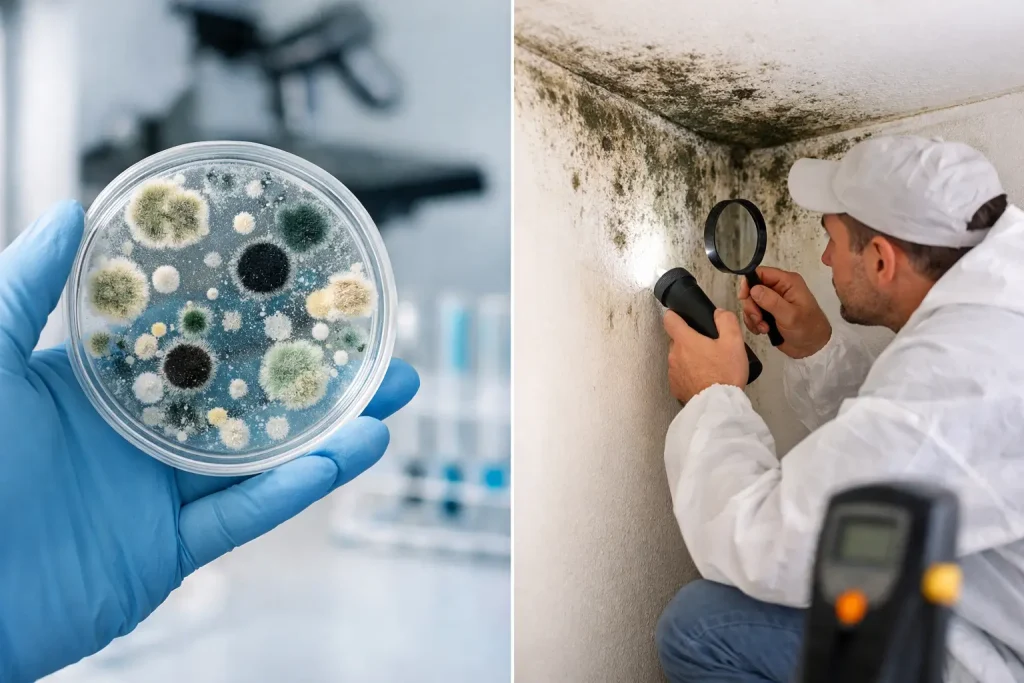
A musty basement after a New Jersey rainstorm can make any homeowner wonder whether mold is growing behind the walls or under the carpet. When comparing mold testing vs mold inspection, the key question is not simply which service to schedule. It is whether you need help identifying a moisture problem, confirming the type or level of mold present, or both.
In many homes, the most useful first step is a thorough inspection focused on water. Mold needs moisture to grow, so the lasting solution is rarely a lab report alone. It is finding out why the basement, crawl space, or finished lower level is staying damp and correcting that condition.
Mold Testing vs Mold Inspection: The Practical Difference
A mold inspection is a hands-on evaluation of the property. A qualified professional looks for visible mold growth, water intrusion, elevated humidity, condensation, leaks, staining, damaged materials, and conditions that allow mold to return. The inspection should extend beyond the spot where you see a problem. For example, staining on a basement wall may point to foundation seepage, poor exterior grading, a failed gutter discharge, or a plumbing leak.
Mold testing, on the other hand, involves collecting samples for laboratory analysis. Samples may come from the air, a surface, dust, or a piece of affected material. Testing can help identify mold types or compare indoor conditions with outdoor conditions, depending on the sampling method and the reason for testing.
Neither service is automatically better. They answer different questions. An inspection asks, “Where is the moisture coming from, what is affected, and what needs to be fixed?” Testing asks, “What did this sample contain at the time it was collected?” For most basement and crawl space concerns, the inspection provides the direction homeowners need first.
What a Thorough Mold Inspection Should Reveal
A useful inspection is not a quick walk through with a flashlight. It should connect visible signs of mold to the conditions causing them. That means examining the foundation walls and floor, windows, rim joists, exposed framing, insulation, sump pump area, drainage conditions, and any signs of previous water damage.
In a finished basement, the evidence can be less obvious. Mold may be hidden behind drywall, baseboards, carpeting, paneling, or stored belongings. A professional may use moisture meters, humidity readings, and other noninvasive tools to identify areas that deserve closer attention. The goal is to avoid tearing into sound materials while also not overlooking trapped moisture.
For New Jersey homeowners, seasonal conditions matter. Heavy rain, high summer humidity, snowmelt, and older foundation systems can all contribute to damp below-grade spaces. A crawl space with exposed soil, poor ventilation, or wet insulation can affect the air above it. A basement that appears dry most days may still take on water during storms and create the conditions mold needs over time.
A good inspection also separates active problems from old ones. Water stains may be historic, but high moisture readings, a persistent odor, peeling paint, or new discoloration can indicate that the issue is ongoing. That distinction matters when deciding whether you need cleanup, waterproofing, repairs, or further testing.
When Mold Testing Makes Sense
Mold testing can be worthwhile when the inspection does not provide a clear answer. If there is a strong musty odor but no visible growth, testing may help support a deeper investigation. It may also be useful after a cleanup project, when documentation is needed for a real estate transaction, or when a homeowner wants an independent record of conditions.
Testing can also help when there are multiple possible sources of an indoor air concern. A sample may identify whether elevated mold levels are present, but it should always be interpreted alongside the property’s condition. A single air sample is a snapshot, not a complete diagnosis of the home.
There are limits to understand before paying for testing. Mold is naturally present outdoors, and some amount can enter any home through open doors, windows, clothing, and normal air movement. Results can vary with weather, ventilation, recent cleaning, occupancy, and where the sample was taken. A lab finding does not tell you exactly where mold is hidden, how long it has been there, or what repair will stop it from returning.
That is why testing should not replace a careful inspection. If mold is visibly growing on water-damaged materials, the priority is generally to address the moisture source and remove or remediate affected materials safely. Testing a clearly visible problem may add a cost without changing the repair plan.
Signs You Should Start With an Inspection
Start with an inspection when you can see discoloration, smell a musty odor, notice damp walls or floors, find recurring condensation, or have had water in the basement or crawl space. The same is true if you see efflorescence on masonry, peeling paint, warped baseboards, rust around appliances, or insulation that feels damp. These signs point to a building moisture issue that needs to be understood before it can be solved.
Homeowners should also schedule an inspection after a significant leak, flood, sump pump failure, or foundation seepage event. Even after standing water is removed, moisture can remain in wall cavities, flooring, framing, and insulation. Fast drying helps, but a professional assessment can identify materials that need attention and systems that need improvement.
If a child, older adult, or anyone with a respiratory condition is experiencing symptoms that seem worse at home, speak with a medical professional as well. A contractor can evaluate moisture and building conditions, but should not diagnose health concerns or make promises about medical outcomes.
The Real Cost Question: Information or a Lasting Fix?
The lowest-priced option is not always the best value. A test may provide a report, but it does not repair a leaking foundation crack, redirect roof runoff, install a drainage system, seal a crawl space, or control basement humidity. If moisture remains, mold can return even after a thorough cleanup.
An inspection-driven plan gives homeowners a clearer path. First, identify active water entry or humidity sources. Next, correct the cause through the appropriate repair, whether that is interior drainage, sump pump work, foundation repair, crawl space protection, plumbing repair, or exterior water management. Then address damaged or mold-affected materials and verify that the space can stay dry.
There are trade-offs. A simple, isolated mold issue from a one-time plumbing leak may only require drying, targeted removal, and a repair to the pipe. A damp basement with recurring seepage may require a broader waterproofing solution. The right scope depends on the source, the extent of damage, and how the space is used.
Questions to Ask Before You Hire Someone
Ask whether the professional will inspect for the moisture source, explain what they find in plain language, and provide a written scope of work. Find out whether testing is recommended because it will change the next step or because it is being offered as a standard add-on. You should also ask how the affected area will be contained, cleaned, dried, and protected against future moisture.
Be cautious of fear-based recommendations. Not every dark mark is toxic mold, and not every moisture concern requires a major project. At the same time, recurring dampness should not be brushed aside. The right contractor will explain the evidence, discuss options, and help you make a practical decision without pressure.
For basement and crawl space problems, A-1 Basement Solutions takes this solutions-first approach: identify how water is getting in, explain the repair options clearly, and focus on work that protects the home over the long term. A dry, properly managed space is the foundation of effective mold prevention.
If you are deciding between mold testing and an inspection, start with what you know. Visible growth, odors, past water intrusion, or damp building materials are all reasons to investigate the moisture source. Once you understand the condition of the space, you can decide whether targeted testing adds useful information. The best next step is the one that moves your home closer to dry, clean, dependable conditions.