
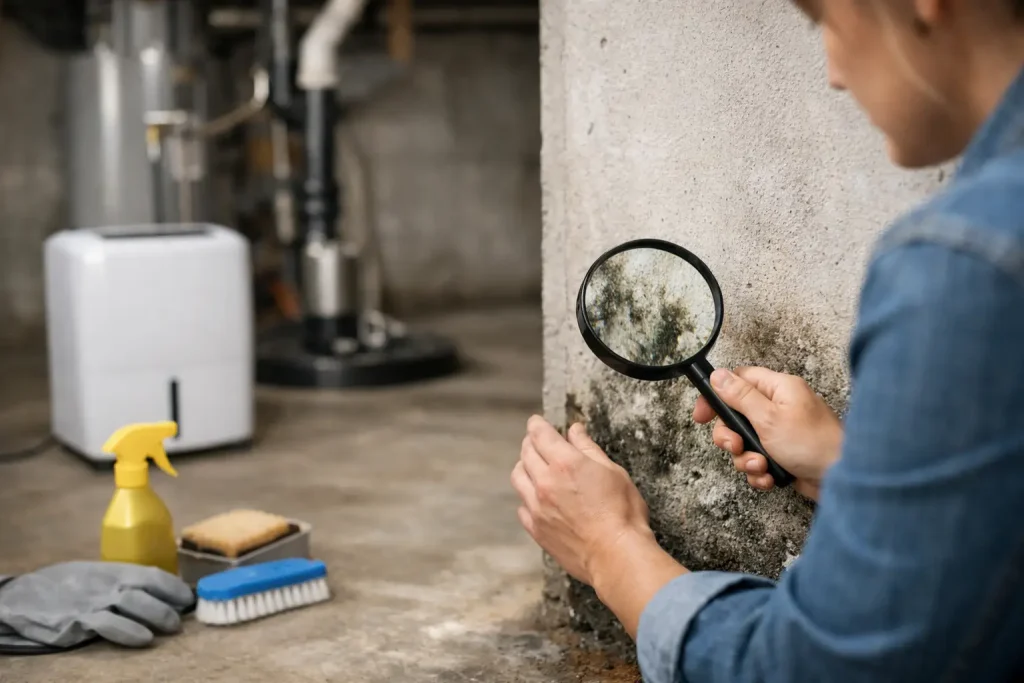
A basement can look dry at a glance and still have the conditions mold needs to grow. A musty odor after rain, peeling paint near a foundation wall, damp cardboard boxes, or condensation on pipes are early warnings that moisture is lingering where it should not. This guide to basement mold prevention explains how New Jersey homeowners can find the source, reduce moisture, and make decisions that protect the home for the long term.
Mold prevention is not about masking odors or spraying a stain with cleaner. Mold needs moisture, a food source such as wood or paper-faced drywall, and time. Take moisture out of the equation, and the rest of the solution becomes far more manageable.
Why Basements Are Vulnerable to Mold
Basements sit below grade, surrounded by soil that holds water after rain, snowmelt, and seasonal temperature changes. In New Jersey, heavy storms, humid summers, aging drainage systems, and freeze-thaw cycles can all add pressure around a foundation. Water may enter through a wall crack, a cove joint where the floor meets the wall, a window well, plumbing, or an overflowing gutter system.
Not every mold issue comes from an obvious leak. Humid outside air can enter a cool basement and condense on pipes, walls, and concrete surfaces. A basement laundry area, an unvented bathroom, or a dryer vent problem can raise indoor humidity as well. Even a small amount of moisture that returns repeatedly can create a persistent mold problem.
The goal is to identify whether the basement has a one-time event, a humidity problem, or a water-management problem. Those causes require different solutions. Treating every situation the same is how homeowners end up paying for repeated cleanup without solving the source.
Guide to Basement Mold Prevention: Start With Moisture
The first step is a practical inspection. Walk through the basement after a hard rain and again on a humid day. Look along foundation walls, around windows, beneath pipes, near the water heater, and around the perimeter of the floor. Pay attention to changes in color, white mineral deposits on masonry, soft drywall, rusted metal, and areas where the paint is bubbling or flaking.
A musty smell matters, even if there is no visible growth. It can indicate moisture behind finished walls, under flooring, or inside stored belongings. Move boxes away from exterior walls and check the underside of rugs, shelves, and furniture. Cardboard, fabric, paper, and untreated wood are especially vulnerable when they sit directly on a concrete floor.
Outside, inspect the parts of the property that direct rainwater away from the foundation. Gutters should be clean and working, downspouts should discharge well away from the home, and the ground should slope away from the foundation rather than toward it. A roof drainage issue can send a surprising amount of water into the soil beside a basement wall.
If water appears after storms, do not assume a dehumidifier will solve it. A dehumidifier can help control airborne moisture, but it cannot stop groundwater from pressing against the foundation or water from entering through a crack. In that situation, the home may need drainage improvements, waterproofing, a sump pump system, or foundation repair based on what an inspection finds.
Keep Basement Humidity in a Safe Range
For most basements, maintaining relative humidity between 30% and 50% helps discourage mold growth. A simple hygrometer provides a more reliable answer than judging the room by feel. If readings regularly climb above 60%, the basement has a moisture-control issue worth addressing.
Run a properly sized dehumidifier during humid weather and keep doors and windows closed when outdoor air is warm and damp. Empty the reservoir consistently, or use a unit with a drain connection so it can operate without interruption. Clean the filter and inspect the drain line periodically. A neglected dehumidifier can become another source of standing water.
Ventilation needs a little judgment. Fresh air is helpful in some spaces, but opening basement windows during a humid summer day can make condensation worse. If ductwork, cold-water pipes, or concrete walls are sweating, bringing in more humid air is unlikely to help. Insulating cold pipes and correcting the humidity level usually makes more sense.
Prevent Water From Reaching the Foundation
Exterior water management is one of the most effective forms of mold prevention because it addresses the issue before water reaches the basement. Keep gutters free of leaves and debris, repair loose sections, and make sure downspout extensions direct water away from the house. Do not let discharge spill beside the foundation or onto a walkway where it can flow back toward the home.
Check the grade around the home as landscaping settles over time. Soil, mulch, and hardscaping should guide water away from the foundation. Avoid piling mulch against siding or covering the top of foundation walls. It can hold moisture against the structure and make visual inspections more difficult.
Some properties have deeper drainage concerns. Homes with high water tables, recurring perimeter seepage, or water entering at the floor-wall joint may benefit from an interior French drain and sump pump system. The right system depends on how water is moving around the home, not on a one-size-fits-all recommendation. A clear inspection should explain where the water is coming from, what the proposed solution will do, and what it will not do.
Choose Basement Materials That Do Not Feed Mold
A finished basement needs moisture-conscious materials, especially in a home with any history of dampness. Standard paper-faced drywall, carpet padding, and wood trim can absorb moisture and support mold growth if water enters the space. That does not mean a basement can never be finished, but the waterproofing and drainage questions should be settled first.
Use shelving that keeps belongings off the floor, and store seasonal items in sealed plastic bins rather than cardboard. Leave a small gap between storage and exterior walls to allow air circulation and make inspections easier. If a basement has had moisture problems, avoid placing rugs or upholstered furniture directly against foundation walls.
For finished areas, moisture-resistant materials can reduce risk, but they are not a substitute for correcting water intrusion. Vinyl flooring may tolerate a small spill better than carpet, for example, yet hidden moisture below the slab or behind a wall can still cause damage. The best finish materials are chosen after the basement is dry and the cause of past moisture has been addressed.
Respond Quickly to Leaks, Flooding, and Visible Mold
Speed matters after a plumbing leak or water event. Remove standing water, dry wet materials promptly, and identify the cause before rebuilding. Wet drywall, insulation, carpet padding, and stored items can hold moisture long after the floor looks dry. Fans and dehumidifiers can help with a limited, clean-water incident, but they are not always enough for widespread saturation.
Small, contained areas of surface mold may be manageable with appropriate cleaning and drying, provided the underlying moisture source is fixed. Do not paint over mold, and do not rely on fragrance products to cover the smell. If growth keeps returning, involves a large area, appears behind finished walls, follows sewage or floodwater exposure, or affects materials that cannot be fully dried, professional mold remediation and moisture correction are the safer next steps.
A reliable contractor should not use fear to sell a solution. Ask what evidence supports the diagnosis, where the water is entering, whether structural cracks need attention, and how the proposed work prevents recurrence. The right answer may be as simple as improving drainage, or it may require a more comprehensive waterproofing plan. Honest guidance starts with the actual condition of the home.
Build a Simple Prevention Routine
Mold prevention works best as regular home maintenance, not a once-a-year reaction. Check the basement after major storms, monitor humidity through the summer, test the sump pump before wet seasons, and inspect gutters and downspouts in spring and fall. These small checks can catch a problem before it reaches drywall, flooring, or stored belongings.
If your basement has recurring dampness, water stains, or a persistent musty odor, it is reasonable to bring in a specialist before making cosmetic repairs. A-1 Basement Solutions helps homeowners identify the moisture source and understand practical options without pressure. A dry, healthy basement is not just more comfortable – it gives you confidence that the home is being protected from the ground up.