
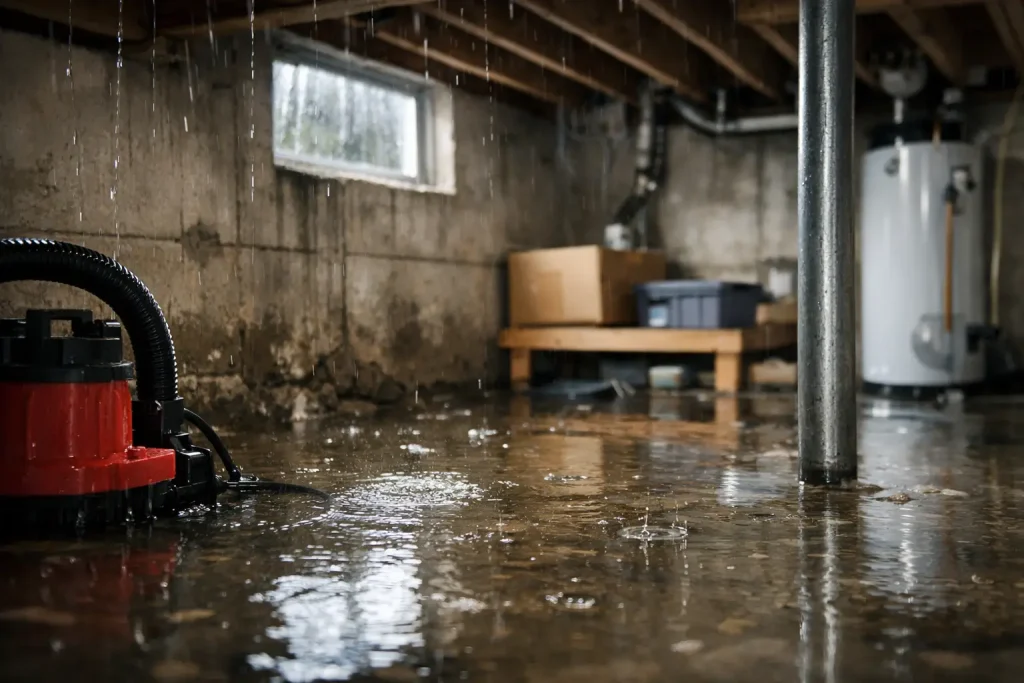
A wet basement after a storm rarely starts with one dramatic failure. More often, basement water after heavy rain shows up because several smaller problems line up at the same time – saturated soil around the house, poor exterior drainage, a tired sump pump, or cracks that finally let water through. If you have seen puddles along a wall, damp carpet, musty odors, or water collecting near the sump pit, the right response is not guesswork. It is finding the actual entry point and fixing the system that allowed it to happen.
For New Jersey homeowners, this is a common issue because weather can change quickly and soils stay saturated for long stretches. One hard rain may expose a weakness that has been building for months. The good news is that most basement water problems are fixable. The key is understanding why the water is getting in and choosing a repair that matches the cause.
Why basement water after heavy rain happens
Rainwater does not need a large opening to enter a basement. When the ground around your foundation becomes saturated, hydrostatic pressure builds and pushes water toward any vulnerable area. That can mean wall cracks, floor cracks, cove joints where the wall meets the floor, old pipe penetrations, or porous concrete itself.
Sometimes the issue starts outside. Gutters may be clogged, downspouts may dump water too close to the home, or the grading may slope toward the foundation instead of away from it. In those cases, too much roof and surface water ends up right where you do not want it.
In other homes, the exterior may look fine, but the interior drainage system is missing, overwhelmed, or failing. A sump pump that cannot keep up, a French drain system that was never installed, or a partially blocked drain line can all lead to water backing up into the basement during major storms.
There is also an age factor. Older foundations often develop cracks, joint separation, and signs of wear that stay hidden until a heavy rain event tests them. Newer homes are not immune either. Poor lot drainage, rushed construction, or undersized pump systems can create the same result.
The most common sources of basement water after heavy rain
The pattern of the water usually tells part of the story. Water along one wall often points to exterior drainage or a localized crack. Water around the perimeter may suggest seepage at the cove joint or pressure under the slab. Water near the sump area can indicate pump failure or an overloaded system.
Gutters and downspouts
A surprisingly high number of wet basement calls start with the roof drainage system. If gutters overflow, water sheets down the side of the house and saturates the soil next to the foundation. If downspouts discharge too close to the home, they do the same thing in a more concentrated way.
This is one of the easier issues to correct, but it is also one of the easiest to overlook because the problem shows up in the basement rather than at the roofline.
Poor grading and yard drainage
Your yard should guide water away from the house. When the grade pitches inward or settles over time, rainwater collects near the foundation instead. Add compacted clay soil or low spots near the home, and that water can sit there long after the storm ends.
This is where the right fix depends on the property. Some homes benefit from regrading. Others need a surface drain, a buried discharge line, or a more complete waterproofing approach because the water load is simply too high.
Foundation cracks and wall seepage
Not every crack is a structural emergency, but any crack can become a water entry point. Vertical cracks, shrinkage cracks, and gaps around utility penetrations can all allow seepage during storms. If the crack changes width, bows, or comes with displacement, that is a separate concern that should be evaluated for structural repair as well.
Wall seepage can also happen without a visible crack. Masonry and concrete are porous. Under enough pressure, moisture can migrate right through the wall and leave staining, dampness, or mineral deposits.
Floor seepage and cove joint leaks
When water appears where the floor meets the wall, that is often a sign of hydrostatic pressure below or beside the slab. Homeowners sometimes think the wall is leaking higher up and the water just runs down, but in many basements the real issue is at the perimeter joint.
This is one reason interior drainage systems are so effective. Rather than trying to stop pressure from building outside, they collect the water at the point of entry and direct it to a sump pump before it spreads across the floor.
Sump pump problems
A sump pump is your basement’s last line of defense during a heavy rain. If it loses power, wears out, clogs, or is undersized for the water volume, the basement can flood quickly. Sometimes the pump still runs, but not fast enough to keep up. Other times the discharge line is frozen, blocked, or sending water back toward the house.
A pump issue is especially urgent because it can turn a manageable seepage problem into standing water.
What to do right away
If you find water in the basement after a storm, start by protecting people and limiting damage. If water is near outlets or appliances, avoid the area until power safety is confirmed. Move boxes, furniture, and stored items away from the wet area if you can do it safely.
Then try to observe, not just react. Take photos. Note where the water is entering, how far it spread, and whether it appears during rain or only afterward. That information helps identify the source and avoids wasted money on the wrong repair.
If the sump pump is not working, check whether it has power and whether the float moves freely. If gutters are overflowing or downspouts are disconnected, address that as soon as conditions are safe. Wet materials should be dried quickly because mold can begin developing in as little as 24 to 48 hours.
Fixes that actually solve the problem
The right solution depends on how water is getting in. There is no honest one-size-fits-all answer, and that matters. A crack injection may solve one isolated leak, but it will not fix widespread perimeter seepage. Regrading may help with surface runoff, but it will not replace a failed sump pump.
Drainage corrections outside the home
If roof runoff and surface water are overloading the foundation, exterior drainage improvements can make a major difference. That may include cleaning and adjusting gutters, extending downspouts, correcting the grade, or adding drainage lines to move water away from the house.
These fixes are often part of the answer, but not always the whole answer. If water pressure is already building below grade, exterior drainage alone may reduce the problem without fully solving it.
Interior drainage and sump pump systems
For recurring basement water after heavy rain, an interior drainage system with a properly sized sump pump is often the most reliable long-term solution. The system captures water at the perimeter before it reaches the basement floor and routes it to the pump for discharge.
When installed correctly, this approach works with the reality that water will reach the foundation during storms. Instead of hoping it never gets there, the system manages it in a controlled way. Battery backup protection is also worth serious consideration in areas where storms can knock out power.
Crack repair and foundation repair
If a specific crack or wall defect is the source, targeted repair may be needed. Some cracks can be sealed effectively. Others point to movement that should be stabilized first. This is where inspection matters most, because treating a symptom without addressing the structural cause usually leads to repeat leaks.
A trustworthy contractor should explain what is cosmetic, what is waterproofing-related, and what is structural. Those are not always the same thing.
When it is time to call a professional
If water comes back after every major storm, if you see mold or strong musty odors, if the sump pump is unreliable, or if there are visible cracks and wall movement, it is time for a professional inspection. The goal should not be a sales pitch. It should be a clear explanation of what is happening and what level of repair your home actually needs.
That is especially true when more than one issue is present. Many basements need a combination of drainage correction, waterproofing, and pump protection. A company like A-1 Basement Solutions can assess the full picture and recommend a solution built for the home rather than a generic fix.
Basement water problems tend to get more expensive when they are left alone. The first puddle may seem manageable, but repeated moisture can damage finishes, ruin storage, affect indoor air quality, and gradually contribute to more serious foundation concerns. Acting early is not overreacting. It is good homeownership.
If your basement gets wet after heavy rain, trust what the house is telling you. Water follows pressure, gravity, and weak points. Once you know which of those is at work in your home, the path to a dry basement becomes much clearer.