
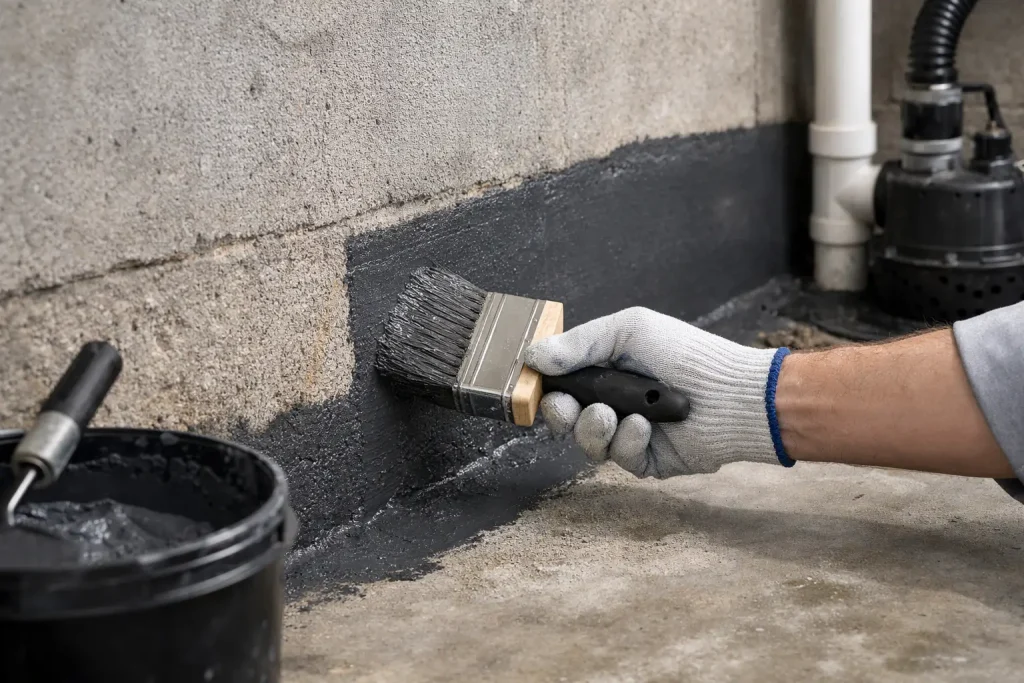
A painted wall that starts bubbling after a hard rain is usually the moment homeowners realize this is not a cosmetic problem. If you are trying to figure out how to waterproof basement walls, the first thing to know is that most wet basement issues do not start at the wall surface. They start with water pressure around the foundation, drainage problems outside, or cracks that give water an easy path in.
That matters because many basement waterproofing jobs fail for a simple reason: the wrong fix gets applied to the wrong problem. A waterproof coating can help in some cases, but if hydrostatic pressure is pushing water through the wall or up through the floor joint, paint-on products alone will not hold up for long. The right approach starts with understanding where the moisture is coming from and what the basement is being asked to handle.
How to waterproof basement walls starts with diagnosis
Before anyone opens a bucket of sealer, the basement needs a real inspection. Water stains, white chalky residue, damp corners, musty smells, and mold growth all tell part of the story. So do exterior grading issues, clogged gutters, short downspouts, cracked masonry, and window wells that collect water.
Homeowners often assume the wall itself is the problem because that is where the evidence shows up. In reality, basement walls are often the victim, not the cause. Concrete and block walls are porous. If the soil outside stays saturated, moisture can move through the wall, especially in older homes or homes with poor perimeter drainage.
This is why a reliable waterproofing plan looks at both the inside and outside of the foundation. If a contractor recommends one quick product without explaining the source of the water, that is a red flag.
Interior vs. exterior waterproofing
There is no single answer to how to waterproof basement walls because the right method depends on the severity and source of the water.
Interior waterproofing is often the most practical option when water is entering through wall-floor joints, minor wall cracks, or pressure from saturated soil. This can include crack injection, interior drainage systems, vapor barriers, and sump pump installation. These systems do not stop rain from reaching the outside of the foundation, but they do manage the water before it damages the basement.
Exterior waterproofing is more invasive but sometimes necessary. It typically involves excavating around the home, applying a membrane to the exterior wall, sealing cracks, and improving footing drainage. This is often the stronger option when there is widespread wall seepage, foundation deterioration, or repeated failure of interior patch-style repairs.
The trade-off is cost and disruption. Exterior work can be excellent, but it is not always the first or most efficient answer. In many New Jersey homes, a well-designed interior drainage system paired with proper exterior water management solves the issue without full excavation.
When waterproof coatings help and when they do not
Waterproof coatings have a place, but they are often oversold. If the wall has minor dampness and no active leaks, a masonry waterproofing product can help reduce moisture migration. It may also improve the wall surface before finishing the basement.
But coatings are not a cure for active intrusion. If you have running water, recurring seepage, bowing walls, or water collecting at the floor edge, coating the inside is like repainting over a roof leak. It may look better for a while, but the pressure behind the wall remains.
This is especially true with painted block walls. Hollow block foundations can fill with water, and once that happens, surface products do very little. In those cases, drainage and pressure relief matter far more than another layer of sealer.
Crack repair is often part of the answer
A basement wall crack is not always a structural emergency, but it should never be ignored. Water follows the path of least resistance, and a small crack can become a consistent leak point during heavy rain.
For poured concrete walls, polyurethane or epoxy injection is a common repair method. Polyurethane is often used when active water is involved because it expands and seals the leak path. Epoxy is more rigid and is typically used when structural bonding is the goal. The right material depends on the type of crack and whether movement is still occurring.
For block or stone foundations, repairs can be more complicated. Mortar joints, porous surfaces, and multiple entry points may mean a simple crack fill is not enough. That is where a broader waterproofing system becomes more important.
Drainage is usually the real solution
If there is one point homeowners should remember, it is this: keeping basement walls dry usually comes down to controlling water before it builds pressure.
Outside, that may mean regrading the soil so water drains away from the house, extending downspouts farther from the foundation, and correcting gutter overflow. These are simple items, but they are often ignored. A basement can stay damp for years because roof runoff is dumping right next to the wall.
Inside, drainage solutions may include a perimeter French drain system along the basement footing, a sump pump to move collected water out, and a wall vapor barrier to direct moisture into the system. This kind of setup does not rely on hoping the wall stays dry. It manages water in a controlled way, which is often the more dependable long-term strategy.
That is also why experienced waterproofing contractors do not treat every wet basement the same. One home may need crack repair and downspout extensions. Another may need a full interior drainage system. Another may have foundation movement that needs structural repair before waterproofing even begins.
What homeowners can do first
If the basement has occasional dampness but no major flooding, there are a few practical steps worth taking early. Check the grading around the foundation and make sure soil slopes away from the home. Clean the gutters and confirm downspouts discharge well away from the house. Remove stored items from damp walls so you can inspect the full perimeter.
Also pay attention to timing. If moisture appears only after storms, the issue is likely drainage-related. If the basement feels humid year-round, condensation may be part of the problem, especially around uninsulated pipes or during summer. A dehumidifier can help with air moisture, but it will not solve water intrusion through the foundation.
If you notice mold, repeated puddling, peeling paint, or a musty smell that keeps coming back, it is time for a deeper evaluation. Those signs usually mean the problem has moved beyond a minor maintenance issue.
Signs you should not rely on DIY fixes
Some basement projects are reasonable for homeowners. Regrading a flower bed, extending a downspout, or sealing a small non-structural gap around a pipe penetration may help. But a few warning signs call for professional waterproofing and possibly foundation repair.
If the wall is bowed, cracked horizontally, or shifting inward, that is no longer just a waterproofing issue. If water is coming in at multiple points, especially along the cove joint where the floor meets the wall, pressure under and around the foundation is likely involved. If previous coatings or patch repairs keep failing, the underlying water path has not been addressed.
This is where working with a specialist matters. A good contractor should explain what is causing the issue, what each repair option will and will not do, and what kind of long-term protection you can realistically expect. At A-1 Basement Solutions, that solutions-first mindset is what homeowners should expect from any company they invite into their home.
The best waterproofing plan is the one that fits the house
Older homes, newer homes, block foundations, poured concrete walls, finished basements, and unfinished utility spaces all present different challenges. There is no honest one-size-fits-all answer to how to waterproof basement walls. The best plan is built around the condition of the foundation, the way water moves around the property, and how the homeowner wants to use the space.
If you only want to reduce occasional dampness in a storage basement, the solution may be fairly straightforward. If you are protecting a finished family room, home office, or long-term investment in the house, it makes sense to think beyond the next storm and choose a system designed for lasting performance.
A dry basement starts with clear answers, not pressure. When the cause is identified correctly and the repair matches the real problem, waterproofing becomes a long-term improvement instead of another temporary patch.