
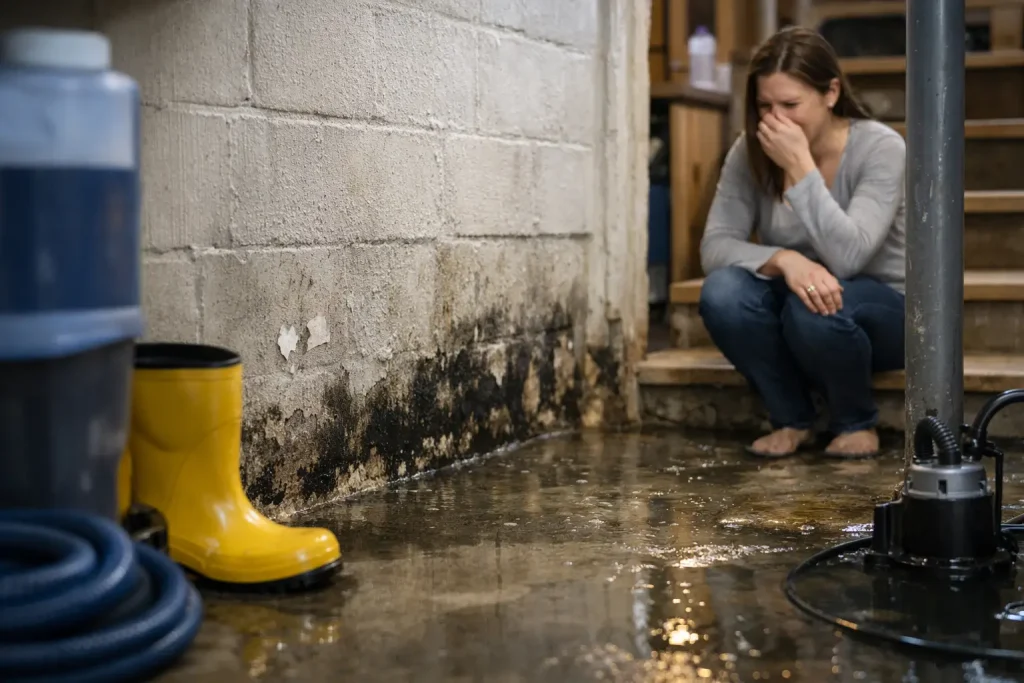
A basement does not have to flood to create a health problem. In many New Jersey homes, the warning signs start smaller – a musty smell, damp walls, condensation on pipes, or cardboard boxes that feel soft at the bottom. Those early symptoms matter because wet basement health risks often build slowly, long before standing water forces anyone to pay attention.
For many homeowners, the first concern is damage to storage or finished space. The bigger issue is what persistent moisture can do to the air you breathe and the surfaces inside your home. Basements are part of the house, and when they stay damp, that moisture rarely stays isolated.
Why wet basement health risks are more serious than they look
A wet basement changes the indoor environment. Moisture supports mold growth, raises humidity, and creates conditions where bacteria, dust mites, and other irritants are more likely to thrive. Even if your family does not spend much time downstairs, basement air can move upward through the home.
That matters because air does not stay neatly on one floor. As warm air rises, it can pull air from lower levels with it. If your basement smells musty, there is a good chance some of that air is affecting the rest of the house as well.
This is why homeowners sometimes notice symptoms before they connect them to the basement. A child may seem more congested at home. Allergy symptoms may feel worse at night. You may run a dehumidifier constantly and still feel like the house never smells quite clean. Those are not proof of a basement problem by themselves, but they are signs worth taking seriously.
The most common health concerns linked to a wet basement
Mold is usually the first issue people think about, and for good reason. Mold can begin growing on drywall, wood, carpet, insulation, stored fabrics, and even dust when enough moisture is present. Some people are more sensitive than others, but common reactions include coughing, sneezing, throat irritation, watery eyes, nasal congestion, headaches, and skin irritation.
For people with asthma, allergies, or other respiratory conditions, a damp basement can make symptoms worse. Young children, older adults, and anyone with a weakened immune system may be more vulnerable as well. Not every mold issue leads to severe illness, and not every wet basement turns into a major contamination problem. Still, repeated exposure to damp, moldy conditions is not something to ignore.
Humidity is another overlooked problem. When basement humidity stays high, it can contribute to a general feeling of stuffiness in the house and create a more favorable environment for dust mites and microbial growth. High moisture levels can also affect furnishings and finishes on upper floors over time, especially in homes where the basement is partially finished or directly connected to the main living space.
There is also the issue of bacteria and contaminated water. If water enters from outside, backs up through drains, or mixes with sewage, the health risk changes significantly. Clean groundwater intrusion is one thing. Water that carries contaminants is another. In those cases, direct contact and improper cleanup can expose people to much more serious hazards.
What makes one basement riskier than another
Not every wet basement presents the same level of health concern. The severity depends on how often water enters, how long materials stay wet, what surfaces are affected, and how quickly the problem is addressed.
A basement with occasional condensation on foundation walls is different from one with recurring seepage, soaked carpet, and visible mold behind finished walls. A small moisture issue that is caught early may be easier to correct with drainage improvements, waterproofing, and humidity control. A long-standing problem can spread into hidden areas and require more extensive repairs and remediation.
Finished basements often carry extra risk because moisture can get trapped behind drywall, under flooring, and inside insulation. That creates a hidden environment where mold can grow without being obvious right away. Unfinished basements are not immune, but they are usually easier to inspect and dry out properly.
Seasonality matters too. Some homes only have water intrusion during heavy rain, spring thaw, or periods of high groundwater. Others stay damp year-round because of poor drainage, foundation seepage, or crawl space moisture. A basement that never fully dries out between events is more likely to create ongoing indoor air quality issues.
Signs your basement may be affecting indoor air quality
You do not need to see black spots on a wall to have a basement moisture problem. In fact, some of the earliest signs are less dramatic.
A persistent musty odor is one of the most common clues. If the smell returns quickly after cleaning, or if it gets stronger after rain, moisture is likely still present somewhere. Peeling paint, white chalky residue on masonry, warped trim, rust on metal surfaces, and repeated condensation are also red flags.
Pay attention to what happens upstairs as well. If the house feels humid even with air conditioning running, if allergies seem worse indoors, or if certain rooms smell stale for no clear reason, the basement may be part of the problem. Homeowners sometimes treat the symptom with air fresheners or a portable dehumidifier while the underlying water entry continues.
That approach may reduce discomfort for a while, but it does not solve the cause. When moisture keeps entering the basement, the house keeps fighting the same problem.
Why quick fixes often fall short
It is understandable to start with the simplest answer. Many homeowners try bleach, fans, store-bought moisture absorbers, or a single dehumidifier. Those steps can help in limited situations, especially after a minor dampness issue. But they do not stop water from entering through foundation walls, floor joints, window wells, or poor exterior drainage.
This is where a lot of frustration comes from. The basement looks better for a few weeks, then the smell comes back. The mold stains are cleaned, but new discoloration appears. The dehumidifier runs nonstop, but the walls still feel cool and damp.
That does not mean maintenance is useless. It means moisture control has to be matched to the actual source of the problem. Sometimes the answer is better grading or gutter discharge management. Sometimes it is an interior drainage system, sump pump protection, crawl space sealing, foundation repair, or professional mold remediation after the water issue is corrected. It depends on how and where the moisture is getting in.
The practical way to reduce wet basement health risks
The safest long-term approach is to treat basement moisture as a home system issue, not just a cleanup issue. Water intrusion, humidity, and mold growth are connected, so the solution usually has to address all three.
Start by identifying the source of water. That may involve checking for wall seepage, floor cracks, hydrostatic pressure, failing drainage, plumbing leaks, or poor exterior runoff control. Once the source is clear, the next step is keeping the basement dry consistently, not temporarily.
After the water problem is addressed, any damaged or contaminated materials need to be evaluated. Some surfaces can be cleaned and preserved. Others, especially porous materials that stayed wet too long, may need to be removed. This is one area where homeowners should be cautious about doing everything themselves. Disturbing moldy materials without proper containment can spread contamination rather than solve it.
Humidity control also matters after repairs are made. Even a properly waterproofed basement can benefit from managed ventilation and dehumidification, especially during humid New Jersey summers. The goal is not just to prevent puddles. It is to create a dry, stable environment that does not support recurring mold or musty air.
For homeowners who are unsure whether the issue is cosmetic or more serious, a professional inspection can bring clarity without guesswork. A good contractor should explain what they see, what is causing it, and which repairs are actually necessary. At A-1 Basement Solutions, that kind of no-pressure, solutions-first approach is how basement problems should be handled.
When to act sooner rather than later
If anyone in the home has asthma, chronic allergies, or unexplained respiratory irritation, a damp basement deserves prompt attention. The same is true if you notice visible mold growth, repeated water entry, sewage backup, or a musty odor that never really leaves.
Waiting can increase both the health concern and the cost of repair. Moisture problems tend to spread. What starts as a damp corner can eventually affect framing, finishes, stored belongings, and indoor air quality throughout the home.
A dry basement is not just about protecting square footage. It is about protecting the environment your family lives in every day. If your basement has been sending warning signs, take them seriously now while the solution is still straightforward.