
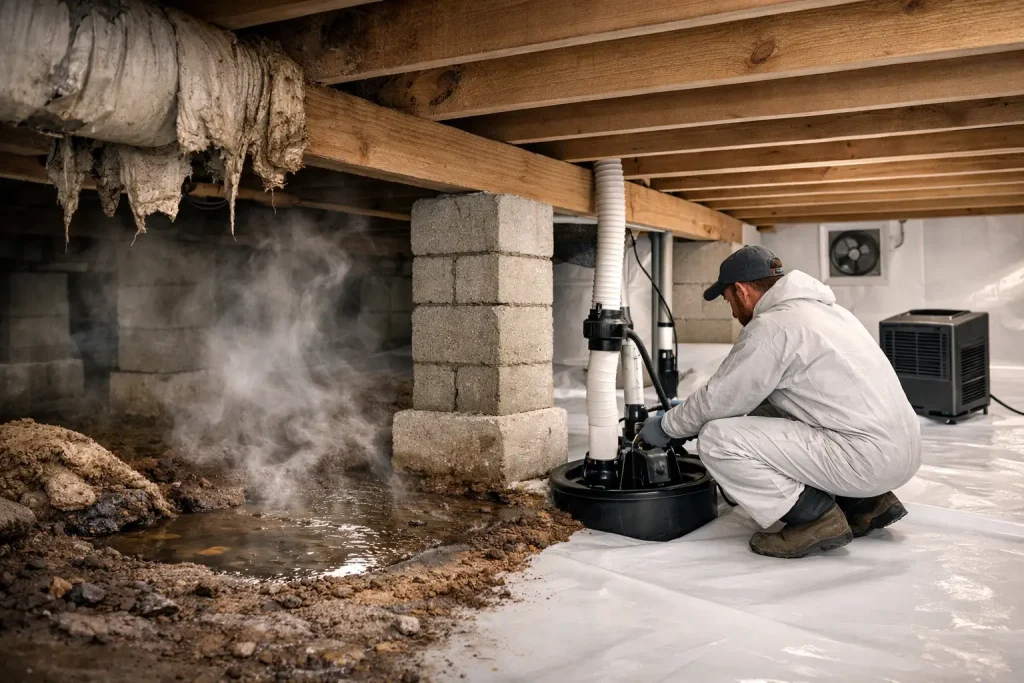
A musty smell near the first floor, an odor that gets worse after rain, or stale air coming through vents is more than an inconvenience. Crawl space odors often point to moisture below the home, and that moisture can affect indoor air quality, wood framing, insulation, and the long-term condition of the property. Covering the smell may make a room more pleasant for a day or two, but it does not correct the cause.
For New Jersey homeowners, the right response starts with a clear inspection. The goal is to identify where moisture is entering, what materials have been affected, and which repairs will keep the odor from returning.
What Crawl Space Odors Usually Mean
A crawl space is a cool, enclosed area, which makes it especially vulnerable to dampness. When humid air, groundwater, plumbing leaks, or surface runoff enter the space, they can create conditions where organic materials break down and microbial growth develops. The odor is often the first warning sign homeowners notice.
A typical musty smell may come from damp soil, wet insulation, mildew, mold growth, or decaying wood. Not every odor means there is a severe mold problem, but a persistent odor should never be dismissed. It is evidence that something in the crawl space needs attention.
Some smells have more specific clues. An earthy, damp odor commonly follows excess moisture. A sharp or sour smell can come from wet building materials or stagnant water. Animal-like odors may indicate pests, droppings, or a dead animal in the crawl space. If the smell resembles sewage, a plumbing or drain line issue should be evaluated promptly.
The key is not to guess based on smell alone. Crawl spaces can have more than one issue at the same time. A home might have poor exterior grading that allows runoff near the foundation, a failing vapor barrier, and insulation that has absorbed moisture. Treating only one of those conditions can leave the odor source in place.
Why a Crawl Space Smell Can Affect the Rest of the Home
Many homeowners assume the crawl space is separate from the living area. In reality, air moves through a house. Warm air naturally rises and exits through upper levels, pulling replacement air from lower areas. This process, often called the stack effect, can draw crawl space air upward through gaps around pipes, ducts, flooring, and framing.
That means crawl space odors can show up in bedrooms, closets, hallways, or areas near floor registers. Homes with open crawl spaces, unsealed penetrations, or ductwork running below the floor may notice the effect more strongly.
Odors are not the only concern. High humidity in a crawl space can contribute to condensation on framing and HVAC equipment. Over time, moisture can encourage mold growth, cause insulation to sag, corrode metal components, and create a more welcoming environment for termites and other pests. Wood that remains damp for extended periods may also become vulnerable to rot.
This does not mean every musty odor is a structural emergency. It does mean the underlying moisture issue deserves a professional assessment before it becomes more difficult and expensive to correct.
The Most Common Causes of Crawl Space Odors
Groundwater and Surface Water Intrusion
Water often enters a crawl space from outside. Heavy rain, high water tables, clogged gutters, downspouts that discharge too close to the house, and sloping ground can all send water toward the foundation. Even small amounts of repeated seepage can keep the area damp enough to create odors.
In some homes, water comes through foundation walls or along the footing. In others, it rises through the soil floor or collects in low spots. The location and pattern of moisture help determine whether a drainage system, sump pump, exterior drainage correction, or a combination of solutions is appropriate.
Humidity and Condensation
New Jersey summers bring humid air, and a vented crawl space does not always stay dry just because it has vents. Warm, humid outdoor air can enter the crawl space and condense on cooler surfaces. This is one reason a crawl space may smell worse during the summer even if there is no obvious standing water.
Humidity control depends on the crawl space design and the home’s conditions. In many cases, sealing the space properly, installing a durable vapor barrier, and using a correctly sized dehumidifier offer more reliable results than relying on passive vents alone.
Damaged or Missing Vapor Barriers
A vapor barrier helps limit moisture rising from the soil into the crawl space. Thin plastic sheeting, torn material, or barriers that stop short of walls and supports provide limited protection. They may shift, trap water underneath, or leave large areas of exposed ground.
A properly installed crawl space liner is more than a sheet laid over dirt. It should be fitted around piers and obstacles, secured to the appropriate surfaces, and paired with drainage and moisture-control measures when needed. The best approach depends on whether the space has active water intrusion, high humidity, or both.
Mold, Mildew, and Wet Materials
Mold and mildew require moisture and organic material. Crawl spaces contain plenty of possible food sources, including wood joists, subflooring, paper-faced insulation, stored items, and construction debris. Once these materials become damp, they can produce persistent odors.
Removing visible mold without correcting water entry is only a temporary improvement. The affected materials need to be evaluated, cleaned or removed as appropriate, and the moisture conditions that allowed the growth need to be addressed. This is where a complete plan matters more than a cosmetic cleanup.
Plumbing Leaks and Pest Activity
A slow leak from a supply line, drain pipe, or HVAC condensate line can keep one area wet for months. Because crawl spaces are rarely visited, these leaks often go unnoticed until odors, high water bills, or damage appear.
Pests can create odor problems as well. Rodents may nest in insulation, leave droppings, or damage vapor barriers. Moist crawl spaces are more attractive to many pests, so moisture control and pest exclusion often work hand in hand. A waterproofing contractor can identify moisture-related conditions, while a licensed plumber or pest professional may be needed for the specific repair or removal.
What Actually Gets Rid of Crawl Space Odors
Air fresheners, odor absorbers, and disinfectant sprays cannot solve a wet crawl space. They may mask a smell briefly, but odors return when moisture remains in the structure. Lasting relief comes from correcting the water and humidity conditions first.
A thorough inspection should look at the crawl space floor, walls, foundation penetrations, insulation, support posts, framing, drainage path, and any existing sump pump or vapor barrier. It should also consider exterior conditions, including gutter discharge and grading near the foundation. Homeowners deserve an explanation of what was found and why each recommended repair is necessary.
If groundwater is entering, an interior drainage system may collect water at the perimeter and direct it to a sump basin. A sump pump can then move that water safely away from the house. If surface water is contributing, correcting the exterior drainage may be part of the solution. The right system is based on the home, not a one-size-fits-all package.
After active water is controlled, crawl space encapsulation can limit moisture vapor from the earth and isolate the space from humid outside air. Sealing gaps, properly covering the floor and walls, and managing humidity can create a cleaner, drier environment below the home. Wet insulation, debris, and deteriorated materials may also need to be removed so they do not continue holding odors.
Dehumidifiers can be valuable, but they are not a substitute for drainage. A dehumidifier is designed to manage remaining humidity. It should not be expected to handle standing water, ongoing seepage, or a plumbing leak. Similarly, a sump pump handles collected water but does not replace a vapor barrier or humidity control plan. These systems work best when each one has a clear job.
When to Schedule a Crawl Space Inspection
Do not wait for a strong odor to become visible damage. An inspection is sensible when you notice a musty smell that returns after cleaning, damp or cold floors, peeling finishes near the first floor, increased humidity, sagging insulation, or water after rain. It is also a good idea before finishing nearby spaces, replacing floors, or selling a home.
During an inspection, ask direct questions. Where is the water coming from? Is there evidence of active growth or wood damage? Which repairs are essential now, and which are optional improvements? How will the system be maintained? A trustworthy contractor should answer clearly without using pressure or fear to force a decision.
A-1 Basement Solutions approaches crawl space problems with that same practical standard: identify the cause, explain the options, and recommend work that protects the home for the long term. When the repair calls for drainage, moisture protection, or mold remediation, quality installation and clear communication matter as much as the materials themselves.
A dry, properly protected crawl space should not be a source of worry every time the weather changes. Addressing the smell early gives you the best chance to protect the air in your home, the structure beneath it, and the value you have worked hard to maintain.