
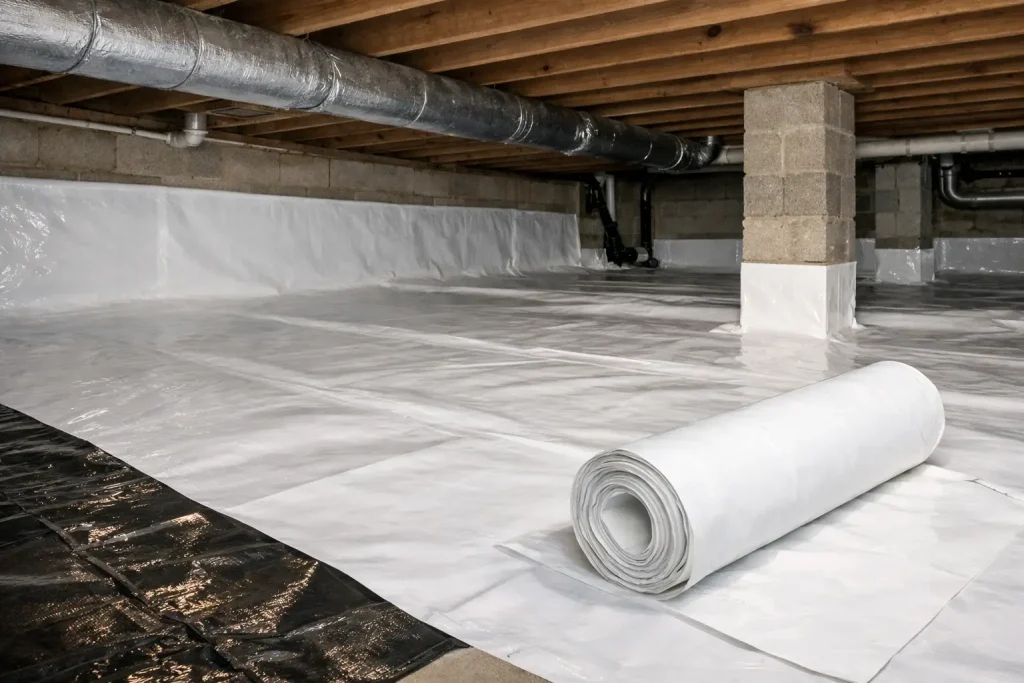
A crawl space can look dry from the access door and still release moisture into the home every day. Groundwater vapor rises through exposed soil, humid summer air condenses on cool surfaces, and damp insulation or framing can follow. The best crawl space vapor barriers help stop that cycle, but the right choice depends on the condition of the space, not just the thickness printed on a roll.
For New Jersey homeowners, a vapor barrier is often part of a larger moisture-control plan. Heavy rain, seasonal groundwater, humid weather, and older home construction can all create conditions that a sheet of plastic alone cannot solve. The goal is not to cover up a water problem. It is to keep ground moisture from entering the crawl space while addressing any drainage, foundation, or ventilation issues that are already present.
What a Crawl Space Vapor Barrier Actually Does
A crawl space vapor barrier is a durable polyethylene liner installed over exposed soil. Its primary job is to block water vapor that naturally moves up from the ground. Without a barrier, that vapor can raise humidity below the home, contribute to musty odors, and encourage mold growth on wood framing, insulation, and stored materials.
A barrier does not stop standing water, leaking foundation walls, or water entering through an exterior opening. If puddles appear after rain, the crawl space may need drainage improvements, a sump pump, foundation crack repair, or exterior grading work before a liner can perform as intended.
It also helps to separate two terms that are often used interchangeably. A basic vapor barrier covers the floor and limits ground vapor. Crawl space encapsulation is a more complete system that typically seals the floor, walls, vents, seams, and penetrations, then controls humidity with a dehumidifier or conditioned air strategy. For a mildly damp crawl space, a well-installed floor liner may be enough. For chronic moisture, mold, or insulation damage, encapsulation is usually the more dependable answer.
Best Crawl Space Vapor Barriers by Situation
There is no single liner that is best for every home. Thickness, reinforcement, and installation method should match the crawl space and the work being done inside it.
6-mil polyethylene for clean, low-traffic spaces
Six-mil polyethylene is the minimum thickness many homeowners consider for a basic ground cover. It can reduce vapor movement in a clean crawl space with level soil, limited foot traffic, and no active water concerns. It is also widely available and relatively inexpensive.
The trade-off is durability. Thin plastic tears easily around rocks, pier supports, sharp debris, and access paths. Once it is punctured or pulled apart at a seam, moisture can bypass it. A 6-mil liner can be a reasonable short-term improvement, but it is rarely the best long-term choice for a crawl space that technicians will need to enter for plumbing, electrical, pest, or HVAC work.
10-mil to 12-mil liners for most residential crawl spaces
For many New Jersey homes, a 10-mil or 12-mil liner offers the best balance of cost and durability. It is much more resistant to punctures than thin plastic, handles uneven soil better, and stands up to occasional foot traffic during maintenance.
A quality liner in this range should be installed with generous overlaps at seams, not simply laid edge to edge. The seams need to be sealed, and the material should run up the foundation walls where appropriate. If the liner only covers the center of the floor, exposed soil along the perimeter can still release moisture into the crawl space.
Reinforced 15-mil to 20-mil liners for difficult conditions
Thicker reinforced liners make sense when the crawl space is rough, frequently accessed, or part of a full encapsulation system. Reinforcement adds tear resistance, which matters around stone, block walls, support columns, and tight service areas where workers must crawl across the surface.
These products cost more upfront, but they are often the better value when a homeowner wants a long-lasting installation. A durable liner is especially worthwhile after drainage and mold remediation work, because it protects the investment by helping keep humidity from returning.
A thicker liner is not automatically better if the underlying issue is active water. Installing a 20-mil barrier over a wet floor without correcting the source can trap water below it and leave the crawl space unhealthy. Material quality and proper diagnosis need to work together.
Features That Matter More Than a Brand Name
When comparing the best crawl space vapor barriers, focus less on marketing language and more on the details that affect performance. Thickness matters, but installation quality often matters just as much.
Look for a liner designed for crawl space use rather than lightweight painter’s plastic. It should resist tearing, have a low vapor-permeance rating, and be wide enough to reduce the number of seams required. Fewer seams create fewer opportunities for moisture to escape around the material.
Wall attachment is another major factor. In an encapsulated crawl space, the liner is commonly brought up the walls and secured with mechanical fasteners and sealing tape. That creates a continuous moisture boundary rather than a loose floor covering. Around piers, pipes, and support posts, the liner should be carefully cut, wrapped, and sealed.
Color can be useful, too. White liners brighten a dark crawl space and make future inspections easier. A brighter surface can help reveal leaks, pest activity, or damaged areas before they become larger problems. Black plastic may hide dirt, but it also makes a low crawl space harder to inspect.
Installation Details That Separate a Lasting Job From a Quick Cover-Up
Before any barrier is installed, the crawl space should be cleared of loose debris, damaged insulation, and sharp objects that could tear the material. If there is visible mold, wet framing, or evidence of pests, those issues should be evaluated first rather than covered over.
The liner should extend across the entire soil floor, with seams overlapped generously and sealed. It should also be fitted around columns and utility penetrations. Loose plastic that shifts with air movement or is held down only by a few rocks will not deliver the same results as a properly secured system.
Drainage needs special attention. Some crawl spaces benefit from an interior perimeter drain leading to a sump basin, particularly where groundwater rises after storms. In those situations, the vapor barrier is installed as part of the system, not as a substitute for it. The same is true when outside downspouts discharge near the foundation or grading directs water toward the home.
If the crawl space has open vents, the right approach depends on the home and local conditions. Open vents were once considered standard practice, but they can bring humid summer air into a cool crawl space and worsen condensation. Closing vents without a plan for humidity control is not always the answer, either. A professional evaluation can determine whether a sealed, conditioned crawl space is appropriate.
When a Vapor Barrier Is Not Enough
A new liner should not be used to hide warning signs. Call for an inspection if you see standing water, consistently wet soil, a strong musty smell, sagging insulation, rusted ductwork, mold on floor joists, or wood that feels soft or deteriorated.
Those symptoms may point to drainage failure, plumbing leaks, foundation water intrusion, or high humidity that requires more than a ground cover. They can also affect indoor air quality, since air from a crawl space can move upward into the living areas of the home.
At A-1 Basement Solutions, the right recommendation starts with identifying where the moisture is coming from. Some homes need a durable vapor barrier. Others need drainage, sump pump support, mold remediation, or a complete encapsulation system. No problems, just solutions means explaining the difference clearly and avoiding work that does not address the real cause.
A crawl space is easy to ignore because it is out of sight, but it supports the rooms your family uses every day. If the area feels damp, smells musty, or shows signs of water after rain, an honest inspection can help you decide whether a vapor barrier is the right next step or only one part of the repair.