
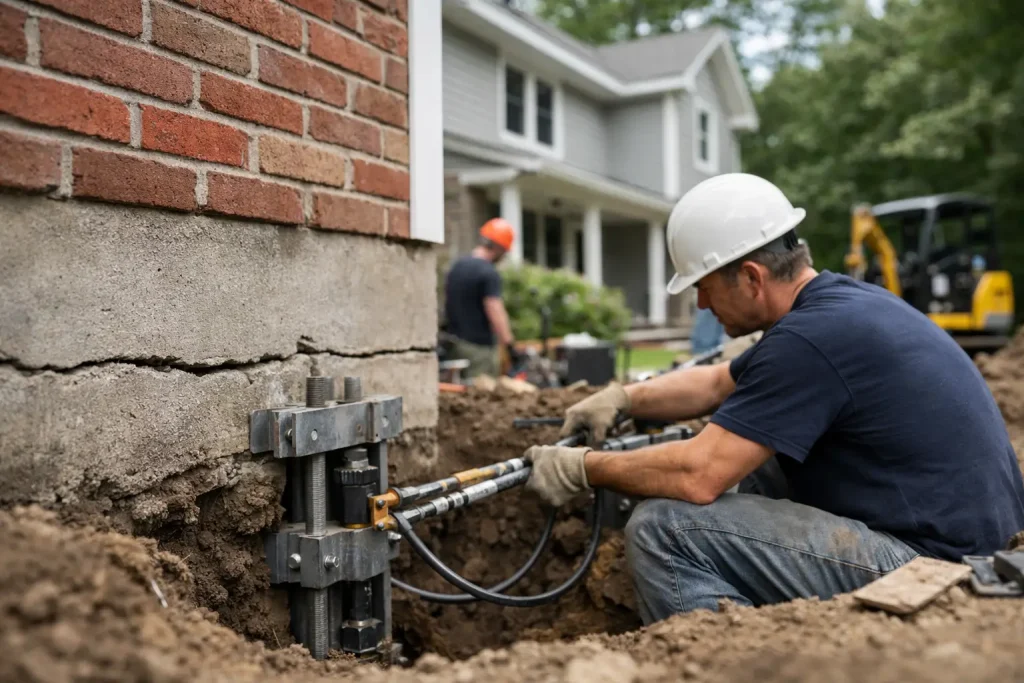
A crack in a basement wall can be unsettling, especially when it seems to grow after a heavy New Jersey rainstorm or a hard winter freeze. This homeowner guide to foundation repair is designed to replace guesswork with clear next steps. Not every crack means your home is in danger, but ignoring changes in your foundation can turn a manageable repair into a larger, more expensive project.
Foundation concerns are rarely just about concrete. Water, soil movement, drainage, and indoor moisture often play a role. The right repair starts with understanding what your home is telling you, then choosing a solution that addresses the cause instead of covering up the symptom.
What Foundation Damage Can Look Like
Foundation problems do not always announce themselves with a dramatic wall collapse. More often, homeowners notice small changes over time: a basement crack, a sticking door, water on the floor after rain, or a gap where a wall meets the ceiling.
Hairline vertical cracks in poured concrete are common as a home settles and concrete cures. They still deserve attention if water is entering through them, but they do not automatically mean the foundation is failing. Wider cracks, horizontal cracks, stair-step cracks in block or brick, and walls that bow inward deserve a professional evaluation sooner rather than later.
Watch for changes both inside and outside the home. A foundation issue may show up as uneven floors, windows that no longer open smoothly, cracked drywall, separated trim, or a chimney that appears to pull away from the house. Outside, soil that slopes toward the foundation, standing water near the walls, or disconnected downspouts can be part of the problem.
The key is not to diagnose your home from one sign alone. A single crack can have a simple explanation. Several changes occurring together, especially if they are getting worse, call for a closer inspection.
Why Water and Soil Matter So Much
New Jersey homes experience wet springs, summer storms, freeze-thaw cycles, and variable soil conditions. That combination can put real pressure on below-grade walls. When water collects in the soil around a foundation, the soil becomes heavier and pushes against basement walls. This is often called hydrostatic pressure.
Poor drainage can also allow water to seep through cracks, wall joints, floor joints, and utility penetrations. Over time, repeated moisture exposure can lead to mold growth, musty odors, damaged finishes, and weakened building materials. A basement can look dry on a sunny day and still have a water-management problem.
This is why foundation repair and waterproofing are often connected. If a wall crack is repaired but the surrounding soil continues to hold water against the foundation, the repair may be under unnecessary stress. In some cases, correcting gutters, extending downspouts, improving grading, installing a French drain, or adding a properly sized sump pump is a meaningful part of protecting the repair.
That does not mean every foundation project requires every drainage solution. The right scope depends on the type of foundation, the source of moisture, the condition of the wall, and how water moves around your property.
A Homeowner Guide to Foundation Repair Options
Foundation repair is not one service or one product. The method should match the actual condition of the home.
For a stable crack that leaks water, a professional crack repair may be enough to stop intrusion. The goal is to seal the pathway where water enters while also confirming that exterior drainage is not creating recurring pressure.
For a wall that is bowing, leaning, or showing horizontal cracking, the repair may involve structural reinforcement. Depending on the wall and soil conditions, solutions can include wall anchors, carbon fiber reinforcement, or steel support systems. Each option has trade-offs. Carbon fiber can be a low-profile choice for certain walls, while anchors may be appropriate where exterior access and soil conditions allow for them. A qualified inspection should explain why one option fits better than another.
Some homes have settlement concerns that affect the foundation footing or create significant movement. These cases may require more specialized structural work. They should not be handled with cosmetic patching or a quick promise that a crack can simply be filled.
For crawl spaces, excess ground moisture can contribute to musty air, wood deterioration, and insulation problems. Encapsulation, drainage improvements, and sump pump protection can help control moisture beneath the home. The goal is a dry, controlled environment that supports the structure above it.
A trustworthy contractor should clearly separate structural repairs from water-control work. They may be related, but homeowners deserve to know what each recommendation does, why it is being made, and what could happen if it is postponed.
What to Expect From a Professional Inspection
A good inspection should feel informative, not intimidating. You should be able to show the inspector where you have seen water, cracks, odors, or changes in the home. If possible, note when the issue occurs. Does the basement get wet only after heavy rain? Did a crack appear after a particular season? Are doors sticking throughout the year or only during humid months?
The inspection should include more than a quick look at one wall. A qualified professional may examine the basement or crawl space, visible interior cracks, exterior grading, gutters and downspouts, drainage patterns, and signs of previous repairs. They should explain what they see in plain language.
Ask direct questions before agreeing to any work:
- What is causing the issue, and what evidence supports that conclusion?
- Is this primarily a water problem, a structural problem, or both?
- What repair options are available, and why is this option recommended?
- What preparation, disruption, and cleanup should we expect?
- What warranty applies, and is it transferable if we sell the home?
Be cautious of anyone who diagnoses a major structural emergency before inspecting the full situation, or who pressures you to sign immediately. Foundation concerns are serious, but serious work deserves a careful explanation. No problems, just solutions means giving homeowners enough information to make a confident decision.
How to Protect Your Home Before Repairs Begin
There are practical steps you can take while arranging an evaluation. Keep gutters clear, make sure downspouts discharge well away from the foundation, and remove leaves or debris that block surface drainage. Check that soil slopes away from the home rather than directing rainwater toward the basement wall.
Inside, avoid storing valuable belongings directly on a basement floor if you have experienced water intrusion. Use shelving and containers, and document active leaks or crack changes with dated photos. Do not paint over damp walls or cover a recurring problem with finished materials. That can hide evidence while moisture continues behind the surface.
If you see sudden major movement, a rapidly widening crack, a severely bowed wall, or signs that part of the structure is shifting, seek professional help promptly. Avoid attempting structural repairs yourself. Foundation work affects the safety and value of the entire home.
Choosing a Contractor You Can Trust
The lowest estimate is not always the lowest long-term cost. Compare the scope of work, materials, labor, cleanup expectations, warranty terms, and whether the company uses trained in-house crews or relies on subcontractors. A detailed written plan is far more useful than a vague proposal that promises to “fix the foundation.”
For New Jersey homeowners, local experience matters because drainage patterns, older housing styles, and seasonal weather conditions influence the repair approach. A-1 Basement Solutions provides inspection-driven foundation and moisture-control services with in-house crews and a transferable Life-of-the-House Guarantee on qualifying work. The point is not to sell more work than your home needs. It is to provide a clear path to a dry, healthy, structurally sound home.
Foundation repair can feel like a big decision because it is one. Start with the facts, ask for clear answers, and address water before it has another season to work against your home.