
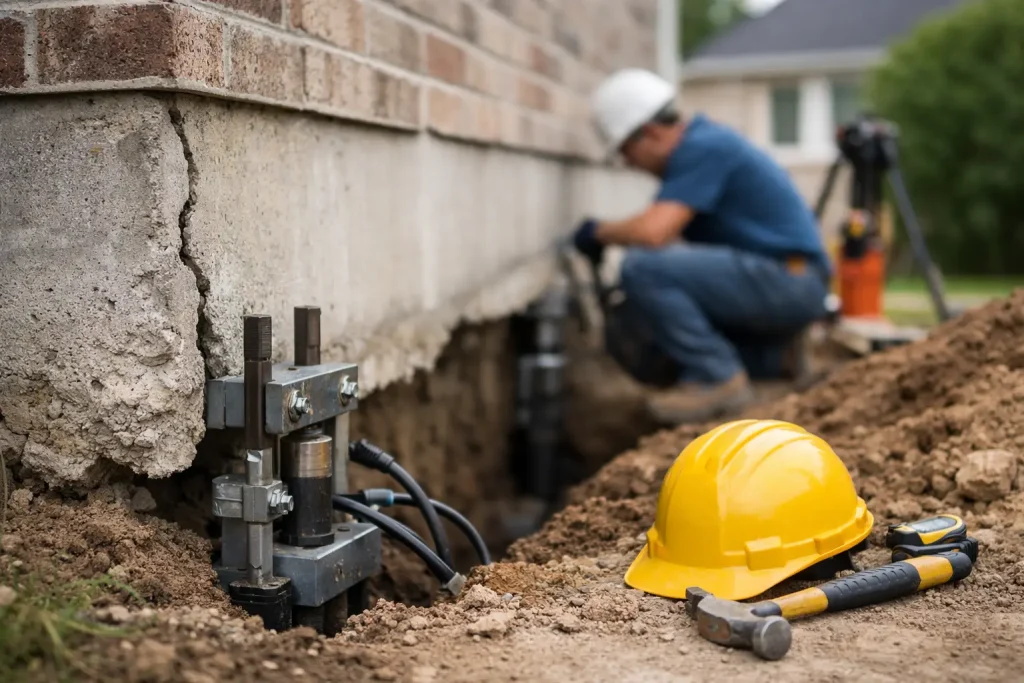
A crack in a basement wall rarely starts as a dramatic problem. More often, it shows up quietly – a stair-step line in mortar, a floor that feels slightly off, a door that suddenly sticks in humid weather and never quite resets. That is usually when homeowners start asking about foundation repair, not because they want a major project, but because they want to know whether the house is still sound and what it will take to protect it.
In New Jersey, that question deserves a careful answer. Soil movement, groundwater pressure, seasonal moisture changes, and aging construction all play a role. Some cracks are cosmetic. Some point to active structural movement. The challenge is knowing the difference before minor damage turns into a larger repair.
What foundation repair actually addresses
Foundation repair is the process of correcting structural problems that affect the stability and performance of a home’s foundation walls, footings, or slab. That can include cracked or bowing basement walls, settlement that causes uneven floors and sticking doors, or foundation sections that shift under changing soil conditions.
The right fix depends on the reason the damage happened in the first place. A wall that is cracking because of lateral soil pressure needs a different solution than a footing that is settling because the soil below it has lost bearing strength. Treating every crack the same is how homeowners end up paying for work that does not solve the real problem.
That is also why a good inspection matters more than a fast sales pitch. The best repair plans are built around the condition of the home, the direction of the movement, the moisture conditions around the foundation, and whether the problem is still active.
Common signs you may need foundation repair
Some warning signs are easy to spot, while others develop so gradually that they feel like normal aging. Horizontal cracks in basement walls usually deserve prompt attention because they can indicate pressure pushing inward from saturated soil. Stair-step cracks in block or brick walls may point to settlement or differential movement. Vertical cracks can be less serious, but they still need to be evaluated in context.
Inside the home, you may notice sloping floors, drywall cracks above doors or windows, gaps around trim, or doors that rub and do not latch cleanly. In the basement, walls may begin to lean, bulge, or allow water seepage through cracks and joints. Outside, sections of the foundation may show separation, and nearby drainage issues may become more obvious after rain.
One sign by itself does not always confirm a structural issue. Two or three signs appearing together usually mean it is time to have the home inspected by a specialist who can explain what is happening in plain language.
Why foundations fail in the first place
Most foundation problems are tied to movement in the soil or water around the home. When soil becomes oversaturated, it expands and adds pressure against basement walls. When it dries out or erodes, it can lose the support the foundation depends on. Repeated cycles of wetting and drying can slowly shift the structure over time.
Poor drainage is a major factor. If roof runoff is not carried away properly, or if grading directs water toward the house, the soil around the foundation stays heavier and wetter than it should. In some cases, hydrostatic pressure builds up and pushes against basement walls. In others, water weakens the soil under a footing and contributes to settlement.
Construction quality and age also matter. Older homes may have foundation materials that have been exposed to decades of pressure and moisture. Some homes were built on soils that are naturally more reactive. Others have had additions, landscaping, or drainage changes over the years that altered how water moves around the property.
Foundation repair and basement water problems often overlap
Homeowners sometimes think of structural repair and waterproofing as separate issues. In practice, they often affect each other. Water intrusion can accelerate foundation damage, and foundation cracks can create clear pathways for water to enter the basement.
That overlap matters because a repair should not stop at the visible symptom. If a wall is bowing from soil pressure and the outside drainage conditions remain unchanged, the wall may continue to be stressed even after reinforcement. If settlement is linked to chronic moisture conditions, ignoring the water source can shorten the life of the repair.
This is where a solutions-first approach makes a difference. Sometimes the right plan includes structural stabilization and moisture control working together, rather than treating them as unrelated projects. For homeowners, that usually means a more durable result and fewer repeat problems.
Types of foundation repair and when they make sense
There is no one-size-fits-all method for foundation repair. Wall stabilization systems are often used when basement walls are bowing, leaning, or cracking under pressure. Depending on the severity and the construction type, that may involve wall anchors, carbon fiber reinforcement, or steel bracing. Each has its place. Carbon fiber can be effective for walls with limited inward movement, while heavier structural systems may be better for more advanced displacement.
When a home is settling, pier systems may be used to transfer the load of the structure to deeper, more stable soils. That can help stop further movement and, in some cases, recover some elevation. The exact outcome depends on how long the house has been settling, the condition of the structure, and the characteristics of the soil.
Crack repair can also be part of the solution, especially when the goal is to seal openings and prevent water entry. But crack repair alone is not always enough. If the crack is the result of active movement, the structural cause needs to be addressed as well.
A trustworthy contractor should explain not just what they recommend, but why one option fits better than another. Homeowners deserve to understand the trade-offs, including cost, disruption, expected performance, and whether the repair is designed to stabilize, restore, or both.
What a good inspection should tell you
A proper inspection should leave you more informed, not more anxious. You should come away understanding where the movement is happening, what may be causing it, how serious it appears, and whether it is likely ongoing. You should also hear what does not need to be fixed right now.
That last part is important. Ethical contractors do not turn every small crack into a crisis. They distinguish between normal shrinkage, aging-related changes, and structural damage that requires action. If a repair is recommended, the scope should be clear and specific. Vague warnings and pressure to sign quickly are usually a red flag.
For many homeowners, peace of mind comes from knowing the work will be done by trained in-house crews, with clean workmanship and a real warranty behind it. That accountability matters on structural projects, where the goal is not just to complete the job but to protect the home for the long term.
Cost, timing, and the reality of waiting too long
Foundation repair costs vary because the conditions vary. A limited wall reinforcement or crack repair is very different from a multi-point pier installation or a project that also requires drainage correction. The honest answer is that pricing depends on the problem, the access, the method, and the amount of movement that has already occurred.
What usually costs more is delay. Structural problems rarely improve on their own. Small cracks can widen. Water entry can worsen. Settlement can begin affecting more finishes, doors, windows, and floor levels throughout the house. Waiting does not always turn a manageable repair into an emergency, but it does increase that risk.
Timing matters for another reason. A repair done before damage spreads gives you more options. Once movement becomes severe, the work can become more invasive and the cosmetic repairs inside the home can add up quickly.
Choosing a foundation repair contractor carefully
Homeowners should not have to choose between expertise and honesty. A reliable contractor will inspect thoroughly, explain findings clearly, and recommend only the work that fits the condition of the home. They should be able to talk through warranty coverage, expected results, and whether any related waterproofing or drainage improvements should be considered at the same time.
If you are comparing estimates, pay attention to more than price. Look at whether the diagnosis makes sense, whether the repair method matches the actual problem, and whether the company stands behind the work with meaningful protection. At A-1 Basement Solutions, that conversation starts with the home itself – no pressure, no scare tactics, just a clear path forward.
Foundation problems are stressful because they affect the part of the home you count on to stay solid without thinking about it. The good news is that most issues can be addressed successfully when they are diagnosed early and repaired with the right plan. If something in your basement or around your home does not look right, trust that instinct and get it checked before a small concern becomes a bigger one.