
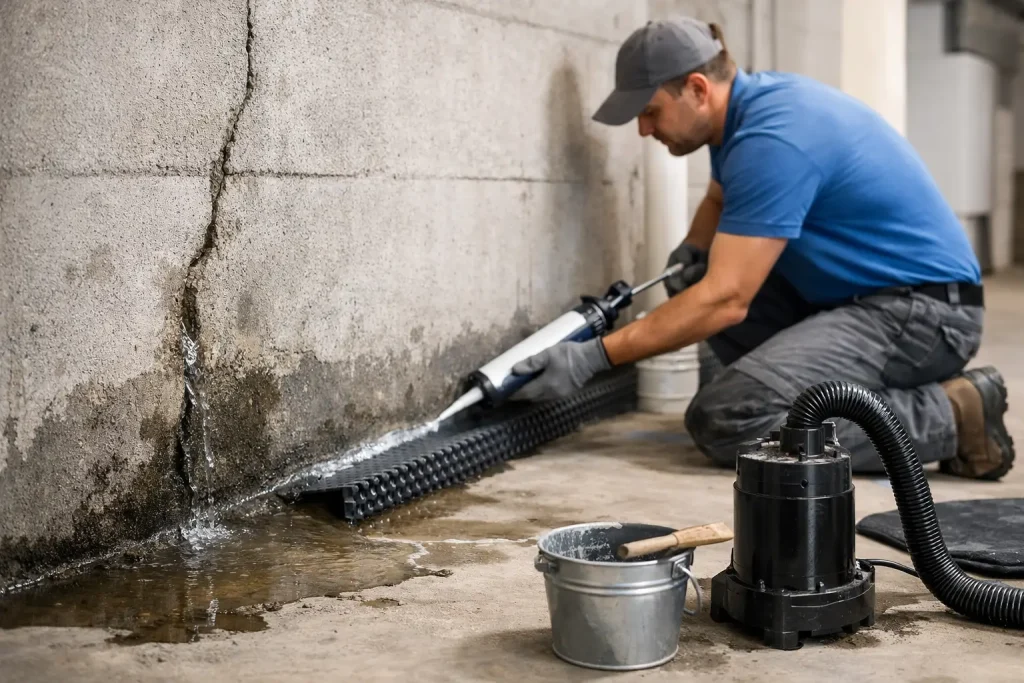
A damp wall after heavy rain is easy to dismiss once. A wet basement floor that keeps coming back is not. If you are searching for how to stop basement seepage, the first thing to know is that water rarely shows up for just one reason. Basement seepage is usually the result of pressure, drainage problems, weak points in the foundation, or a combination of all three.
That matters because the right fix depends on where the water is coming from and how it is getting in. Some issues can be improved with exterior grading or gutter corrections. Others need a full waterproofing system inside the basement. The goal is not to hide the symptom. It is to stop the water path.
What basement seepage actually means
Seepage is different from a one-time plumbing leak or a sudden flood from a broken pipe. It usually refers to water entering through porous concrete, wall cracks, floor joints, cove joints, or around utility penetrations. In many New Jersey homes, seepage becomes obvious during long storms, snowmelt, or periods when the soil around the home stays saturated.
Concrete may look solid, but it is porous. When the soil outside becomes waterlogged, hydrostatic pressure builds against the foundation walls and under the basement floor. That pressure forces water through the easiest opening. Sometimes that opening is visible. Sometimes it is hidden behind finished walls or under flooring.
How to stop basement seepage starts with the source
Homeowners often ask whether waterproof paint, crack filler, or a dehumidifier will solve the problem. Sometimes those products help with appearance or humidity, but they do not usually solve active seepage on their own. To stop basement seepage for good, you need to identify which category the problem falls into.
Surface water problems
If roof runoff is dumping next to the foundation, or the yard slopes toward the house, rainwater will collect where you do not want it. This is one of the simpler causes to correct, but it is also one of the most overlooked. Gutters need to be clean and functioning. Downspouts need to discharge far enough away from the house. The soil around the foundation should pitch away, not toward it.
These corrections can make a real difference when seepage is mild or seasonal. But if water is already pushing up at the floor joint or coming through wall cracks, exterior drainage improvements may only be part of the answer.
Foundation cracks and wall entry points
Some seepage follows a visible path. You may notice water staining on a crack, dampness around a pipe penetration, or efflorescence, which is that white chalky residue left behind when water evaporates. In those cases, targeted crack repair can help, especially when the crack is isolated and the rest of the basement stays dry.
The trade-off is that not every crack is the whole story. If the surrounding soil pressure is high and water is collecting along the entire footing, sealing one crack may not stop seepage somewhere else next month.
Hydrostatic pressure below the floor
This is where many recurring basement water problems come from. When groundwater rises around the home, pressure builds beneath the slab and along the cove joint, where the floor meets the wall. Water may show up as a thin line of moisture, small puddles, or widespread dampness after storms.
When this is the real cause, the long-term fix is usually an interior drainage system paired with a sump pump. That system relieves the pressure by collecting groundwater before it reaches the basement living space and directing it safely out.
The most effective ways to stop basement seepage
There is no single cure for every home, but there are proven solutions that work when they are matched to the actual cause.
Improve grading and roof drainage
Start outside. Extend downspouts away from the house, keep gutters clear, and correct low spots near the foundation. If hardscape or landscaping traps water against the home, that should be addressed as well.
This step is worth doing even if you need interior waterproofing later. Reducing the amount of water around the foundation lowers the stress on the whole system.
Repair foundation cracks properly
If seepage is entering through a wall crack, injection repair or another professional crack-sealing method may be appropriate. The key word is properly. Surface patching often fails because it does not address the full depth of the crack or the pressure behind it.
A good inspection should also determine whether the crack is simply a water entry point or a sign of movement that may require structural repair.
Install an interior drainage system
For chronic seepage, this is often the most reliable answer. An interior drainage system is designed to collect water at the basement perimeter and direct it to a sump pump before it spreads across the floor.
This approach works well because it manages water pressure rather than pretending it does not exist. In homes where exterior excavation is impractical, disruptive, or unnecessarily expensive, an interior system can be the smarter long-term solution.
Add a sump pump with battery backup
A sump pump is only as dependable as its ability to run when you need it. During major storms, power outages are not unusual. That is why a battery backup matters. If your basement seepage problem gets worse during the same weather events that can knock out electricity, backup protection is not an extra. It is part of a complete plan.
Address crawl space and humidity issues too
Some homes have moisture problems that are not limited to the basement. A damp crawl space, poor ventilation, or persistent indoor humidity can make the basement feel wetter than it is and contribute to mold concerns. Even after seepage is controlled, moisture management may still be needed to protect air quality and stored belongings.
What does not usually work for long
This is where homeowners often spend money twice. Waterproof coatings and paints can improve appearance, but they are not built to resist ongoing hydrostatic pressure. Caulk and store-bought patch materials may slow minor leaks briefly, but they usually fail when conditions get worse.
A dehumidifier is useful for moisture in the air. It is not a fix for liquid water entering through the foundation. If water is actively getting in, the priority is stopping the intrusion path first.
Signs you need more than a quick fix
If you only see a small damp spot once a year, basic drainage corrections may be enough. But some warning signs suggest a larger waterproofing issue.
If water appears in multiple areas, if seepage happens every time it rains hard, if you notice moldy odors, peeling paint, stained walls, or damage to finished basement materials, the problem is already affecting the space beyond a minor nuisance. The same is true if the sump pump runs constantly, the basement feels humid all summer, or cracks appear to be widening.
At that point, guessing can get expensive. A proper inspection should explain not just what is wet, but why.
How to choose the right fix without getting pressured
Homeowners should not have to choose between being ignored and being scared into a big project. A trustworthy waterproofing contractor should inspect the full basement, look at exterior drainage conditions, explain what they found in plain language, and recommend a solution that matches the actual problem.
Sometimes that means a modest repair. Sometimes it means a more comprehensive system. The important part is transparency. You should understand what is causing the seepage, what the proposed solution is designed to do, and what kind of long-term protection comes with the work.
That is especially important for New Jersey homeowners, where changing weather, older foundations, and heavy rain can create repeated moisture issues. Companies like A-1 Basement Solutions focus on solving the problem at the source, with clear recommendations and long-term protection instead of temporary patches.
When to act
The best time to address seepage is before it turns into structural damage, mold growth, or a ruined finished basement. Water problems almost always get more expensive when they are left alone. Even if the seepage seems minor now, the pattern behind it tends to repeat.
A dry basement is not just about comfort. It protects the value of your home, the air your family breathes, and the parts of the structure you cannot afford to ignore. If water keeps finding its way in, the right next step is not another bandage. It is a clear diagnosis and a fix that is built to last.