
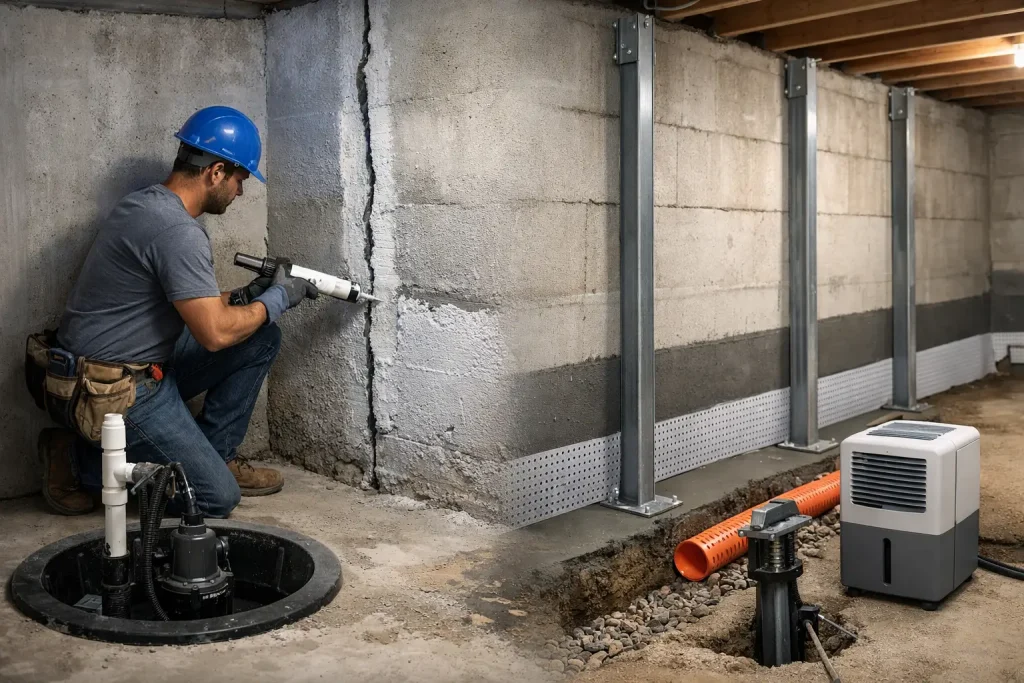
A basement usually tells you what it needs long before major damage shows up. It starts with a damp wall after heavy rain, a musty smell that never quite leaves, or a crack that seems a little wider than it was last year. That is where basement repair systems matter. The right system does not just cover up symptoms. It solves the source of the problem so your basement stays dry, healthy, and structurally sound.
For many New Jersey homeowners, the challenge is that water and foundation issues rarely come one at a time. A wet basement may involve poor drainage, hydrostatic pressure, wall cracks, floor seepage, and rising humidity all at once. That is why a real repair plan has to be more than a quick patch or a single product. It has to work as a coordinated system.
What basement repair systems actually include
When homeowners hear the phrase basement repair systems, they often think of one fix. In practice, it usually means a combination of methods designed to control water, protect the foundation, and improve basement conditions over the long term.
A waterproofing system may include an interior drainage channel, a sump pump, and a vapor barrier to direct water safely away from the space. A structural repair system may involve crack repair, wall stabilization, or reinforcement for bowing or shifting foundation walls. In some homes, the best solution also includes exterior grading improvements or crawl space protection, especially when moisture is moving through more than one part of the house.
The main point is simple. Different problems need different tools, and the best results come from fitting those tools together properly.
Why one-size-fits-all repairs usually fail
A lot of basement problems get worse because the first repair was too narrow. Homeowners are often sold a single fix for a multi-layer issue. Someone seals a crack, but the water pressure behind the wall is still there. Someone installs a dehumidifier, but floor seepage continues every time it rains. Someone paints on a waterproof coating, but the drainage problem outside never changes.
That does not mean those products are always useless. It means they are often incomplete.
For example, sealing a crack can be effective when the crack is isolated and the rest of the wall is stable. But if the wall is moving or water is building up around the foundation, crack repair alone may not hold up. The same goes for sump pumps. A quality sump pump is an important part of many waterproofing systems, but it works best when water is being collected and directed to it correctly.
This is where an inspection matters. A contractor should be able to explain not just what is visible, but why it is happening and what combination of repairs makes sense.
Common problems these systems are designed to solve
Most basement repair systems are built around a few core problems. Water intrusion is the most obvious. That can show up as wet floors, wall seepage, puddles near the cove joint, or visible staining. In New Jersey homes, seasonal rain, high groundwater, and clay-heavy soils can all contribute to that pressure.
Foundation movement is another major issue. Horizontal cracks, stair-step cracks in masonry, inward bowing walls, or uneven floors may point to settlement or lateral pressure against the foundation. Some movement is minor and manageable. Some needs structural reinforcement sooner rather than later.
Then there is the indoor environment itself. Even when you do not see standing water, persistent dampness can lead to mold growth, wood rot, peeling paint, and musty odors that affect the whole home. A basement does not have to flood to become a problem area.
The most common basement repair systems
Interior drainage and sump pump systems
This is one of the most reliable approaches for managing water that enters around the foundation. An interior drainage system collects water at the perimeter and channels it to a sump pump, which then removes it from the home.
For many homeowners, this is a practical alternative to full exterior excavation. It can be highly effective, but the design matters. The system should be sized correctly, installed cleanly, and paired with a dependable pump setup. If your basement has repeated seepage at the floor edge or after storms, this may be part of the answer.
Foundation crack repair
Not every crack means the house is in danger, but no crack should be ignored without evaluation. Some cracks are caused by normal concrete shrinkage. Others are signs of water entry or structural stress.
A proper crack repair system depends on the crack type, size, direction, and whether there is active movement. The goal is not just to fill the opening, but to stop water intrusion and address any underlying cause if movement is involved.
Wall stabilization systems
If a basement wall is bowing, leaning, or cracking under pressure, stabilization may be necessary. This can involve wall anchors, carbon fiber reinforcement, or steel support systems, depending on the severity and wall type.
There is no universal best choice here. Carbon fiber can work well for certain walls with limited inward movement. Anchoring systems may be better when correction or greater reinforcement is needed. What matters is choosing a method that matches the actual structural condition.
Vapor barriers and moisture control
Some basements are not dealing with active flooding, but they are still damp enough to create unhealthy conditions. In those cases, moisture control systems can make a big difference. Wall vapor barriers, drainage integration, and humidity management help reduce condensation, mold risk, and that persistent basement odor many homeowners know too well.
These systems are especially valuable when the basement is used for storage, laundry, living space, or anything else that puts people and belongings in contact with that environment.
How to choose the right basement repair systems
The best starting point is a full inspection by a specialist who focuses on basements and foundations, not a general handyman approach. You want someone who can separate cosmetic issues from actual risk and explain the repair options in plain language.
It also helps to think in terms of long-term value rather than short-term price alone. The cheapest estimate is not always the most affordable solution if the problem returns in a year or two. A well-designed system should reduce repeat repairs, protect air quality, and help preserve the structure of the home.
Ask how the system is installed, who is doing the work, and what kind of warranty stands behind it. Those details matter. So does the company’s approach. If the conversation is built on pressure or worst-case scare tactics, that is a red flag. A good contractor should make you feel informed, not cornered.
What homeowners should expect during the process
A solid repair project starts with a clear diagnosis. From there, the contractor should walk you through what is causing the issue, what system is recommended, and what results you should realistically expect.
Installation should also be clean and organized. Basement work can be disruptive, but it should not feel chaotic. Professional crews protect the work area, communicate clearly, and leave the space in good condition when the job is complete.
That matters because basement repair is not only about materials. It is also about workmanship. Even a strong system can underperform if it is installed poorly.
For homeowners who want peace of mind, that is one reason companies like A-1 Basement Solutions emphasize in-house crews and long-term protection. Accountability is easier to trust when the people doing the work are part of the company standing behind it.
Basement repair systems are an investment in the whole house
A wet or unstable basement does not stay isolated for long. Moisture can affect indoor air quality upstairs. Structural movement can spread into walls, floors, and door frames throughout the house. Resale questions can come up when buyers notice water stains, odors, or unresolved foundation concerns.
That is why basement work should be viewed as core home protection, not a side project. The right system helps protect storage, finished space, mechanical equipment, and the structure itself. It can also reduce stress every time a heavy storm moves through.
If your basement has been giving you warning signs, the next step does not have to be complicated. Start with a real inspection, get clear answers, and choose a repair plan that solves the actual problem instead of chasing it from season to season.