
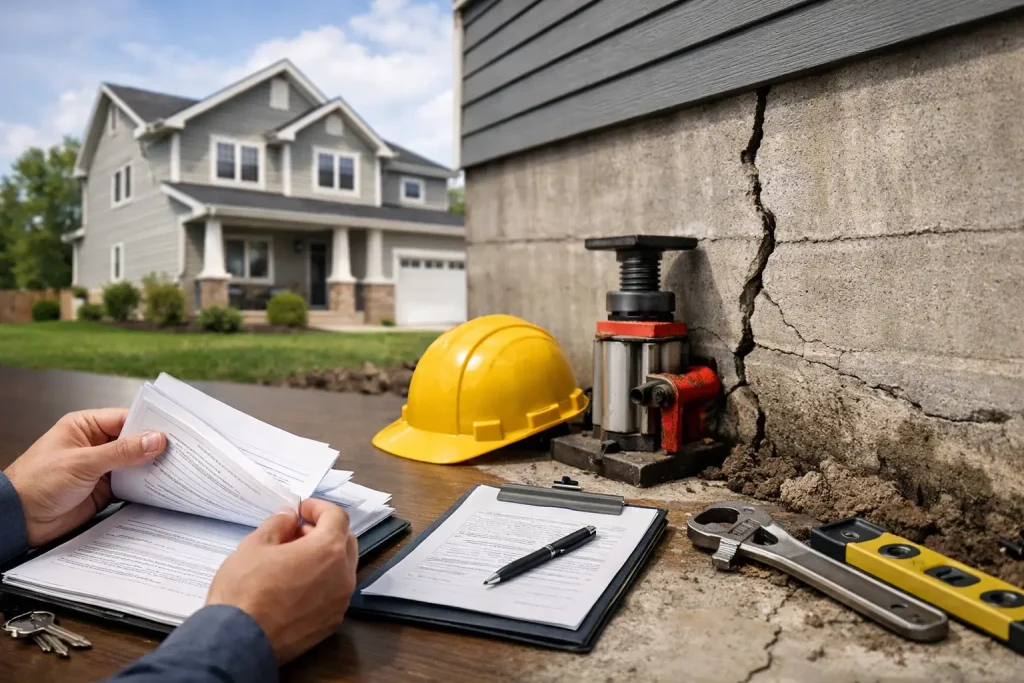
A foundation crack can make any homeowner uneasy. So can a repair proposal that promises a warranty without explaining what that promise actually means. Foundation repair warranties can provide real peace of mind, but only when you understand the work being warranted, the conditions attached to it, and the company standing behind it.
For New Jersey homeowners, that clarity matters. Our soil conditions, seasonal rain, freeze-thaw cycles, older homes, and drainage challenges can all affect foundations and basements. A warranty should never be used to rush a decision. It should give you confidence that the contractor has identified the right problem and is prepared to stand behind the solution.
What a Foundation Repair Warranty Is Really Promising
A warranty is the contractor’s written commitment to address a defined problem if the covered repair fails under the stated terms. It is not a blanket guarantee that your home will never develop another crack, settle, leak, or experience a drainage issue.
The key is specificity. If a contractor installs wall anchors to stabilize a bowing foundation wall, the warranty should explain whether it covers the anchors, the wall movement being corrected, labor to make a covered repair, or some combination of those items. If crack injection is used to stop a leak, the warranty should identify the crack or area treated rather than implying that every future water issue in the basement is covered.
That distinction protects everyone. Homeowners know what they are receiving, and reputable contractors can stand firmly behind work that was designed for the actual conditions at the property.
What Foundation Repair Warranties Should Cover
The strongest warranties are clear enough that you do not have to guess what happens if a problem returns. Before approving a project, ask for the warranty in writing and read it alongside the scope of work.
A sound foundation repair warranty should identify the repair method, the specific area being repaired, the warranty length, and what the contractor will do if a covered issue occurs. It should also state whether labor and materials are included in the corrective work. A warranty that only covers a replacement part may sound reassuring, but it leaves an important question unanswered: Who pays to access, remove, and reinstall that part?
For structural repairs, coverage may address continued movement beyond an agreed tolerance, failure of installed support systems, or recurrence of the condition the system was intended to correct. For waterproofing-related repairs, the language may address water entering through a repaired crack, treated wall area, or installed drainage system.
The warranty should also name the company responsible for honoring it. A long warranty has limited value if it comes from a contractor with no local track record, an unclear business identity, or a history of changing names. The workmanship behind the document matters as much as the document itself.
Transferability Is a Meaningful Advantage
If you plan to sell your home someday, a transferable warranty can be especially valuable. It allows the remaining warranty coverage to move to the next owner, usually with a simple transfer process and sometimes a modest administrative fee.
For buyers, this can reduce concern about a visible foundation repair or waterproofing system. For sellers, it provides credible documentation that the issue was professionally addressed. A repaired foundation is not automatically a red flag when the work was appropriate, well documented, and backed by a legitimate transferable guarantee.
At A-1 Basement Solutions, the transferable Life-of-the-House Guarantee is designed to give homeowners that long-term confidence. Still, homeowners should always review the terms for the particular service being performed. The right guarantee is one that matches the repair, not just a broad phrase used in a sales conversation.
Know the Exclusions Before You Sign
Every legitimate warranty has exclusions. That is not a warning sign by itself. In fact, a contractor that claims to cover every possible future issue without conditions may be making a promise that is difficult to enforce.
Common exclusions involve problems outside the scope of the original repair. For example, a wall stabilization warranty may not cover new damage caused by a major plumbing leak, a vehicle impact, nearby excavation, an addition that changes structural loads, or severe drainage neglect. Likewise, a crack repair warranty may not cover water entering through a different crack, an unsealed window, deteriorated exterior grading, or an overflowing gutter system.
Some conditions are also beyond any contractor’s control. Earthquakes, floods, sinkholes, and major changes to the surrounding property may be excluded. The details vary, which is why vague phrases such as “lifetime warranty” should prompt follow-up questions rather than immediate confidence.
Ask the contractor to explain exclusions in plain language. A dependable professional should be comfortable walking you through them without pressure or defensiveness.
A Warranty Cannot Replace Proper Diagnosis
The best warranty starts with an accurate inspection. Foundation symptoms can look similar while having very different causes. A horizontal wall crack may be related to outside soil pressure. A stair-step crack may point to settlement or movement. A damp basement wall might result from exterior grading and gutters, not a structural failure.
Repairing the symptom without addressing the cause can lead to frustration later. For instance, sealing a crack may stop water at one point, but it will not correct hydrostatic pressure around the foundation or a failed drainage path. Stabilizing a wall may be necessary, but the long-term plan may also need to include water management to reduce pressure against it.
This is where a solutions-first approach matters. A thorough contractor should inspect the interior and exterior conditions, explain what they see, and separate urgent structural concerns from maintenance items that can be addressed over time. No Problems, Just Solutions means recommending the work the home needs, not using a warranty as a substitute for a complete plan.
Questions to Ask About Foundation Repair Warranties
You do not need to be a foundation expert to evaluate a warranty. You do need direct answers. During your estimate, ask what exact condition is covered, how long coverage lasts, and whether the warranty is transferable if you sell the home.
Also ask whether labor is included, what circumstances could void coverage, and whether you must maintain gutters, grading, sump pumps, or drainage systems in a certain way. If the repair involves multiple services, such as structural stabilization and interior drainage, ask whether each system has separate coverage.
Finally, ask who performs the work. Companies that rely on trained, in-house crews have greater control over installation quality and accountability than businesses that pass projects to unknown subcontractors. A warranty is only as reliable as the people who inspect, install, and support the system after the job is complete.
Keep Your Records and Maintain the Property
Once the repair is finished, save the signed proposal, paid invoice, warranty document, photos, and any maintenance instructions. These records make it easier to request service if needed and can be useful during a future home sale.
Your role does not end when the crew leaves. Keep gutters clean, direct downspouts away from the foundation, maintain proper grading, and address plumbing leaks or sump pump problems promptly. These habits cannot prevent every structural issue, but they help manage the water conditions that often contribute to basement and foundation trouble.
A warranty should feel like a safety net, not a mystery. When the scope is clear, the exclusions are honest, and the contractor has the experience to stand behind the work, you can move forward with confidence and focus on protecting your home for the years ahead.